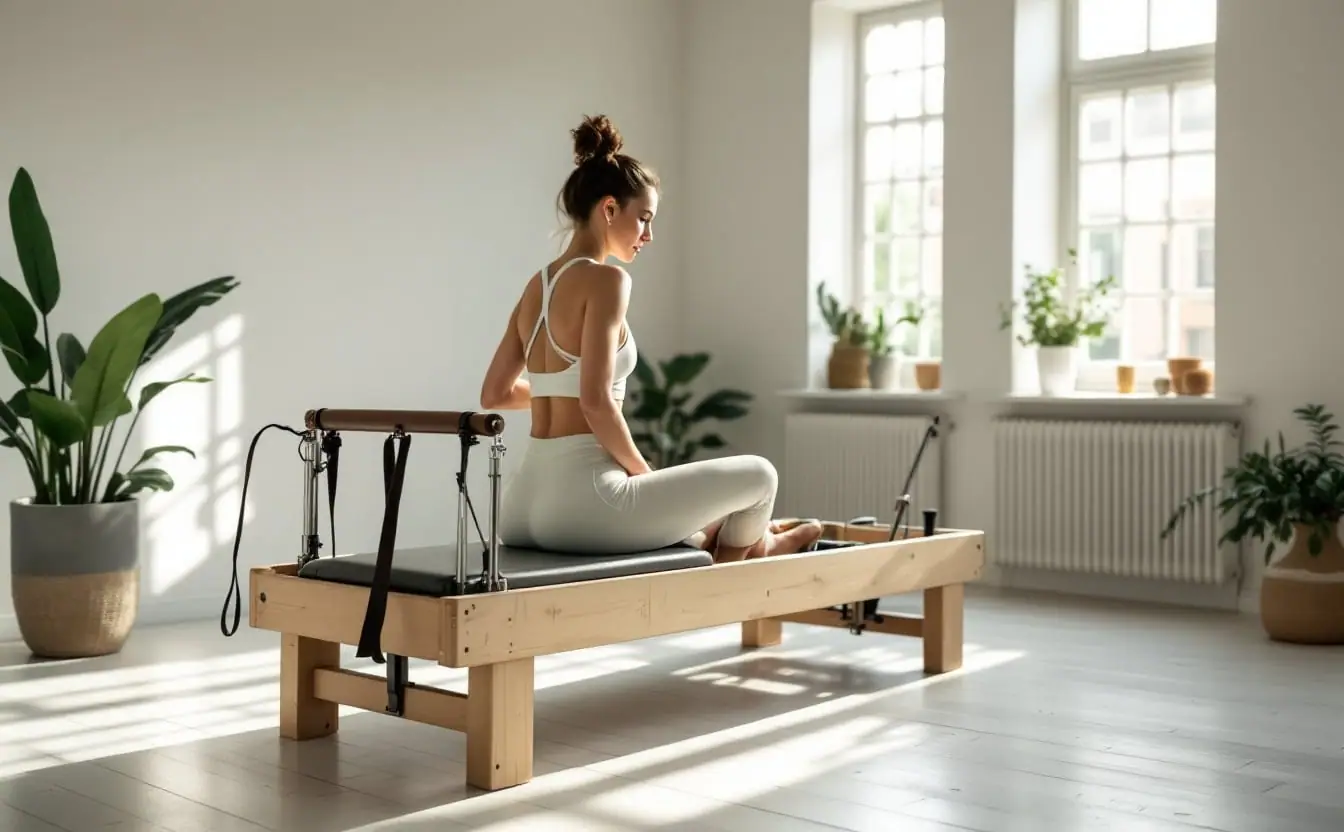
What changes when an experienced teacher learns the classical order
Experienced teachers who study the classical Pilates order from the start often find familiar exercises make new sense. What changes, and how to study it.
Pilates, mobility and everyday fitness
 On the mat this weekA twenty-minute classical mat sequence for your living room
Some stories date more slowly than others. This shelf collects our long reads on the people and ideas behind the method: Joseph Pilates and the physical culture he grew up in, Romana Kryzanowska and the elders who kept the classical work alive, and the questions teachers keep asking about progression, cueing, training and lineage.
Newest additions first.
Experienced teachers who study the classical Pilates order from the start often find familiar exercises make new sense. What changes, and how to study it.
How Pilates survived aerobics, step and spinning: dancers, physiotherapists, a 2000 court ruling that made the name generic, and the long reformer boom.
A practical checklist for choosing a Pilates studio: teacher training, class size, equipment, the first conversation, trial classes, pricing and red flags.
A book is good at teaching Pilates order and set-up, but it cannot see you. How to learn at home with a written guide, a simple log and the occasional lesson.
Anatomical cues, imagery and outcome cues, minimal versus wordy teaching, and a practical way for Pilates teachers to build cues that really change movement.
From a German childhood and a wartime camp on the Isle of Man to New York dancers and city reformer clubs, how Pilates outlasted nearly every fitness fashion.
Pilates asks for three to five repetitions where a gym asks for fifteen. Why the method keeps the numbers low, and how to make each of those few count.
Metabolic health comes down to five ordinary measurements. What each one means, why muscle and daily movement help, and which food habits support them.
Who the Pilates elders were, what it means to call a teacher second generation, and how lineage still shapes the way an exercise is taught in a studio.
Classical and contemporary Pilates differ on order, springs, spine position and transitions. What each tradition keeps, what it changed, and the reasons why.
Sleep, posture awareness, stairs and energy: what regular Pilates tends to change first for everyday stiffness, what the evidence says, and how long it takes.
Two hip bones and the pubic bone form the triangle Pilates teachers use to find neutral. How to feel it lying, sitting and standing, and when to let it go.
What one teacher can and cannot see in a reformer class of ten or twelve, where spring changes go wrong, and when a small group or private is the better buy.
What separates good Pilates apparatus from poor: frames, springs, straps, upholstery, wood versus aluminium, home-built machines and the safety checks to run.
Why the Teaser is the signature Pilates mat exercise, which earlier exercises prepare you for it, a step by step progression and the faults that stall it.
A Pilates certificate is where a teacher's education starts. Lessons, workshops, self-practice and reading keep good teachers improving for decades.
Joseph Pilates cared about baths, beds, breathing and fresh air as much as exercise. How to carry his method into your week, one small habit at a time.
Why Pilates teachers join guilds and associations, what the Pilates Guild does for one classical lineage, and how a teacher chooses the right group to join.
Joseph Pilates defined Contrology as complete coordination of body, mind and spirit, and the phrase means more, and asks more, than a wellness slogan.
A practical definition of fitness built on strength, stamina, mobility and balance, with simple tests to try at home and a plan to train for capability.
Weekend Pilates courses versus comprehensive training: why thin training matters, what clients can ask a teacher, and how experienced teachers can help.
A reader's guide to Bess Mensendieck's 1906 book Body Culture for Women: what it argued, how its exercises and photographs work, and where its ideas went.
Training to teach Pilates at sixty or older: what the course asks of your body, what older teachers bring to older clients, and how to choose a course.
Do-in is a Japanese routine of self-massage, tapping, stretching and slow breathing. Where it comes from, what it can do, and a ten-minute version to try.
A ten-point plan for clearing out a Pilates studio, from a props audit and smarter storage to cleaning routines, room flow and the digital mess behind it.
Kneipp's water cures, Mensendieck's exercises for women and Steiner's eurythmy are often linked to Joseph Pilates, but only one link really holds up.
Your core is far more than your abs: diaphragm, pelvic floor, deep trunk and hip muscles. Why that matters as you age, and how Pilates trains all of it.
What retraining as a Pilates teacher at forty involves: the training routes, real costs in time and money, early income, and office skills that carry over.
Studio biographies say Joseph Pilates beat asthma and rickets as a boy, but the story comes from later interviews and the evidence behind it is thin.
How good Pilates teachers decide when a client is ready for the next exercise, from readiness signs to springs, tempo and transitions, and why slow works.
Romana Kryzanowska learnt from Joseph Pilates as a teenage dancer and kept his studio and classical system going for decades after his death in 1967.