How Pilates lasted a century, from internment camp to reformer club
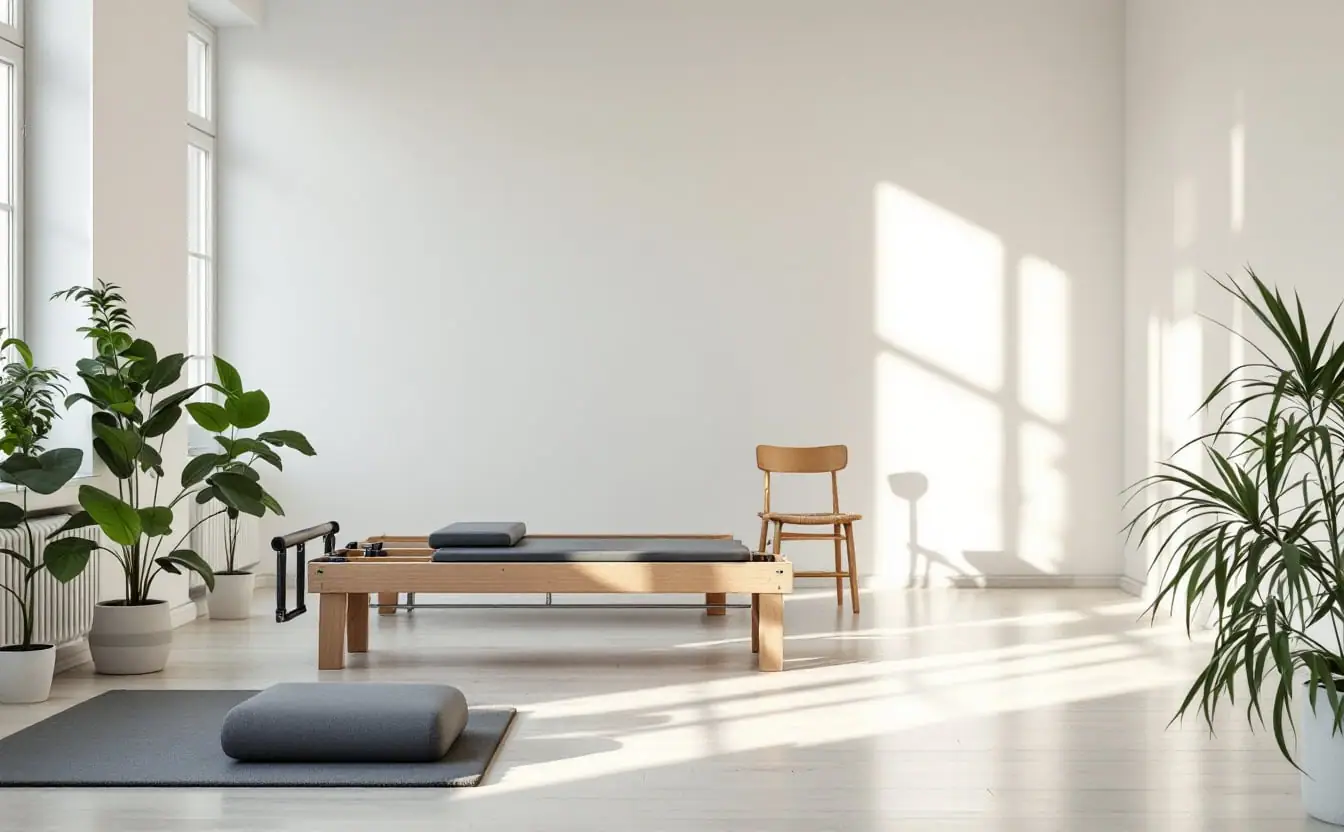
Fitness fashions rarely last a decade. Step aerobics, the vibrating belt machine, the trampoline class, the toning trainer: each filled a room or a cupboard and then quietly emptied it. Pilates has now been taught for about a hundred years, and the reformer classes booked out across British cities run on a machine descended from one Joseph Pilates patented in the United States in 1927.
That is unusual enough to be worth explaining. Here is a short history of how the method got from a German industrial town to your local high street, and a few thoughts on why it stuck when so much else did not.
Germany and the Isle of Man
Joseph Hubertus Pilates was born in Mönchengladbach in 1883. The familiar tale of a sickly boy who built himself up through gymnastics, boxing and anatomy books comes largely from Pilates himself, told decades later, and we have looked at how much of the childhood illness story holds up in a separate piece. What is not in doubt is the world he grew up in. Late nineteenth-century Germany was full of gymnastics clubs, nature cures, water treatments and systems promising health through movement, light and fresh air, and figures such as Kneipp, Mensendieck and Steiner were part of the background noise.
By the outbreak of the First World War he was living in England. As a German national he was interned, and from 1915 he was held at Knockaloe, the large camp for civilian internees on the Isle of Man. The story told in almost every history of the method is that he drilled fellow internees in his exercises and worked out how to use bed springs as resistance for men who could not get up. The details are hard to document. The idea it captures, resistance from springs that can help as well as challenge, became the heart of his apparatus.
New York and the dancers
After the war he went back to Germany and then, in the mid 1920s, emigrated to the United States. With Clara, who taught alongside him for the rest of his life, he opened a studio at 939 Eighth Avenue in Manhattan, in a building shared with dance studios. He called his system Contrology. He wrote two short books, Your Health in 1934 and Return to Life Through Contrology in 1945, the second with William John Miller, and he designed and built the reformer, the Cadillac, the chairs and the barrels that studios still use.
The address mattered more than he could have planned. Dancers came in with injuries and stayed for the conditioning, and the studio is linked with the companies of both George Balanchine and Martha Graham. That gave the method its first great advantage. It was taken up early by a profession that depends on bodies working well, and that passes skills on through years of apprenticeship rather than a quick course.
The elders
Joseph Pilates died in New York in 1967. Clara went on teaching until her death in 1977. The method then passed to a small group who had learned it directly from them and went on to teach others, now usually called the elders or the first generation.
Romana Kryzanowska, who first came to the studio as a young dancer, kept the New York studio and the classical order going for decades. Kathy Grant and Lolita San Miguel trained with Joe and Clara and taught for the rest of their long careers. Ron Fletcher, who had danced with Martha Graham's company, took the work to Los Angeles in the early 1970s. Carola Trier, Eve Gentry, Mary Bowen, Jay Grimes and Bob Seed each taught what they had learned, in their own way and in their own cities.
This is the second reason the method lasted. It travelled through people, not a franchise, and each elder trained teachers who trained others. Classical teachers still describe themselves by lineage. Laura Browning Grant, for instance, trained in Lolita San Miguel's lineage, which ties her teaching back to a woman who learned on Eighth Avenue. There is more on what second-generation teaching means, and why it matters to teachers, elsewhere in the magazine.
The 1990s and 2000s
For most of the twentieth century Pilates was a niche practice, known to dancers, a handful of physiotherapists and people who happened to live near the right studio. That changed in the 1990s. Physiotherapists adapted exercises for rehabilitation. New schools developed contemporary versions, with changes to the order, the breathing and the machines. Mat classes moved into gyms, and home videos and then DVDs carried the Hundred into living rooms.
A court case cleared the way. In 2000 a federal court in New York ruled that "Pilates" was the generic name for a type of exercise, not a trademark one company could own. After that anyone could call a class Pilates. It helped the method spread faster than any marketing budget could have done, and it made quality much harder for a newcomer to judge.
The reformer boom
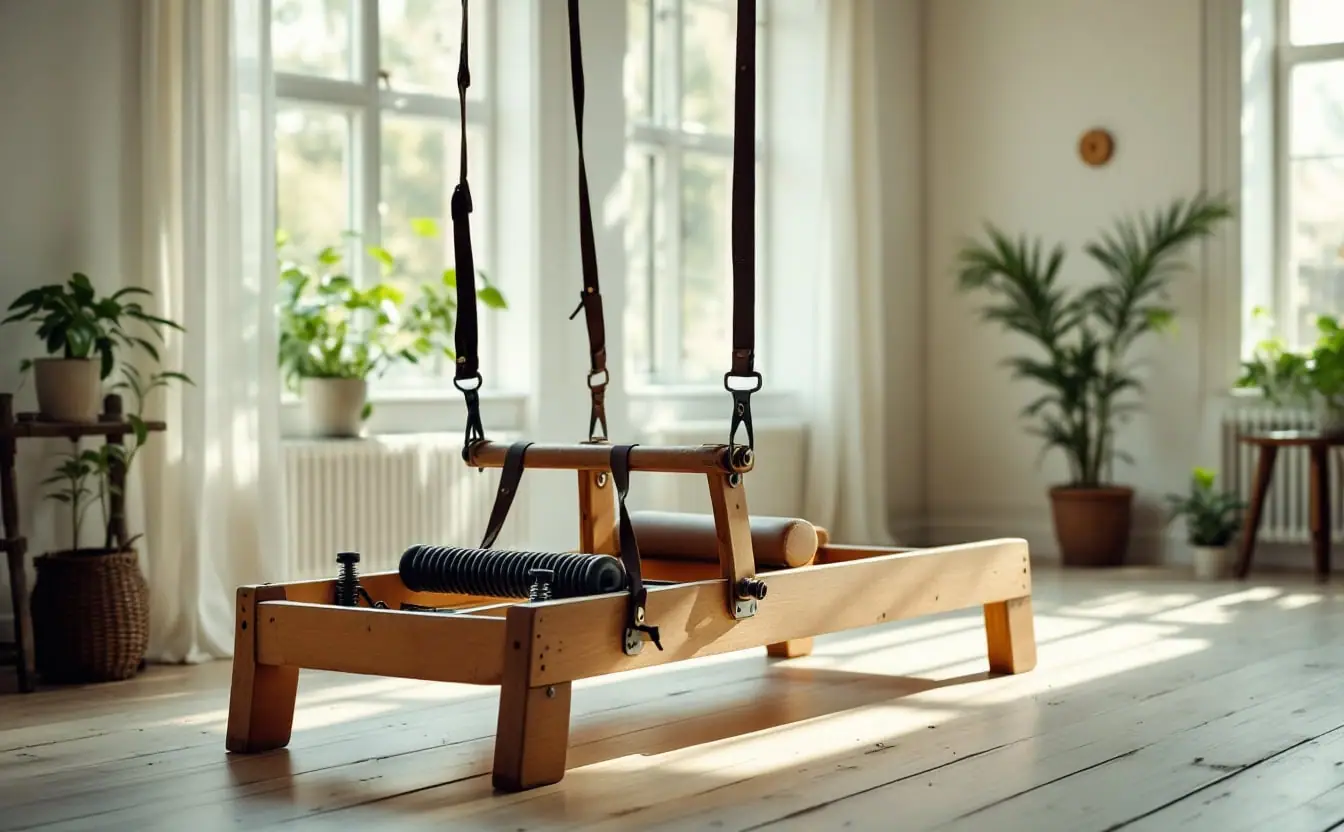
The most recent wave is the reformer club: purpose-built rooms with ten, twelve or more machines, timed classes, music and booking apps. Some of it would puzzle the elders. Yet the machine underneath is still a sliding carriage, a set of springs, a footbar and a pair of straps, and the better classes still open with Footwork and build towards the Hundred and Short Spine.
A century in dates
| Year | What happened |
|---|---|
| 1883 | Joseph Pilates born in Mönchengladbach, Germany |
| 1915 | Moved to Knockaloe internment camp on the Isle of Man |
| Mid 1920s | Emigrates to New York; opens the Eighth Avenue studio with Clara |
| 1927 | Granted a US patent for a reformer-type apparatus |
| 1934 | Publishes Your Health |
| 1945 | Return to Life Through Contrology, written with William John Miller |
| 1967 | Joseph Pilates dies in New York |
| 1977 | Clara Pilates dies; the elders carry the work on |
| 2000 | US court rules that Pilates is a generic term |
| 2010s onwards | Reformer studios and clubs spread through cities worldwide |
Why it has lasted
Looking back over the century, a few things stand out:
- It was built for injured and hard-working bodies, not for a trend cycle, so it kept being useful.
- It spread by apprenticeship and lineage, which kept a core of the original work intact.
- The exercises scale. A beginner and a principal dancer can both do Footwork on the same reformer with different springs.
- It is never finished. There is always a harder version, a cleaner transition, a better Roll Up.
If you want to feel the hundred years in your own body, try the opening of Joe's mat order tomorrow morning: the Hundred, the Roll Up, Single Leg Circles and Rolling Like a Ball, with the Roll Over left out as beginners usually do, and notice how each one sets up the next.