Big reformer classes and what one teacher can actually see
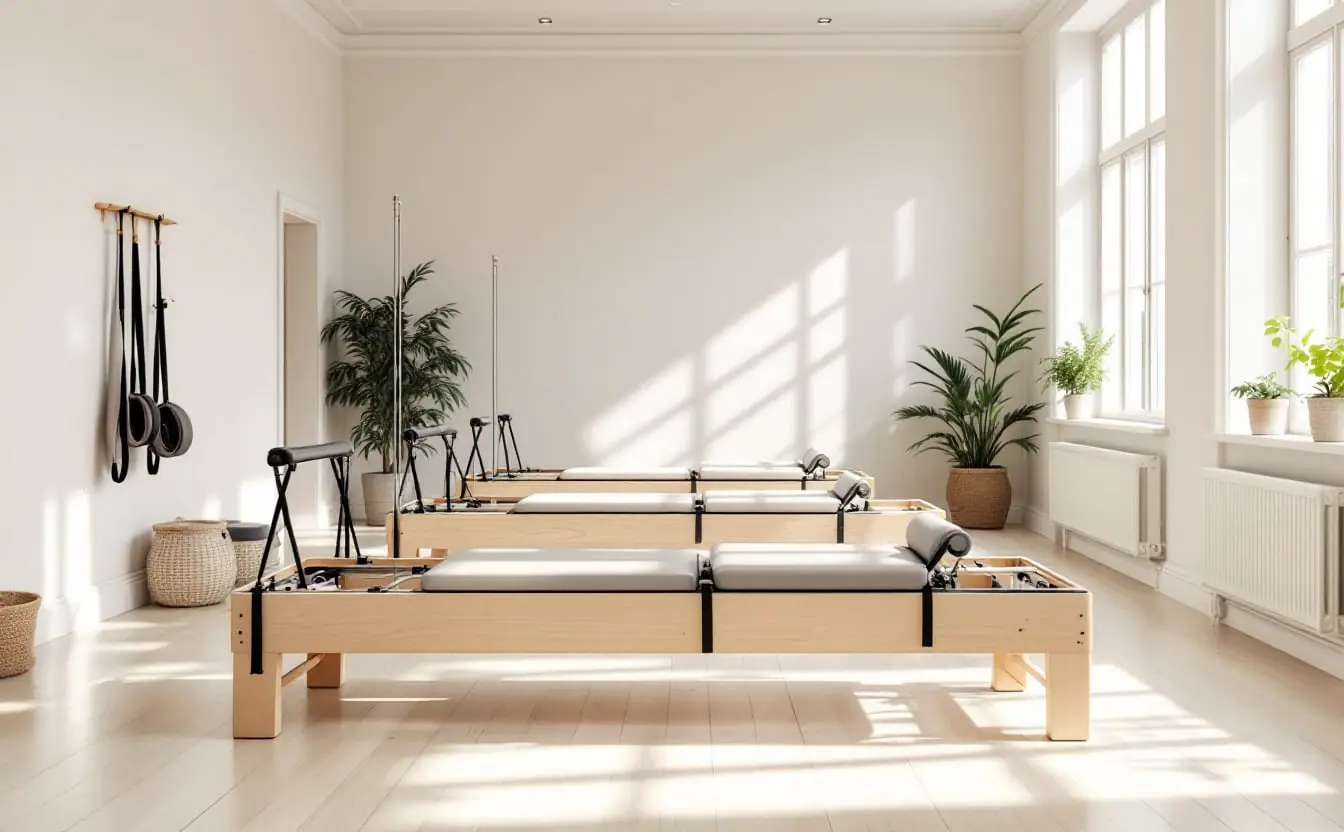
Walk into a group reformer studio at six on a weekday evening and the picture is usually the same: ten or twelve machines in two tidy rows, a playlist, and one teacher at the front with a headset microphone. The format has spread quickly because it works commercially and because plenty of people enjoy it. It is also the format that makes many experienced teachers wince.
Both reactions have a point. A large reformer class is not automatically unsafe, and a small one is not automatically good. What changes with numbers is how much a single pair of eyes can take in, and how much of the safety work quietly passes from the teacher to you.
What one teacher can see from the front
With ten machines, a teacher at the front can follow the broad shape of the room. They can tell whether everyone is lying down, whether the tempo is holding, whether someone has stopped or looks uncomfortable. They can spot a carriage travelling much further than its neighbours and guess that the springs are wrong.
What they cannot see well from there is detail, and on a reformer the detail is most of the method. Where the feet sit on the footbar. Whether a strap is round the arch or creeping towards the toes. Whether the pelvis stays level during Footwork or tips as the carriage goes out. Whether the neck is gripping in The Hundred. The person at the far end of the back row is seen in profile, through other bodies. Good teachers walk the room for exactly this reason, but every minute spent beside one machine is a minute the other eleven work unsupervised.
There is no official ratio for reformer classes. Classical studios have tended to keep apparatus groups small, often in single figures and sometimes as few as three, because the original system was taught largely one to one. Club-style studios plan for bigger numbers from the start, with choreography designed to be followed rather than individually adjusted. Those are different products, and it helps to know which one you are buying.
Springs, setup and the seconds between exercises
The riskiest moments on a reformer tend to come between exercises rather than during them. Someone stands up on a carriage that is free to roll. A foot slips off the bar while the springs are being changed. A strap is let go under tension and the carriage slams home. With one client, the teacher stands next to the machine for all of this. With twelve, each person changes their own springs, sets their own headrest and footbar, and climbs on and off alone.
Spring changes show the problem most clearly. Most modern reformers have colour-coded springs, but the colours and tensions differ between manufacturers, so a call of 'one red, one blue' means different things on different machines. A teacher calling one setting for the whole room cannot check twelve spring bars at once. Usually the cost is small: an exercise that feels too light or too heavy. Occasionally a spring is half hooked, or someone has far too little load for a standing exercise on the carriage, and that is when people get hurt.
Well-run large studios design around this. They keep spring changes few and predictable, use one setup for a block of exercises, give people time to change instead of talking over it, and service their machines on a schedule. The state of the equipment matters as much as the teaching, and our piece on what makes good Pilates apparatus covers the checks worth knowing.
Beginners carry most of the risk
An experienced client in a twelve-person class brings their own checklist. They know where their feet go, what a strap under tension feels like and when to stop. A first-timer does not, and cannot yet tell good instruction from poor. An exercise can look fine in a mirror while the setup underneath it is wrong.
That is why the first few sessions matter so much. The most useful thing a large studio can offer is a proper induction: a smaller introductory class, or at least a clear briefing on getting on and off, keeping the carriage steady, changing springs and handling the straps. If a studio puts brand-new clients straight into a full, fast class without asking about injuries, that tells you something about its priorities.
Teacher training matters here too. A short reformer course can produce a confident group instructor, but it usually covers far less about adapting exercises for different bodies than a comprehensive programme does, and adaptation is the skill a crowded room needs most. I have written before about the effect of thin training on the industry, and big classes are where it shows first.
A checklist for a large reformer class
Before you book a block, or during your first visit, look for these:
- An induction or beginners' class before you join the main timetable.
- A question about injuries, pregnancy and health conditions before the class starts.
- A stated maximum number of people, and a room that keeps to it.
- Spring settings called clearly, with time to change them and a look round the room afterwards.
- A teacher who walks the rows and gives individual corrections, not just counts.
- Easier and harder options offered for demanding exercises, with genuine permission to take the easier one.
- Machines that look cared for: clean upholstery, intact straps, springs without gaps or rust.
- Grip socks required or provided, and bags and bottles kept clear of the machines.
- Transitions taken calmly, not raced to keep up with the music.
When a small group or private is the better choice
Large classes suit a fair number of people: those with some reformer experience, no current injuries and a goal that is mostly general fitness and enjoyment. They cost less per session, and many people find a full room motivating. Nothing wrong with that.
They suit others badly. If you are new to the reformer and have a history of back, neck or joint pain, start with privates or a small group. The same goes if you are pregnant, returning after surgery or injury, or have been told you have osteoporosis. These call for qualified, in-person guidance from a teacher who can watch you closely, and if you are unsure, check with your doctor or physiotherapist first. And if you want to work towards the intermediate and advanced repertoire, a big class will rarely take you there, because progression depends on someone watching how you handle each stage before adding the next.
A sensible pattern for many people is a mix. Take a few privates to learn the machine and your own habits, move into group classes, and book an occasional private to check that nothing has drifted.
How to judge a room in one visit
You can learn most of what you need from a single class. Watch the first five minutes: whether anyone asks who is new, whether the teacher looks at feet and springs, whether the pace leaves you time to set up. Notice whether the teacher ever comes over and uses your name. If you leave having been corrected at least once, with your springs checked and a clear idea of what you were meant to feel in your legs on the final Footwork set, that room is doing its job, whatever the number of machines.