What makes good Pilates apparatus, from springs to upholstery
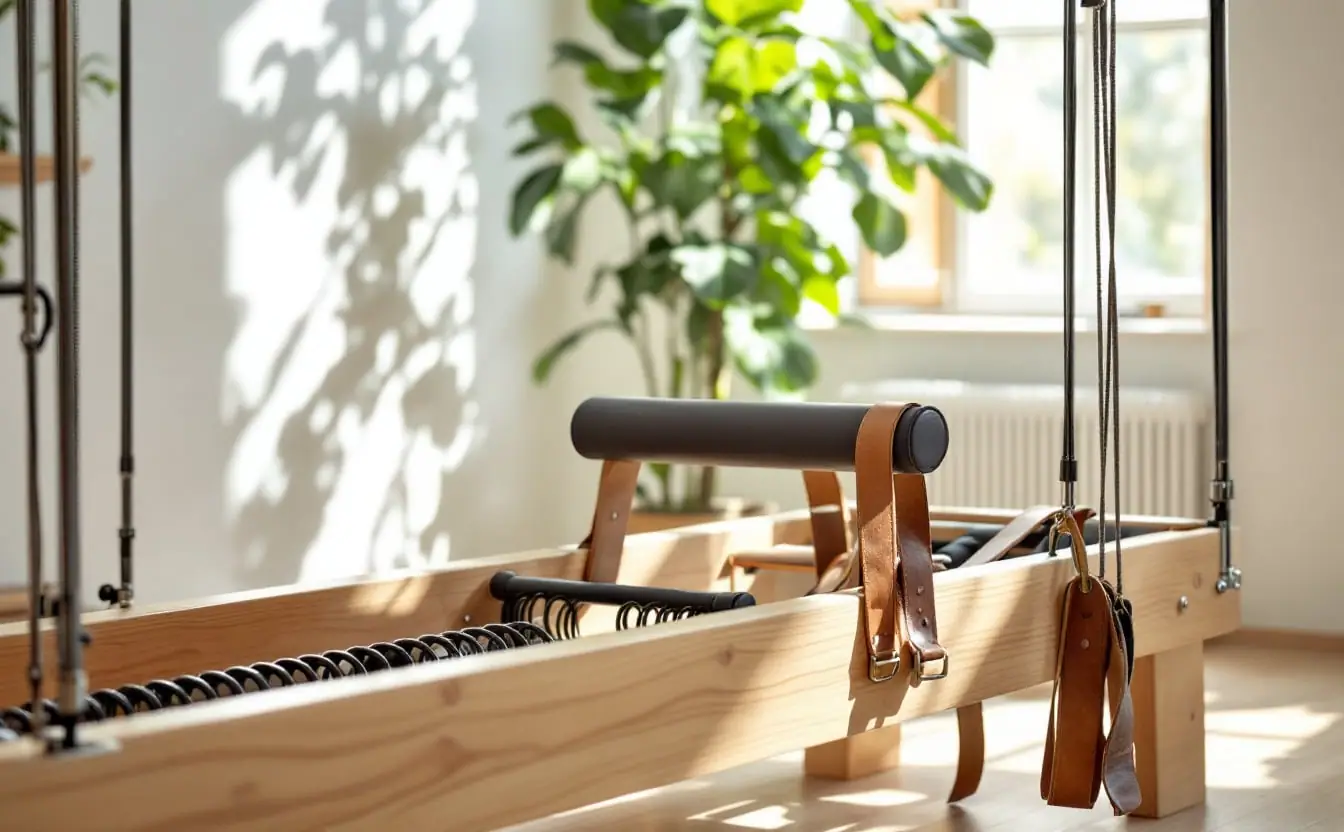
A reformer is a simple machine. A frame, a sliding carriage, a row of springs, a footbar and a pair of straps. That simplicity is exactly why the details matter: with so few parts, each one changes how an exercise feels, and a poor one shows up in every session.
Teachers who have worked on several brands can usually tell within a minute of Footwork whether a machine is right. The carriage rolls quietly or it rattles. The springs feel smooth through the whole range or they go hard at the end. Here is what sits behind that feeling and how to check it. The same points apply to a full studio fit-out and to a single machine bought for a spare room.
The frame
The frame keeps everything square. It must not flex, twist or creak when a tall, strong client pushes out against heavy springs. Hardwood is the traditional material and still what many classically trained teachers prefer. Aluminium is common in commercial studios because it is lighter and easier to move, and steel turns up on some budget and home machines.
| Material | Strengths | Drawbacks | Suits |
|---|---|---|---|
| Hardwood | Quiet, stable, warm to look at, repairable | Heavy, usually dearer, dislikes damp rooms | Classical studios, permanent home set-ups |
| Aluminium | Light, consistent, often very adjustable | Cheaper models can feel less solid or sound clattery | Busy group studios, rooms that change layout |
| Steel or pipe-built | Strong, cheaper to make, easy to repair | Heavy, finish and feel vary widely | Budget and home-built machines |
Material matters less than build quality. A well-made aluminium reformer beats a wobbly wooden one every time.
Springs
Springs are the heart of the apparatus. They are steel extension springs, and like all springs they tire with use. Good ones feel even through the whole stroke, with no snatch at the start and no sudden wall at the end. Some machines use several springs of similar strength and change the load by adding or removing them; others use colour-coded springs of different strengths. Neither system is wrong, but teachers moving between brands need a session or two to recalibrate, because the spring setting is one of the main ways a teacher adjusts difficulty, as I explained in progressing clients from basic to advanced.
Replace springs on the schedule your manufacturer sets, which for studio machines in daily use is commonly every year or two, and replace a whole set together so the tensions stay matched. Replace any spring sooner if you see:
- gaps between the coils when it is at rest
- rust, pitting or a kink anywhere along its length
- a bent, worn or loose hook or eye
- a clearly different feel from its neighbours of the same colour or strength
A damaged spring can fail under load, and a carriage that suddenly loses resistance can hurt someone. Do not wait for the service visit.
Straps, ropes and loops
Some reformers use leather straps, others rope or webbing with fabric loops or handles. All of them wear at the points where they bend or rub. Look for fraying, cracked leather, loose stitching, clips that no longer close firmly, and rope that has flattened or gone fuzzy where it runs over a pulley. Pulleys and risers should turn freely and quietly. Strap length matters more than people think, since a few centimetres change where the work lands in exercises such as Rowing or the Feet in Straps series.
Upholstery and padding
Firmer padding gives clearer feedback. The early apparatus in Joseph Pilates's studio had very little cushioning, and many classical teachers still prefer a firm surface because the spine cannot sink into it and hide what it is doing. Softer foam is kinder to bony clients and to people who find lying down uncomfortable, so the right answer depends on who you teach.
Whatever the firmness, the cover must be intact. Cracks and tears trap sweat, cannot be cleaned properly and only get bigger. Reupholstering a carriage or a box is a routine job for a local upholsterer, and much cheaper than a new machine. Clean with a product your manufacturer approves.
Dimensions and adjustability
Look at footbar height and the number of footbar positions, carriage length, the spacing of the shoulder rests, headrest positions and the number of settings for the bar the springs hook onto. More adjustment helps you fit very tall and very short clients. Classical teachers often care about proportions as much as adjustment, because the original exercises were shaped on particular machines, and a footbar that sits too high or a carriage that is too short changes the work.
Measure the room before you order. Most full-size reformers are a little under 2.5 metres long, a tower or Cadillac needs ceiling height as well as floor space, and every machine needs room around it for you to move and spot. A tidy, well-planned floor helps here, and our ten-point guide to decluttering a Pilates studio covers the layout side.
Home-built and budget machines
Some teachers build their own apparatus. Joseph DeRuvo, for instance, has built his own Pilates equipment. Home-built and budget machines can make the work far more affordable, and a careful maker who knows the method can produce something that teaches well.
The risks are real, though. A loaded spring stores a lot of energy, joints have to carry repeated heavy loads, and a carriage that slips off its track can trap fingers. If you are not confident about load-bearing construction, do not build one. If you teach on a home-built or imported budget machine, check that your insurer is happy with it before clients use it.
Buying second-hand
A used reformer from a reputable maker can be excellent value. Before you pay, go through this list in person:
- Push the carriage from side to side. It should not wobble or knock.
- Roll it slowly along its full length, listening for grinding, clicks or flat spots on the wheels.
- Inspect every spring, then budget for a new set anyway.
- Check straps, ropes, clips and pulleys for wear.
- Lock the footbar in every position and lean on it.
- Look for cracks in wood, loose bolts, and splits or crumbling foam in the upholstery.
- Confirm the maker still sells spare parts for that model.
Routine checks
A simple log keeps problems small. Before each session, glance at springs and hooks and make sure the footbar is locked and the straps are attached. Each week, run the carriage slowly and listen, and wipe the rails. Each month, look closely at every spring, tighten loose fittings and check the wheels. Book a full service, and new springs, on the manufacturer's schedule, and write the date somewhere you will see it.
If a reformer will not fit your home or budget yet, a mat, a band and a small ball cover a lot of ground, as our travel kit for Pilates on the road shows. When you do step onto a machine, do ten slow Footwork presses and listen. A good reformer is almost silent, and that quiet tells you more than any brochure.