Yoga blocks for Pilates: foam, cork or bamboo, and how to use one
Some links in this story go to shops, and we may earn a commission from them.
How to choose a yoga block for Pilates: foam, cork or bamboo, the standard 4 x 6 x 9 size, four ways to use one on the mat, and four blocks to consider.
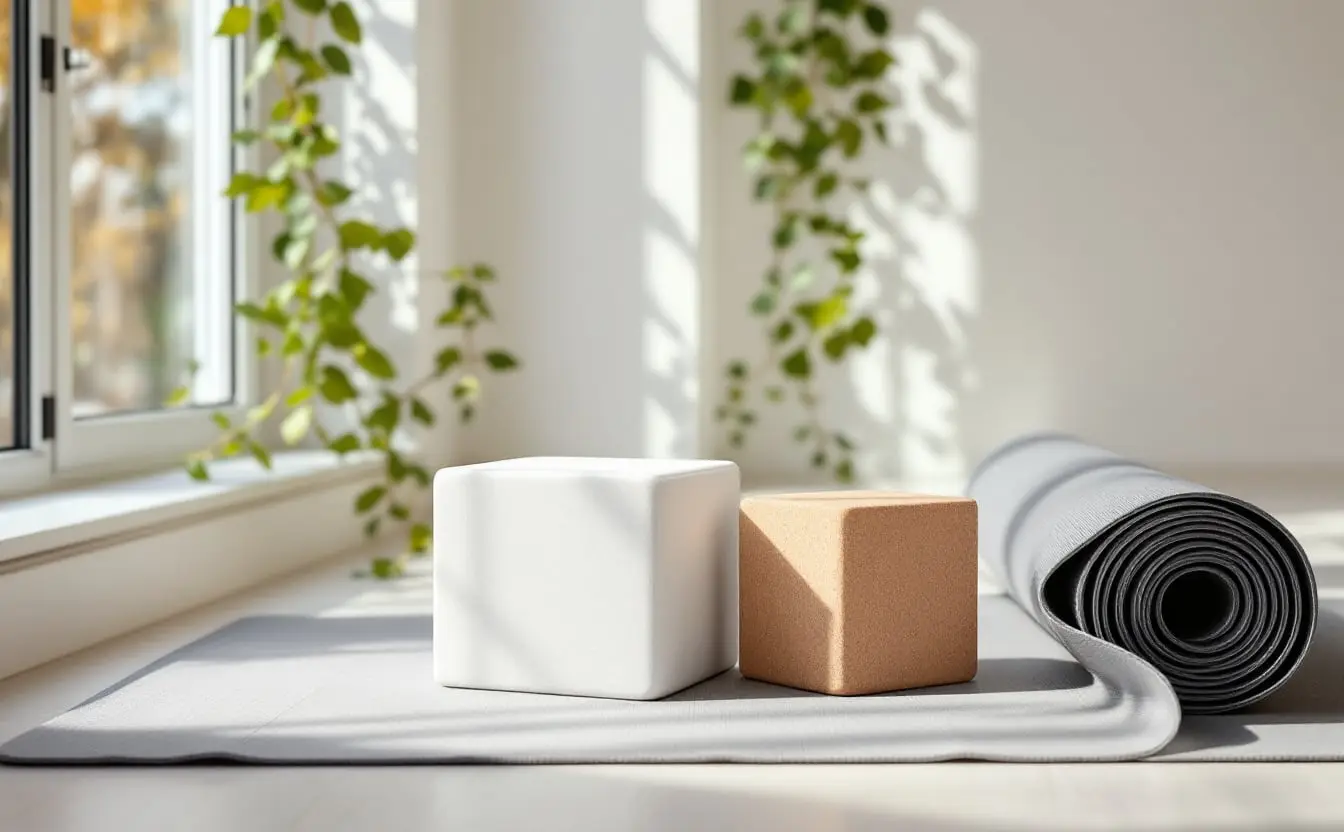
For Pilates, the yoga block to buy is a foam one in the standard 4 x 6 x 9 inch size (about 10 x 15 x 23 cm): light, soft at the edges and comfortable to lie on or squeeze. Cork is firmer and heavier, and suits people who lean their weight on a block more than they lie on it. Bamboo looks lovely and does the least on a Pilates mat.
On the mat, a block does four jobs well. It goes under the head when the chin tips up as you lie flat, between the thighs for a steady squeeze, under a hand in side bends, and under the sacrum in a supported bridge. It also makes a good seat when tight hamstrings round the lower back. That makes it a sensible buy for beginners, for stiff or tall people, and for anyone who wants a squeeze prop before deciding on a ring.
Blocks reached Pilates by way of the yoga room. Joseph Pilates wrote his mat work for the body and the floor, and the yoga teacher B.K.S. Iyengar is usually credited with popularising blocks, belts and bolsters as props. Pilates teachers borrowed the block because it does a handful of small jobs better than anything else in the cupboard. Our comparison of Pilates and yoga covers the wider differences between the two.
Four yoga blocks compared
| Pick | Best for | Key facts |
|---|---|---|
| Gaiam foam yoga blocks | Soft support under hands and hips | Latex-free EVA foam; 4 x 6 x 9 in (about 10 x 15 x 23 cm); bevelled edges; non-slip surface |
| Yoga blocks, set of two | A matching pair | Two high-density foam blocks; 4 x 9 x 6 in; rounded edges |
| Manduka cork yoga block from Power Systems | Firm support you can lean on | Dense cork; contoured edges; firmer and heavier than foam |
| Power Systems foam yoga block | A lower block for the head or pelvis | 9 x 6 in (about 23 x 15 cm) in a 3 or 4 inch (7.5 or 10 cm) thickness; from a studio supplier |
We chose these from the makers' specifications, published reviews and how well each suits Pilates mat work. We have not tested them ourselves, so treat the table as a shortlist and check the size and material on the listing before you buy.
Kit list
- Power Systems Pilates resistance ringBest for: a studio-grade ringSee it at Power Systems (Power Systems Pilates resistance ring)
- AIREX yoga and Pilates mat from Power SystemsBest for: a mat that wipes cleanSee it at Power Systems (AIREX yoga and Pilates mat from Power Systems)
We may earn a commission from these links.
Foam, cork or bamboo
Foam
Most blocks are made of EVA or a similar closed-cell foam. Foam is light, a little giving and warm to the touch, and its edges are usually bevelled or rounded, which matters when the block sits under your pelvis or between your knees. It is also the most likely to dent over the years, and low-density foam squashes under a hand. Look for the words high-density, and for latex-free if you react to latex. A latex-free EVA block with bevelled edges is a typical example. If you want two, a matching pair of high-density foam blocks keeps both sides of the body at the same height.
Cork
Cork is dense, noticeably heavier than foam and barely compresses. That makes it steady when you lean or sit on it, and many people find it keeps its grip when hands are damp. The trade-off is comfort. Under the sacrum or between the knees a cork block feels hard, and its edges can wear a little with time. The cork block sold by Power Systems has contoured edges, which take some of the hardness away.
Bamboo and wood
Bamboo and wooden blocks are hard, smooth and long-lasting, and make a steady platform under a hand in standing yoga poses. On a Pilates mat they are the least useful of the three: uncomfortable to lie on, unpleasant to squeeze, and slippery on a polished floor or under a sweaty palm.
Yoga block sizes, and whether you need two
The standard yoga block measures 4 x 6 x 9 inches (about 10 x 15 x 23 cm). Turn it and you get three heights: 4 inches lying flat, 6 on its side, 9 standing on end. Pilates mostly uses the lowest; the tall setting belongs to standing yoga poses.
Thinner blocks, around 3 inches (7.5 cm), are worth knowing about. The Power Systems foam block comes in a 3 or 4 inch thickness, and many people find the thinner one more comfortable under the head or pelvis.
One block covers most Pilates mat work. Buy two if you also practise yoga, if you want one under each hand, or if you like to sit on one and keep the other for squeezing. If you are still building a home kit, the guide to Pilates equipment for home puts the mat first, and a block makes a small, useful addition after it.
How Pilates uses a yoga block
Under the head
When you lie on your back, your face should look straight up at the ceiling, with forehead and chin roughly level. If the chin tips up and the back of the neck shortens, some height under the head helps. Most people need only an inch or two (2.5 to 5 cm), so a standard block lying flat is often too high and pushes the chin towards the chest. It suits a rounded upper back that needs real height; everyone else does better with a thin block or a folded towel.
Between the thighs
Placed between the inner thighs just above the knees, a block gives a steady squeeze that keeps the knees in line in a pelvic curl, a chest lift or a standing heel raise. Turn it so the knees sit about hip-width apart, which for most people means the 4 or 6 inch width. Unlike a ring, it does not push back. Stop pressing and it drops, which tells you exactly when the inner thighs switched off.
Under a hand in side bends
In the seated side bend called the Mermaid, and in kneeling side work, the lower hand often cannot reach the floor without the shoulder collapsing. A block under that hand brings the floor up to meet you, so the side of the waist lengthens instead of crumpling. Here firmness helps, and cork comes into its own.
Under the sacrum
The sacrum is the flat, bony triangle at the back of the pelvis. In a supported bridge the block, at its lowest height, sits under that bone, not under the curve of the lower back. Your weight rests on the block and the back muscles can let go, which makes it a restful way to end a session.
Sitting on it
If tight hamstrings round your lower back in Spine Stretch Forward, the Saw or the Spine Twist, sitting on the front edge of a block tips the pelvis forward enough to sit tall. A folded towel does the same job, but a block is the same height every time.
Yoga block exercises: a short mat sequence
These six take about ten minutes and sit well alongside the foundations in 12 mat Pilates exercises for beginners. Move slowly and breathe out on the effort.
- Seated spine stretch. Sit on the front edge of the block, legs straight and a little wider than the hips, arms reaching forward. Breathe out and round forward from the top of the head; breathe in and stack back up. Do 5. Feel the back lengthen rather than the hamstrings pulling.
- Pelvic curl with a squeeze. Lie on your back with knees bent and the block between your thighs. Squeeze gently, peel the spine up to the shoulder blades and roll back down. Do 8. Feel the inner thighs and the backs of the legs.
- Chest lift with a squeeze. Same position, hands behind the head. Breathe out, press the block lightly and curl the head and shoulders up, then lower with control. Do 8. Easier: leave the head down and just press the block.
- Mermaid with a block. Sit with both knees bent and folded to your right, a block on the floor beside your left hip. Rest your left hand on it and reach the right arm up and over to the left. Hold for three breaths, then fold the legs the other way and repeat. Feel a long stretch down the side of the waist.
- Supported bridge. Lift the hips, slide the block under the sacrum at its lowest height and lower onto it. Rest there for five to eight slow breaths. If that is comfortable, draw one knee towards the chest for a breath or two, then the other. To come out, lift the hips, take the block away and roll down.
- Standing roll down. Stand with feet hip-width apart and the block on its end in front of your toes. Breathe out and roll down through the spine, knees soft, until your hands rest on the block. Breathe in, then roll up one bone at a time. Do 4. Easier: bend the knees more.
Care
- Foam: wipe with a damp cloth and a drop of mild soap, then let it air-dry. Do not soak it.
- Cork: wipe with a barely damp cloth and dry it straight away. Never soak it, and keep it away from radiators. A new cork block may shed a few crumbs at first.
- Keep any block out of strong sun, which can fade foam and make it brittle over time.
- Retire a foam block that has started to crumble or has a dent deep enough to make it rock.
Safety
- Use a block on a mat or a non-slip floor, and check it before you lean on it. A block that rocks, slides or crumbles will not hold you.
- In a supported bridge, keep the block under the sacrum. If you feel pinching in the lower back, lower the block or take it away.
- Do not stand on a foam block for balance work unless a teacher has set it up; it can tip or compress unevenly.
- If you have osteoporosis, a back problem or a recent injury, or you are pregnant, ask a physiotherapist or a qualified teacher which positions suit you, particularly forward bends and the supported bridge.
Yoga block questions
Are yoga blocks good for Pilates?
Yes, as a support and a squeeze prop. They add no resistance, unlike a ring or band, but they make several mat exercises easier to do well, which matters more in the first year.
Should a beginner buy foam or cork?
Foam. It is lighter, softer to lie on and kinder between the knees. Choose cork if you lean on blocks more than you lie on them, or practise yoga too.
Can a yoga block replace a Pilates ring?
For the inner-thigh squeeze, partly. A block gives a steady squeeze with no spring; a ring gives resistance that builds as you press, plus pads to push out against. A block is a fair stand-in until you know you want a ring.
What can I use instead of a yoga block?
A firm cushion between the knees, a folded towel under the head or the pelvis, a stack of hardback books under a hand. They all work until they slide, which on a mat they will.
Start with the head check. Lie on your back on the mat with your knees bent and ask someone to look at you from the side. If your chin points at the ceiling, slide the block under your head. If your face looks straight up, put the block between your knees instead and begin your pelvic curls.