Ankle weights for Pilates and home workouts: how to choose a pair
Some links in this story go to Amazon and to other shops, and we may earn a commission from them. As an Amazon Associate I earn from qualifying purchases.
How to choose ankle weights for Pilates and home leg work: how heavy, fixed or adjustable, fit, whether to walk in them, and three light pairs to consider.
The edit
| Pick | Best for | One fact | Where to buy |
|---|---|---|---|
| Amazon Basics adjustable ankle weights$12.97 Amazon price as of 23 Oct 2026, 04:32 UTC | The lightest adjustable range | 0.5 to 2.5 lb per cuff | See it on Amazon (Amazon Basics adjustable ankle weights) |
| Henkelion ankle weights | A fixed light pair | Sold as pairs in several weights | See it on Amazon (Henkelion ankle weights) |
| Sportneer adjustable ankle weights$33.99 Amazon price as of 23 Oct 2026, 04:32 UTC | Adding weight over time | 1 to 5 lb per cuff | See it on Amazon (Sportneer adjustable ankle weights) |
Product prices and availability are accurate as of the date/time indicated and are subject to change.
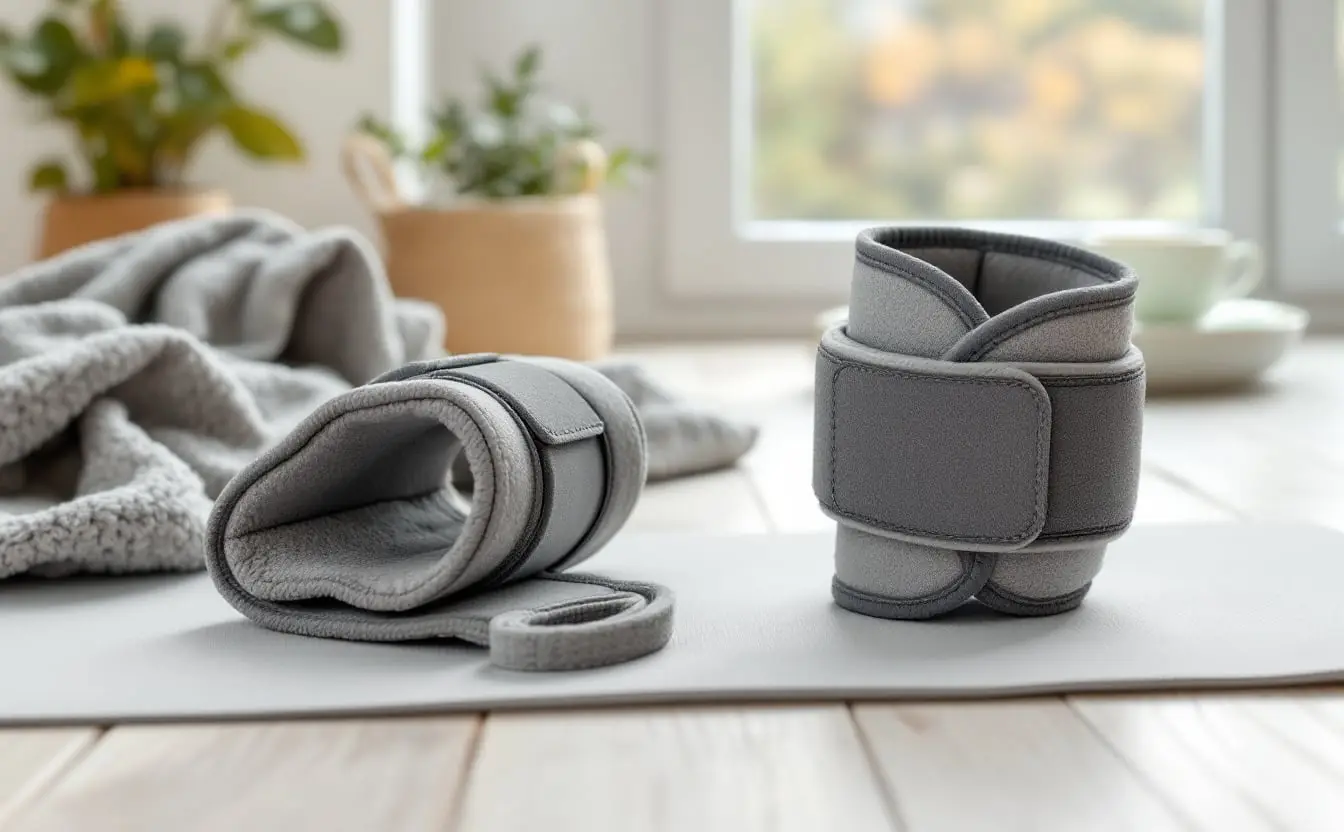
For Pilates leg work and standing strength exercises at home, the ankle weights worth owning are light ones. Half a pound to 2.5 lb (about 0.2 to 1.1 kg) on each leg covers almost everything a mat class could ask of them, and an adjustable pair lets you start at the bottom of that range and add weight in small steps. Walking in them is another matter.
They suit people whose top leg has started to feel weightless in the side-lying series, people building leg strength for steadier balance in later life, and anyone who wants more from seated and standing exercises without a rack of dumbbells. They are not a first purchase. Your own leg is heavy enough for the first weeks, and the shapes need to be steady before you load them. What matters is weight, fit and whether the cuffs stay where you put them.
Three pairs of ankle weights compared
| Pick | Best for | Key facts |
|---|---|---|
| Amazon Basics adjustable ankle weights | The lightest adjustable range, for mat work | 0.5 to 2.5 lb (about 0.2 to 1.1 kg) per cuff; removable weight inserts; double hook-and-loop closure |
| Henkelion ankle weights | A simple fixed light pair | Padded cuffs sold as pairs in several set weights; adjustable strap; fits wrists as well as ankles |
| Sportneer adjustable ankle weights | Adding weight over time | 1 to 5 lb (about 0.5 to 2.3 kg) per cuff; neoprene with removable sand-filled bags; fits ankles of about 7.5 to 12.5 in (19 to 32 cm) |
We chose these from the makers' specifications, published reviews and how well each suits Pilates and standing leg work. We have not tested them ourselves, so read the table as a shortlist, and check the weight range and cuff size on the listing before you buy.
Kit list
 Fabric hip bands, set of threeBest for: glute work on bare legs$9.99 Amazon price as of 23 Oct 2026, 04:32 UTCSee it on Amazon (Fabric hip bands, set of three)
 Fit Simplify mini loop bands, set of fiveBest for: a first loop set$9.98 Amazon price as of 23 Oct 2026, 04:32 UTCSee it on Amazon (Fit Simplify mini loop bands, set of five)
Product prices and availability are accurate as of the date/time indicated and are subject to change.
We may earn a commission from these links. As an Amazon Associate I earn from qualifying purchases.
Do ankle weights work?
For what they are built to do, yes. An ankle weight sits at the far end of the leg, which is the end of a long lever, so even a pound feels like more than a pound when you lift the leg out to the side or behind you. That suits the exercises where Pilates already uses the leg as a lever: side-lying lifts and kicks, leg lifts on your front, and standing work at a worktop. The outer hip, the seat, the hamstrings and the front of the thigh all get something extra to work against, and muscles grow stronger when their load rises gradually.
What they will not do is reshape one area. No cuff reduces fat around the thighs or ankles, and light weights do not turn a mat session into cardio. They add a little resistance to a controlled movement, and that is all.
How to choose ankle weights
The best ankle weights for Pilates are light, slim and secure. Heavy, bulky cuffs belong to a different kind of training.
How heavy
Start lighter than you think. For the Pilates leg series, half a pound to 1 lb (about 0.2 to 0.5 kg) per leg is plenty at first, and many experienced students rarely go above 2 lb (0.9 kg). Seated and standing exercises can take a little more, perhaps 2 to 3 lb (about 0.9 to 1.4 kg), because you are not also balancing on your side. Five pounds (2.3 kg) at the ankle is a lot, and belongs to slow seated or standing work by strong, experienced exercisers.
To check the weight, do 10 to 12 slow repetitions. The last should look like the first: no sagging waist, no hip rolling back, no held breath. If the movement shrinks or speeds up by the eighth, take weight out.
Fixed or adjustable ankle weights
A fixed pair has one weight sewn in. It is the simpler buy and often slimmer for its weight, but you need a new pair each time you progress, and the steps between pairs can be large.
Adjustable ankle weights have pockets with removable inserts, so one pair covers a range. An adjustable pair running from half a pound to 2.5 lb matches the range most mat work needs. Neoprene cuffs that go from 1 to 5 lb leave more room for standing strength days, at the cost of a slightly heavier starting point. Load both cuffs the same, and fill the pockets evenly so the weight sits round the leg rather than pulling to one side.
Fit and comfort
Measure round the narrowest part of your lower leg, just above the ankle bones, and compare it with the maker's cuff size. The cuff should sit above the bony knobs of the ankle, not on them, and be snug enough not to slide when you lift the leg, with room to slip a finger underneath. A wide hook-and-loop strap, ideally one that fastens twice, holds better than a narrow one. Soft fabric or neoprene is kinder in side-lying work, where the bottom cuff presses into the mat.
Two small things. Hook-and-loop strips snag fine leggings, so fold the strap closed when you take the cuff off. And a bulky cuff on the underneath leg can tip you forward in side-lying work. If it does, wear only the top cuff and move it across when you turn over.
Wrists as well as ankles
Some cuffs, such as the fixed Henkelion pairs, fit wrists too, which is handy for the light arm work many mat classes include: arm circles, small presses, the standing arm series. A pound on each wrist is plenty for most people, and the shoulders will tell you quickly if it is not.
Ankle weights for walking
Walking in ankle weights is popular and much argued over. On balance, I would leave them at home. An extra pound or two at the ankle changes how the leg swings. The front of the hip has to speed up more weight at the end of the lever with every step, and the muscles round the knee and hip have to slow it down again, thousands of times a walk. For that reason many physiotherapists and trainers advise against walking or running in them, particularly for anyone with sore knees, hips or ankles.
If you want a walk to count for more, change the walk. A brisker pace, a hill or ten more minutes will usually do more than a light cuff, and none of them alters your gait. The steps to calories calculator shows how pace and time change what a walk uses. For extra load, a well-fitted backpack keeps it close to the centre of the body, which is generally thought kinder to the joints.
If you still want to try, keep it short and light: a pound or less per leg, on flat ground, for part of a walk, and never for running, stairs or hills.
Six ways to use them at home
Add a cuff only to an exercise you can already do well without one, and only on the leg that is moving.
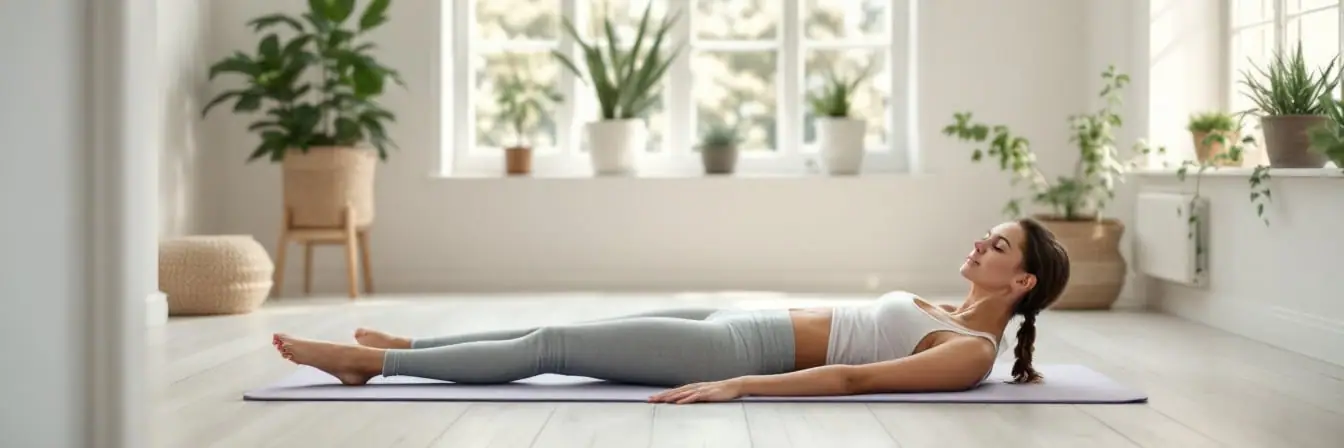
- Side-lying leg lift. Lie on your side with your head on your lower arm, hips stacked and legs angled slightly forward. Lift the top leg to hip height and lower it over three counts, 8 to 10 times, then turn over. Feel the outer hip, with the waist lifted off the mat. It is the side-lying series from 12 mat Pilates exercises for beginners, with more to lift.
- Side-lying front and back. From the same position, swing the top leg slowly forward and then behind the line of the body, 8 times. The trunk stays still. Easier: make the range smaller.
- Prone leg lift. Lie on your front with your forehead on your stacked hands. Lengthen one leg and lift it an inch or two (3 to 5 cm), hold for two counts and lower, 8 times each side. Feel the seat and the back of the thigh, with the lower back long, not pinched.
- Standing side leg lift. Stand tall at a kitchen worktop, fingertips resting on it. Lift one leg a short way out to the side without leaning the other way, and lower with control, 10 times each side. It is exercise 6 in the standing plan in balance after fifty, and the natural place for a light cuff once the plain version feels steady.
- Standing hamstring curl. Holding the worktop, bend one knee to bring the heel towards your seat, knees side by side, and lower slowly, 10 times each side. Feel the back of the thigh, not the lower back.
- Seated knee extension. Sit tall on a firm chair, feet flat. Straighten one knee until the leg is level with the hip, hold for two counts and lower over three, 10 times each side. This works the front of the thigh, which does much of the work when you stand up from a chair.
Care
- Wipe the cuffs with a damp cloth and a little mild soap after sweaty sessions, and let them dry fully before you put them away.
- On adjustable pairs, take the inserts out before washing a cuff, and keep sand-filled inserts out of water altogether. The maker's label has the final word.
- Check the stitching now and then. A split seam on a sand insert empties slowly onto the carpet.
- Store them flat and out of direct sun.
Are ankle weights bad for you?
Not in themselves. Light cuff weights for slow, controlled exercises are a conventional way to add resistance, and physiotherapists often use them in rehabilitation. The trouble comes from using them too heavy, too fast, for too long, or while walking and running.
- Move slowly, especially on the way down. A swinging, weighted leg puts the strain on the hip and knee joints rather than the muscles, and if you cannot control the lowering, the weight is too heavy.
- Keep them off for stairs, running, jumping and dance-style cardio.
- Wearing light weights around the house all day is a fashion, not a training plan. Joints gain nothing from hours of extra load.
- Take them off if the strap leaves deep marks or you feel tingling or numbness in the foot.
- If you have knee, hip or ankle problems, a joint replacement, osteoporosis or a condition that affects your balance, or you are pregnant, ask a physiotherapist before you add weight to your legs.
Questions about ankle weights
What weight should a beginner use?
Half a pound to 1 lb (about 0.2 to 0.5 kg) per leg for mat work, and up to about 2 lb (0.9 kg) for standing exercises. Move up only when 12 slow repetitions look the same as the first.
Can I wear ankle weights in a reformer class?
Only if the teacher asks for them. The springs already provide the resistance, and a cuff can catch on the straps or the frame.
Do ankle weights improve balance?
Not directly. Stronger hip muscles help keep the pelvis level when you stand on one leg, and cuffs are one way to build them, but balance improves mainly by practising balance. Do the strength moves with the cuffs on and the balance holds without them.
Before you buy, lie on your side and do ten slow top-leg lifts, one hand on the floor in front of your chest. If the tenth is as clean as the first, you are ready for half a pound. If the hip starts rolling back by the sixth, the cuffs can wait a few more weeks.