12 mat Pilates exercises for beginners to learn at home
Some links in this story go to Amazon and to other shops, and we may earn a commission from them. As an Amazon Associate I earn from qualifying purchases.
Twelve beginner mat Pilates exercises with set-up, reps, what to feel and easier or harder options, plus how long and how often to practise at home.
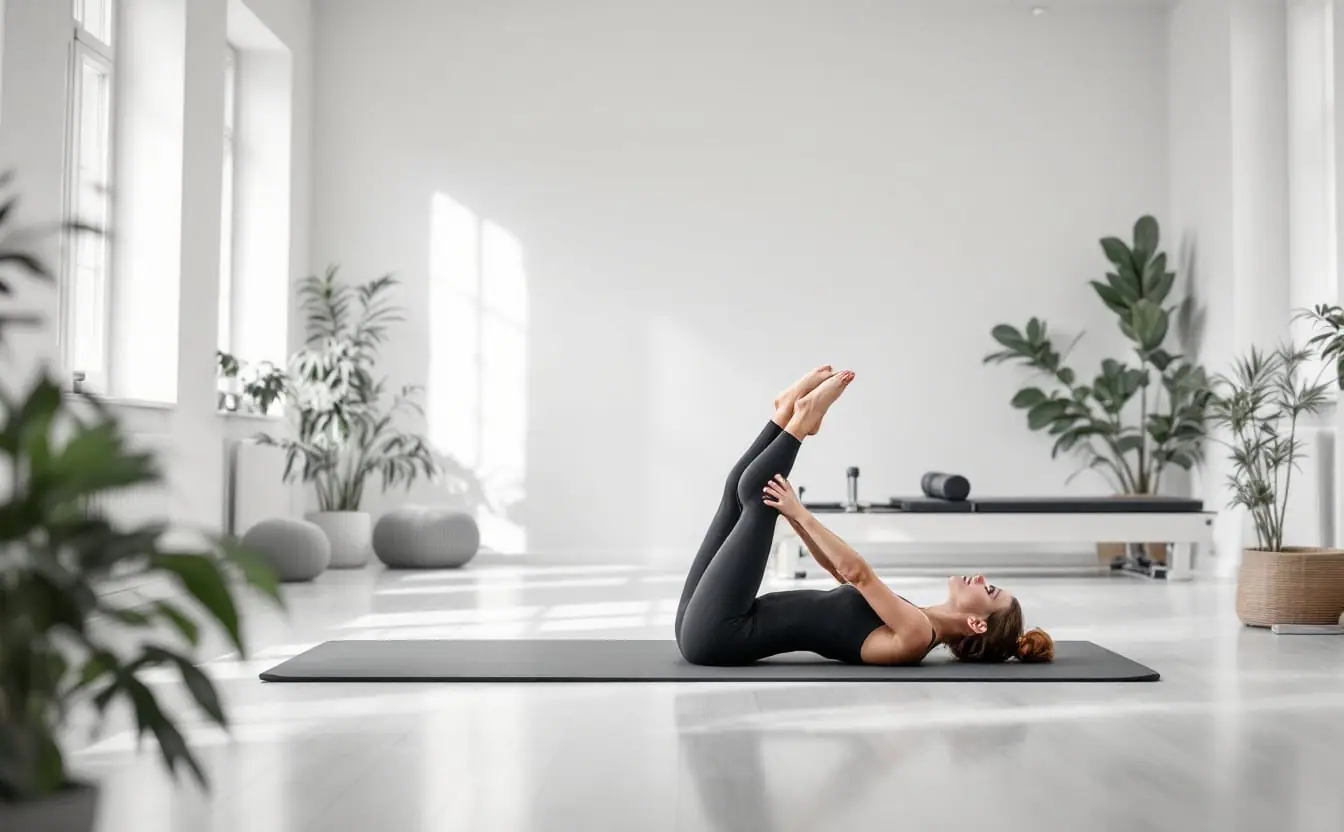
The most useful Pilates exercises for beginners are the preparatory versions of the classical mat work: a pelvic curl, a chest lift, the Hundred with bent knees, gentle leg work on your back and side, and small lifts on your front. Twelve of them, practised two or three times a week for 20 to 30 minutes, will teach you nearly everything the full mat order asks for. You need a mat and a patch of floor.
These are the moves most teachers use in a student's first month, before the Roll Up and the rolling exercises. They are the building blocks of mat Pilates exercises at every level, and they are deliberately small. Once they feel steady, the twenty-minute classical mat sequence is the natural next step, with full versions of several of the same exercises in Joseph Pilates's original order.
Before you start
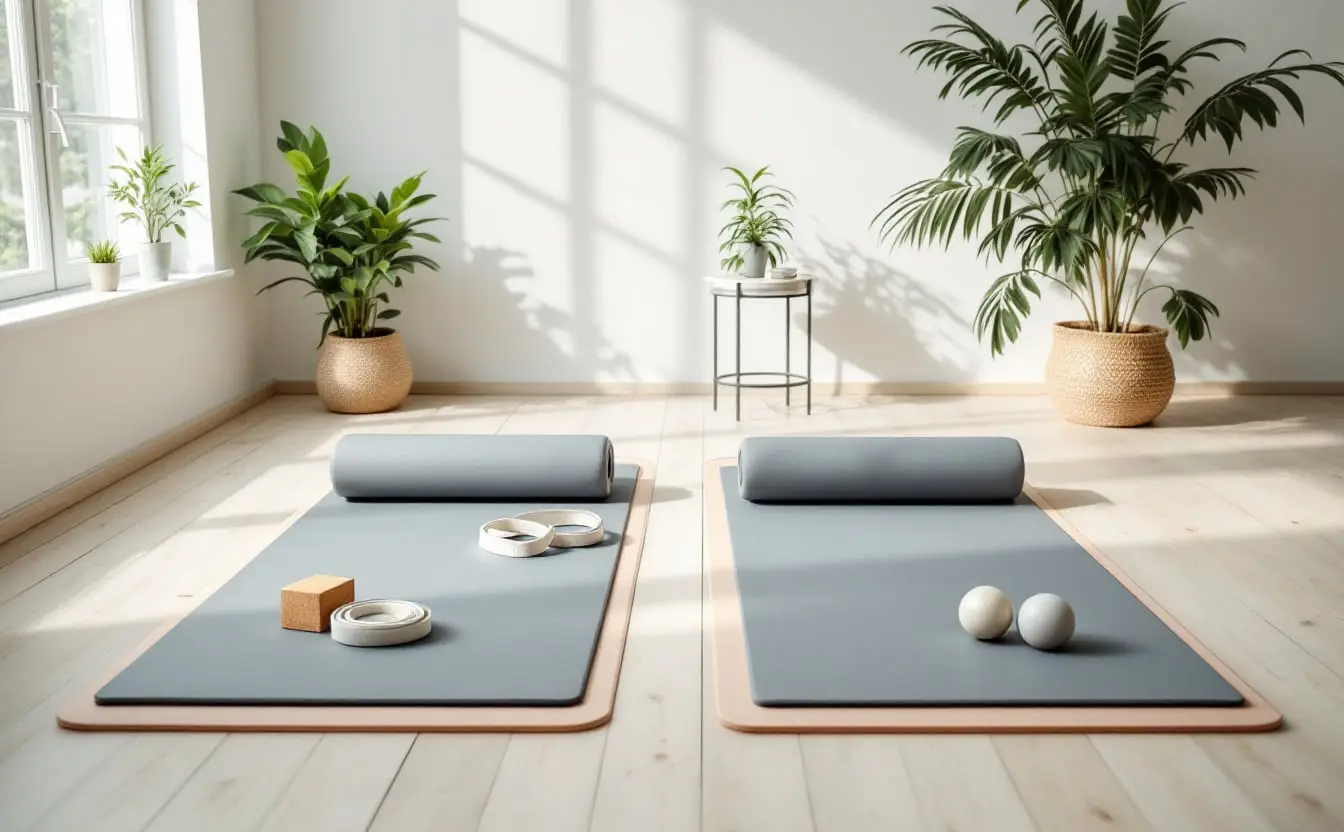
Clear a space a little longer than you are tall and wide enough to lie with your arms out. A hard floor needs cushioning under the spine. A foam mat about 2/5 inch (10 mm) thick is a sensible middle ground: soft enough for rolling, firm enough to kneel on. The one below was chosen from its specification and published reviews; we have not tested it ourselves.
Wear something without a thick waistband, and leave an hour or so after a large meal. If you have osteoporosis, a back or neck problem, a new injury or operation, or you are pregnant or had a baby in the past few months, check with your doctor or a physiotherapist first and learn in person with a qualified teacher. The forward-curling exercises especially are commonly changed or left out in those situations. Stop anything that causes pain rather than effort.
Kit list
 ProBody 14-inch Pilates ringBest for: a first ring$23.95 Amazon price as of 21 Oct 2026, 16:32 UTCSee it on Amazon (ProBody 14-inch Pilates ring)
 Trideer 9-inch soft ballBest for: bridges and curls$7.99 Amazon price as of 21 Oct 2026, 16:32 UTCSee it on Amazon (Trideer 9-inch soft ball)
Product prices and availability are accurate as of the date/time indicated and are subject to change.
We may earn a commission from these links. As an Amazon Associate I earn from qualifying purchases.
Two things to learn first
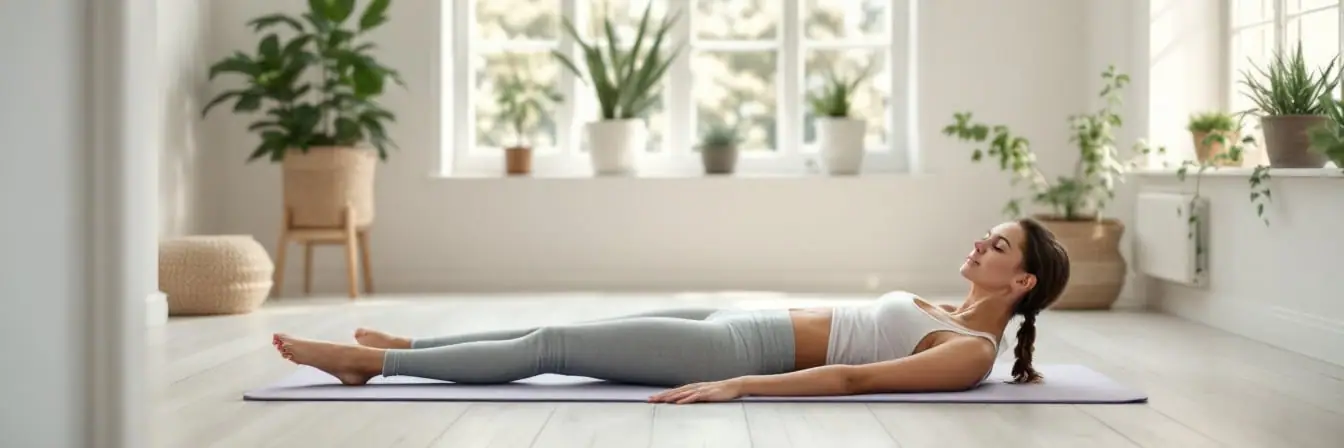
The first is where your pelvis sits. Lie on your back with knees bent and feet flat, hip-width apart. Rock the pelvis gently towards your face and then away, and settle in the middle, with a small natural curve under your lower back. That is neutral, and most of the exercises below start there.
The second is breath. Breathe in through the nose and let the ribs widen to the sides and back, then breathe out through the mouth as the lower belly draws gently in. Our guide to lateral breathing explains why teachers cue it. If a breath pattern makes you lose track of the movement, drop it for now. On day one, the only rule is not to hold your breath.
The 12 basic Pilates exercises
Do them in this order. It warms the spine, then works on your back, your side and your front, and finishes sitting up.
1. Cat-cow spinal warm-up
Come onto hands and knees, hands under shoulders and knees under hips. Breathe out and round your spine from the tailbone up, letting the head drop last. Breathe in and reverse it, sending the breastbone forward into a gentle arch without sagging in the lower back. Do 5 or 6 slow rounds. You should feel each part of the spine move a little, rather than one spot doing all the bending. Easier: sit on a firm chair with your hands on your thighs and make the same shapes. Harder: pause at each end, then add a side bend, looking back towards one hip and then the other.
2. Pelvic curl
Lie on your back in neutral, arms long by your sides. Breathe out, tilt the pelvis so the lower back presses lightly into the mat, and keep peeling the spine up one bone at a time until you rest on your shoulder blades. Breathe in at the top. Breathe out and roll down from the upper back to the tailbone. Do 6 to 8. Feel the backs of the thighs and the seat working. Easier: tilt and lower the pelvis only, without lifting the spine. Harder: at the top, lift one heel an inch (2 to 3 cm) and put it down, alternating, without the hips dropping.
3. Chest lift
Lie in neutral with your hands behind your head, elbows wide. Breathe out, nod the chin slightly and curl your head and shoulders up until the tips of the shoulder blades just leave the mat. Breathe in and hold; breathe out and lower. Do 8 to 10. The abdominals do the lifting while the head rests heavy in the hands. Easier: lift less, with one hand on your lower belly to check it draws in rather than bulging. Harder: hold the top for three breaths, or lift your feet into tabletop (knees over hips, shins parallel to the floor).
4. Hundred preparation
From the chest lift, slide your arms long by your sides a few inches off the mat. Pump them in small, firm beats, breathing in for five pumps and out for five. Start with 20 to 50 counts and build towards 100 over several weeks. Feel the abdominals working steadily and the arms reaching long. Easier: keep your head down and your feet on the floor. Harder: bring the legs into tabletop, and later straighten them on a high diagonal. In the classical order the full Hundred comes first of all; here it follows the chest lift, which teaches the curl it depends on.
5. Single leg circles
Lie with one knee bent and that foot flat, the other leg reaching to the ceiling with the knee soft. Circle the raised leg across your body, down, round and back up, about the size of a dinner plate. Do 5 each way, then change legs. The leg moves in the hip socket while the pelvis stays still. Easier: bend the raised knee more and shrink the circle. Harder: lengthen the bottom leg along the mat and make the circle bigger, but only as big as you can keep the pelvis quiet.
6. Single leg stretch
Start on your back with your head down and both knees in tabletop. Breathe out and stretch one leg away on a high diagonal while the other knee draws towards your chest, hands resting on that shin. Switch legs, slowly. Do 6 to 8 each side. The lower back stays settled and the trunk stays quiet while the legs change. Easier: reach the legs towards the ceiling instead. Harder: curl the head and shoulders up as in the chest lift, and lower the straight leg a little.
7. Roll-up preparation
Sit with your knees bent and feet flat, holding the backs of your thighs. Breathe out, tuck the tailbone under and roll back halfway, until your arms are nearly straight. Breathe in and pause. Breathe out and curl forward, then stack back up to sitting tall. Do 5 or 6. You should feel the abdominals scoop in and the lower back lengthen. Easier: roll back only a few inches. Harder: let go of your legs and reach your arms forward at shoulder height. The full Roll Up, from lying flat, comes later.
8. Side-lying leg series
Lie on your side with your head on your outstretched lower arm, hips stacked and legs angled slightly forward. Lift the top leg to hip height and lower it with control 8 times. Then hold it at hip height and swing it forward and back in a small range 8 times. Turn over and repeat. The waist stays lifted off the mat and the top hip does not roll back. Easier: bend the bottom knee for a wider base. Harder: prop your head on your hand, or rest the top hand behind your head.
9. Swan preparation
Turn onto your front, forehead down, hands flat beside your shoulders. Lengthen through the top of the head, then press gently into the hands to lift the head and chest a few inches, lower ribs close to the mat and hips heavy. Lower with control. Do 5. You should feel the muscles between the shoulder blades and along the upper back. Easier: rest on your forearms and lift only the head. Harder: lift a little higher and hover the hands just off the floor for one breath at the top.
10. Swimming preparation
Stay on your front with your arms reaching overhead and your legs long. Breathe out and lift one arm and the opposite leg an inch or two (3 to 5 cm), thinking long rather than high. Lower and switch. Do 6 to 8 each side. Feel the whole back of the body working, shoulders to heels. Easier: do it on hands and knees, reaching one arm forward and the opposite leg back. Harder: lift both arms and both legs and paddle them in small, quick beats for 10 to 20 counts, breathing steadily.
11. Spine stretch forward
Sit tall with legs straight and a little wider than your hips, feet flexed, arms reaching forward at shoulder height. Breathe out and round forward from the top of the head as if curling over a beach ball. Breathe in and stack the spine back up. Do 4 or 5. Feel a stretch along the back and hamstrings, and the abdominals lifting away from the thighs. Easier: sit on a folded towel with the knees bent. Harder: stay at the bottom for an extra breath and reach further, sit bones heavy.
12. Saw
Sit tall with legs wide and arms out to the sides at shoulder height. Breathe in and turn towards one leg. Breathe out, round forward and reach the opposite hand towards the outside of that foot, the back arm reaching behind you. Breathe in to sit up and turn back to the front. Do 3 or 4 each side. You should feel a twist through the waist and a stretch in the back of the leg. Easier: sit on a cushion with bent knees and turn without the forward reach. Harder: add three small pulses at the bottom, as the classical version does.
How long should a beginner do Pilates?
For most beginners, 20 to 30 minutes two or three times a week is a good start. That is enough time to work through all twelve exercises with care, and short enough that you finish wanting to come back. In the first couple of months, regular practice counts for more than long practice.
A gradual plan for Pilates for beginners at home might look like this:
| Weeks | What to do | Session length | Sessions a week |
|---|---|---|---|
| 1 to 2 | Exercises 1 to 6, easier options | 15 to 20 minutes | 2 to 3 |
| 3 to 4 | All 12, easier options where needed | 20 to 25 minutes | 3 |
| 5 to 8 | All 12, harder options in two or three exercises at a time | 25 to 30 minutes | 3 |
| After 8 | Swap one session a week for the classical sequence | 20 to 30 minutes | 3 |
To fit these sessions around walking, strength work or studio classes, the weekly plan calculator will lay out a week for you.
Common beginner mistakes
Most problems come down to three habits. Rushing is the first: five careful pelvic curls teach more than fifteen quick ones. Gripping the neck is the second. If it aches during the chest lift or the Hundred, rest the head and come back to it; neck strength builds with time. The third is chasing range, lifting the leg higher or rolling further before you can hold the shape. Small and steady first. Bigger later.
Quick questions
Are mat Pilates exercises enough on their own?
For strength, posture and control, a regular mat practice covers a lot of ground. It is not much of a cardio workout, so pair it with walking, cycling or anything else that raises your heart rate.
Can complete beginners do these?
Yes, with the easier options; that is what they are for. If getting down to the floor and back up is difficult, start with the cat-cow on a chair and ask a local studio about chair-based or reformer classes, where the apparatus takes some of the load.
Write the twelve names on a card and lay it at the top of the mat. By the third session you will not need it, and by the sixth you will know which side of the side-lying series is the weaker one.