Wall Pilates exercises: 11 moves for beginners at home
Some links in this story go to Amazon. As an Amazon Associate I earn from qualifying purchases.
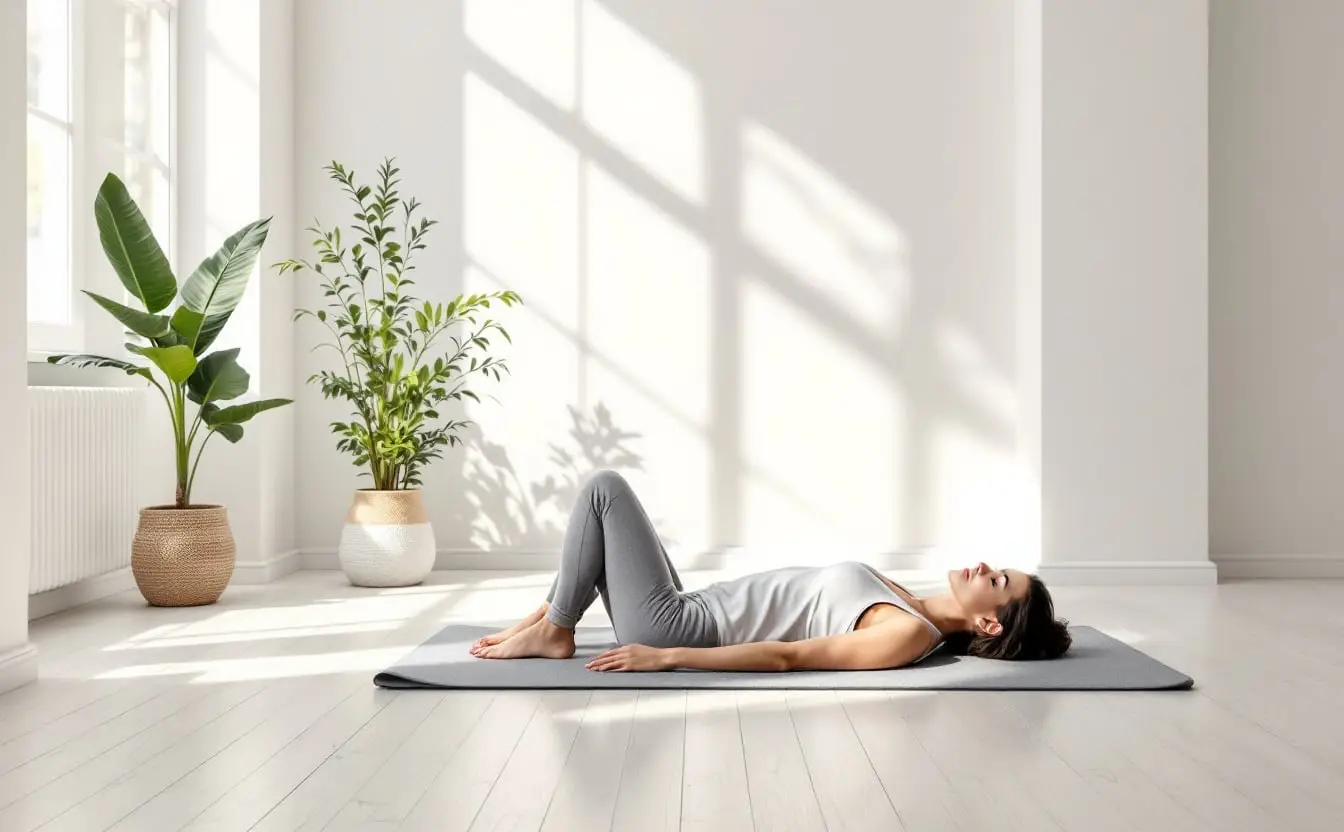
Wall Pilates exercises are ordinary Pilates and strength moves done with a wall as your prop. You lie with your feet on it, lean into it, or stand with your back flat against it. The wall tells you when your pelvis tips or your shoulders creep, steadies you in standing work and gives your hands and feet something solid to press into, which is why wall Pilates suits beginners so well.
Below are 11 moves, each with the set-up, how to do it, a dose, what you should feel, and an easier and a harder option. If you would rather have them laid out as a plan, the free wall Pilates chart builder turns the same kind of moves into a printable day-by-day schedule for 7 to 28 days, set by your level and focus.
Does wall Pilates work?
It depends what you want it to do. Wall Pilates spread through short videos and app adverts, usually packaged as a 28-day challenge with before and after photos attached. Ignore the photos. Nobody can promise you a body from a month of 20-minute sessions, and the lighting, the angle and the posing do a lot of work in those pictures.
What it can do is quieter and still worth having. Two or three sessions a week load your legs, hips, trunk and shoulders, and that counts as the muscle-strengthening activity the US and UK guidelines ask for on at least two days a week. You learn where your spine and pelvis are without a teacher watching. The moves get steadier with practice, because control is a skill. What wall Pilates will not do is burn a great many calories: like most mat work it is light on energy and better judged as a strength and control habit.
Wall Pilates for beginners: setting up
Find a stretch of clear wall at least as long as you are tall, with no radiator, shelf or picture frame in reach of your feet. Lay the mat with its short end against the wall. Bare feet or socks with grip work best; ordinary socks slide in a wall sit, and trainers leave black marks on paint.
For the moves lying on your back, distance matters more than you would think. Start with your hips about 12 to 18 inches (30 to 45 cm) from the wall, so that with your feet flat on it your knees bend to roughly a right angle. If your hamstrings cramp, shuffle a little further away. For standing moves, step your heels a few inches forward so your back meets flat wall above the skirting board (baseboard), not the ledge.
What you need
A mat and a wall cover everything here. Grip socks are the only extra I would bother with, and only if you dislike bare feet on a cold floor. The two below were picked from makers' specifications and published reviews, not tested by us: a mat thick enough for rolling and a plain pair of socks.
The 11 exercises
Work slowly. Breathe out on the effort, and stop any move that pinches rather than works.
1. Wall roll down
Stand with your back against the wall, feet hip-width apart and about 6 to 10 inches (15 to 25 cm) in front of it, knees soft. Breathe in. Breathe out, nod your chin and peel your spine away from the wall one section at a time, arms hanging, until only your pelvis touches. Breathe in at the bottom, then breathe out and roll back up, restacking the low back, the ribs, the shoulders and the head last.
Do 5 slow reps. You should feel a long stretch through the back and hamstrings, and your abdominals drawing in as you return. Easier: bend your knees more and stop halfway down. Harder: pause at the bottom for three full breaths before rolling up.
2. Wall angels
Stand as for the roll down. Raise your arms into a goalpost shape, elbows at shoulder height and bent to a right angle, the backs of the arms towards the wall. Slide the arms up as far as you can without your ribs flaring or your low back arching away, then draw the elbows down towards your waist.
Do 8 to 10 slow reps. You should feel work between the shoulder blades and a stretch across the front of the chest. Easier: let the forearms hover off the wall and move in the same path. Harder: hold the top position for a full breath each time.
3. Wall sit with breathing
With your back on the wall, walk your feet out about 18 to 24 inches (45 to 60 cm) and slide down until your knees bend to about 45 degrees. Knees stay over ankles, weight through the heels and the middle of the feet. Breathe wide into the sides of your ribs.
Hold 20 to 45 seconds, 2 or 3 times. You should feel the fronts of the thighs and the buttocks, never sharp pain in the knees. Easier: a shallower bend and shorter holds. Harder: sit lower, towards a right angle, or lift both heels and lower them 8 times during the hold.
4. Wall push-up
Face the wall and place your hands on it at chest height, a little wider than your shoulders. Walk your feet back until your body makes one long diagonal line. Breathe in as you bend your elbows (angled back at about 45 degrees, not flared) and bring your chest towards the wall; breathe out to push away.
Do 2 sets of 8 to 12. You should feel the chest, the backs of the arms and the trunk holding the line. Easier: stand closer. Harder: step further back, lower over a slow count of three, or move your hands to a sturdy kitchen worktop for a steeper angle.
5. Incline plank on the wall
Place your forearms on the wall at shoulder height, elbows under shoulders, and walk your feet back into a long line from head to heels. Press the forearms into the wall as if pushing it away and breathe steadily.
Hold 20 to 30 seconds, 2 or 3 times. You should feel the abdominals and the muscles around the shoulder blades. Easier: feet closer to the wall. Harder: slowly lift one heel and then the other, keeping the hips perfectly still.
6. Calf raises
Face the wall with your fingertips resting on it, feet hip-width apart. Rise onto the balls of your feet, pause, then lower over three counts.
Do 2 sets of 12 to 15. You should feel the calves, and your ankles steadying you. Easier: both hands on the wall and a smaller lift. Harder: one leg at a time, with a single finger on the wall. Calf strength matters more as we age, and balance after fifty explains why.
7. Bridge with feet on the wall
Lie on your back with your feet flat on the wall, hip-width apart, knees at about a right angle. Breathe out, press your feet into the wall, curl your tailbone and lift your hips one section of spine at a time until you make a line from shoulders to knees. Breathe in at the top. Breathe out and roll down.
Do 8 to 10 reps. You should feel the hamstrings and buttocks, more than in a floor bridge because your feet sit higher. Easier: lift only halfway. Harder: a single-leg bridge, with one leg reaching straight up towards the ceiling.
8. Toe taps from the wall
Lie with your hips at a distance where, with your feet on the wall, your hips and knees are both at right angles and your shins are parallel to the floor. Keep the pelvis heavy. Lift your right foot off the wall and draw the knee in until it is over the hip, then return the foot to the wall. Alternate.
Do 8 each side. You should feel the low abdominals working to keep the pelvis still. Easier: lift the foot only an inch or two. Harder: lift both feet off together and return them together.
9. Chest lift with feet on the wall
From the bridge position, lace your hands behind your head. Breathe in. Breathe out, nod the chin and curl the head and shoulders up until the bottoms of your shoulder blades brush the mat. Breathe in to hold, breathe out to lower.
Do 8 reps. You should feel the abdominals, with your head heavy in your hands and no strain in the neck. Easier: keep the head down and simply breathe out as you draw the abdominals in. Harder: hold the curl, reach the arms by your sides and pump them for 50 counts, a short version of the Hundred.
10. Side-lying leg series, back to the wall
Lie on your right side with your back and buttocks lightly touching the wall, head resting on your lower arm, hips stacked. Lift the top leg to hip height and lower it, letting the heel brush the wall, 10 times. Then make 5 small circles each way. Then bend both knees, keep your feet together and open the top knee like a clam, 10 times. Swap sides.
You should feel the side of the hip working. The wall stops you rolling back to cheat. Easier: bend the lower knee for a wider base and keep lifts small. Harder: hold each lift for three counts.
11. Legs up the wall rest
Sit sideways with one hip against the wall, then swing your legs up as you lie back. Shuffle your buttocks a few inches away so the backs of the legs rest easily, knees soft, arms by your sides.
Stay 2 to 5 minutes, breathing slowly. You should feel a gentle lengthening behind the legs and not much else. Easier: move further from the wall and rest your feet on it with knees bent. There is no harder version, which is rather the point. To come out, bend your knees, roll onto your side and pause before sitting up.
A free wall Pilates workout
This session takes about 20 minutes and works the whole body. Do it two or three times a week with a day between.
| Order | Exercise | Dose |
|---|---|---|
| 1 | Wall roll down | 5 slow reps |
| 2 | Wall angels | 8 reps |
| 3 | Bridge with feet on the wall | 8 reps |
| 4 | Chest lift with feet on the wall | 8 reps |
| 5 | Side-lying leg series | Full series, each side |
| 6 | Wall push-up | 2 × 10 |
| 7 | Calf raises | 2 × 12 |
| 8 | Legs up the wall rest | 3 minutes |
Keep the same session for two weeks, then add a couple of reps or swap in a harder option for one move at a time. For a different session on each day and a plan that steps up over several weeks, build one with the wall Pilates chart and pin the printout beside your wall. When the wall work starts to feel easy, the 20-minute classical mat sequence is a good next step away from it.
When to check with a professional first
If you are pregnant, have osteoporosis, have had recent surgery or an injury, or have pain that gets worse as you move, ask a doctor or physiotherapist before you start. The roll down and the chest lift both bend the spine forward, which is not advised for everyone, and several moves keep you on your back for minutes at a time.
Keep a damp cloth near the wall. Socks leave faint grey prints on pale paint, and you will soon find a neat row of them at bridge height.