Pilates equipment for home: the small kit worth buying first
Some links in this story go to Amazon and to other shops, and we may earn a commission from them. As an Amazon Associate I earn from qualifying purchases.
What you need for Pilates at home: start with a thick mat, then add a ring, a small ball, loop bands and grip socks, in that order, and skip the gimmicks.
The edit
| Pick | Best for | One fact | Where to buy |
|---|---|---|---|
| Gaiam 10 mm thick mat$22.46 Amazon price as of 19 Oct 2026, 16:33 UTC | Rolling on hard floors | 10 mm (about 2/5 inch) foam | See it on Amazon (Gaiam 10 mm thick mat) |
| ProBody 14-inch Pilates ring$23.95 Amazon price as of 19 Oct 2026, 16:33 UTC | A first ring | 14-inch diameter | See it on Amazon (ProBody 14-inch Pilates ring) |
| Trideer 9-inch soft ball$7.99 Amazon price as of 19 Oct 2026, 16:33 UTC | Bridges and curls | About 9 inches | See it on Amazon (Trideer 9-inch soft ball) |
Product prices and availability are accurate as of the date/time indicated and are subject to change.
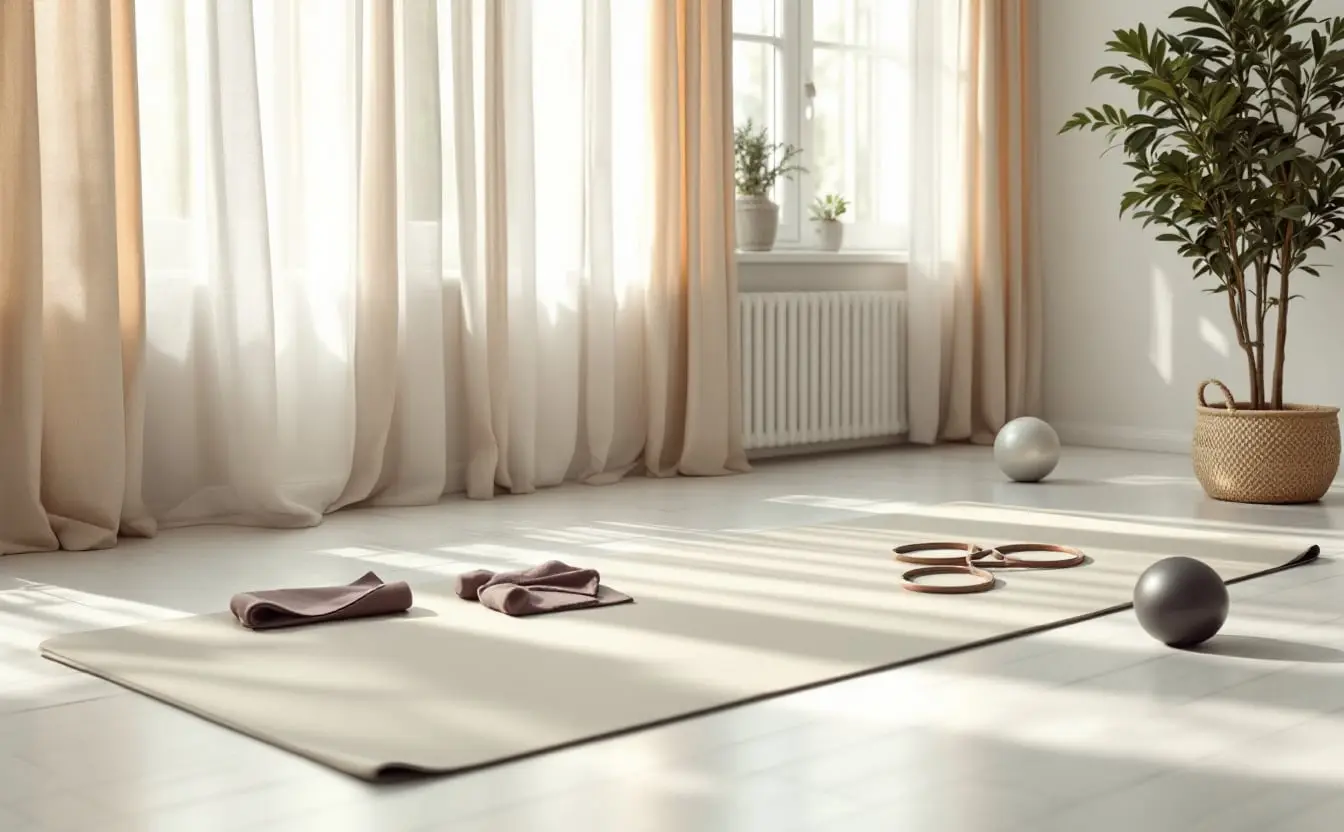
The only Pilates equipment for home that you truly need is a mat thick enough to roll on, about 2/5 inch (10 mm). Everything else is optional. Once a mat routine has become a habit, a Pilates ring, a small soft ball, a set of mini loop bands and a pair of grip socks cover most of the small kit you will meet in a mat class, and the whole home Pilates kit fits in a single drawer.
That order matters. It is easy to buy a box of accessories in a burst of January optimism and end up with a ring under the bed and a ball that never got inflated. A Pilates kit earns its space when each piece arrives because the work asked for it: the ring when you want something to press against, the ball when an exercise needs support, the bands when the side-lying work gets easy. This guide sets out what each piece does, which to buy first, and the things that are not worth the shelf space.
A home Pilates kit in five pieces
The table runs in the order I would buy, from the mat to the socks. Each row is one item, not a bundle.
| Pick | Best for | Key facts |
|---|---|---|
| Gaiam 10 mm thick mat | The base of every home session | About 2/5 inch (10 mm) foam; textured surface; cinch carry strap; firm enough for roll-ups |
| ProBody 14-inch Pilates ring | Adding resistance for the thighs, arms and chest | 14 inches (36 cm) across; fibreglass core; padded handles inside and out; medium resistance |
| Trideer 9-inch soft ball | Support and a gentle squeeze in bridges and curls | About 9 inches (23 cm); soft PVC; inflation straw included |
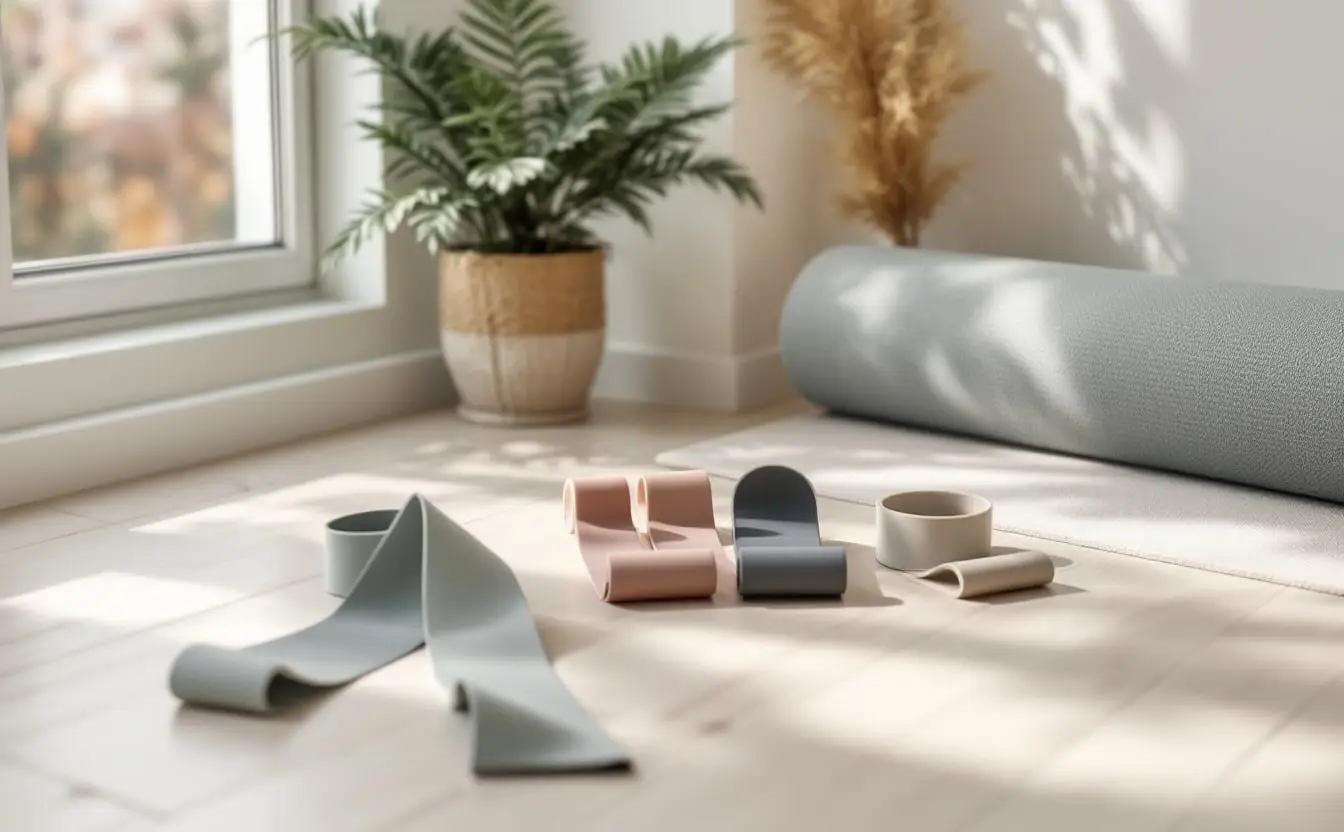
| Fit Simplify mini loop bands, set of five | Side-lying leg work, clams and bridges | Five latex loops in graded strengths; about 12 by 2 inches (30 by 5 cm); carry bag and guide |
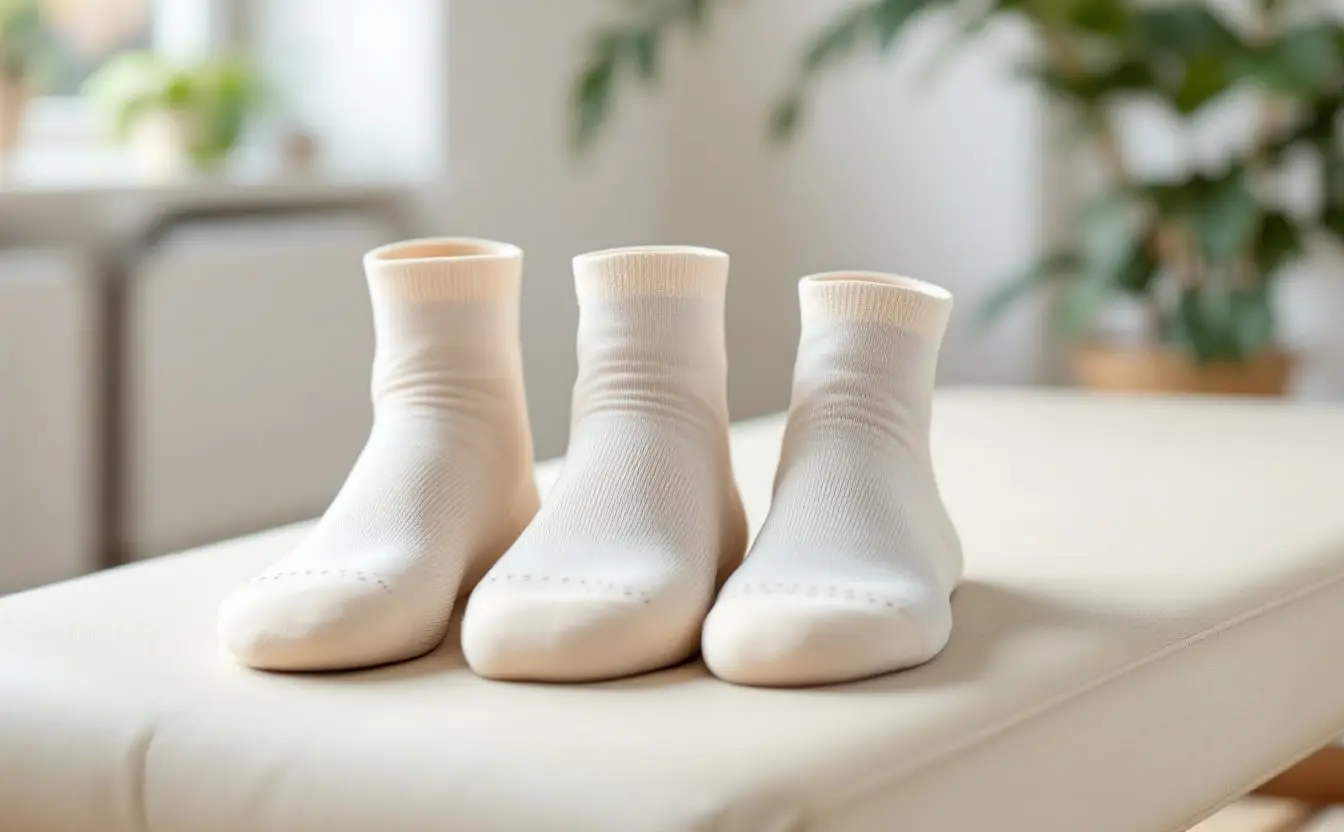
| unenow unisex grip socks | Hard floors and standing work | Cotton, nylon and spandex mix; grip dots on the sole; unisex sizing |
We chose these from the makers' specifications, published reviews and how well each suits mat Pilates at home. We have not tested them ourselves, so take the list as a sensible shortlist rather than a verdict.
Kit list
 WHATAFIT tube bands with handlesBest for: standing strength days$22.99 Amazon price as of 19 Oct 2026, 16:33 UTCSee it on Amazon (WHATAFIT tube bands with handles)
 Fabric hip bands, set of threeBest for: glute work on bare legs$9.99 Amazon price as of 19 Oct 2026, 16:33 UTCSee it on Amazon (Fabric hip bands, set of three)
Product prices and availability are accurate as of the date/time indicated and are subject to change.
We may earn a commission from these links. As an Amazon Associate I earn from qualifying purchases.
What do I need for Pilates at home?
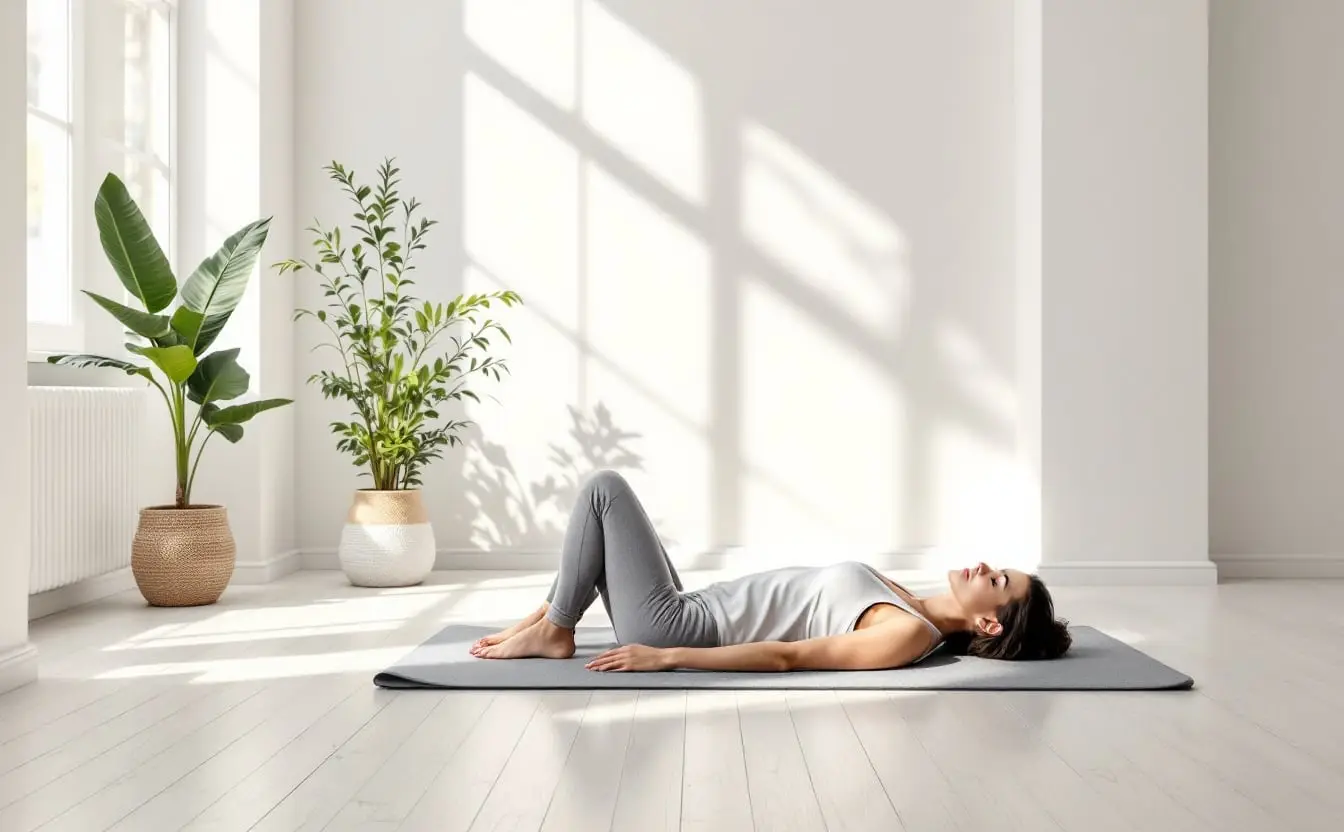
A mat, some floor space and a short routine you know well enough to do without a screen. That is genuinely it for the first month or two. The mat work Joseph Pilates published was written for people to do at home without apparatus, and every exercise in a beginner's mat class can be done with your body and the floor.
Start with the mat
A yoga mat is usually about 1/6 to 1/4 inch (4 to 6 mm) thick, which is fine for standing poses and hard on the spine in Pilates. Rolling Like a Ball, the Roll Up and the Seal all put the bones of your back on the floor one after another, and on a thin mat over floorboards you feel every one. A mat around 2/5 inch (10 mm) thick cushions those without being so soft that you sink. A 10 mm mat with a textured surface is a sound place to start. Very thick, squashy mats feel kind on the knees but wobble under you in kneeling and standing balance work, so firmness matters as much as thickness.
Until it arrives, a thin mat with a folded blanket under the spine will do. Then learn a short order of exercises well. The twenty-minute classical mat sequence is built for exactly this: a living room floor, a mat and nothing else.
Space
You need a clear strip a little longer than you are tall with your arms overhead, and wide enough to lie on your side with your legs angled forward. Something like 7 feet by 4 feet (about 2.1 by 1.2 m) suits most people. Check above you as well, since standing arm work sends your hands overhead, and a low pendant light is easy to forget until your knuckles find it.
Pilates accessories, in the order to buy them
1. A Pilates ring
The ring, often called the magic circle, is a flexible hoop with pads on the inside and outside. Pressing it in or pulling it apart gives your muscles something to work against without any weights. Held between the inner thighs in a bridge, it keeps the legs working together; pressed between the palms at chest height, it turns a simple squeeze into arm and chest work; with both ankles inside it in side-lying work, pressing out against the pads adds load to the outer hip.
Size and resistance are the two choices. Around 14 inches (36 cm) across is a common size and suits most people. Resistance varies, and medium is the sensible first ring: light enough to press slowly and smoothly, firm enough to notice. A 14-inch ring with padded handles inside and out lets you both squeeze and pull, which doubles what it can do.
2. A small soft ball
A 9-inch (23 cm) soft ball does two jobs. Squeezed gently between the knees in a bridge or a chest lift, it reminds the inner thighs to work and keeps the knees in line. Tucked behind the lower back as you curl back from sitting, it supports you through a range you cannot yet control on your own, which makes it one of the most useful things a beginner can own. Inflate it only partly. A soft ball that gives when you squeeze is easier to control than one pumped hard, and you can let air out or add more as the exercise needs. Studios often use an 8-inch version made for holding positions rather than throwing, such as the Poz-A-Ball from Power Systems.
3. Mini loop bands
A set of mini loops adds load to the side-lying leg series, clams and bridges once your own leg starts to feel light. Five graded strengths mean you can progress without changing the exercise. Loops are only one kind of band, though. If you want a long flat band for Footwork and rowing as well, the guide to choosing a resistance band set sets out the types and which strengths to start with.
4. Grip socks
Grip socks are for floors, not for the mat. If you do standing work on polished wood or tiles, or your feet slide on the mat in winter, a pair with dots on the sole makes balance work steadier. On a good mat with dry feet you can stay barefoot. The guide to Pilates grip socks covers styles, sizing and how to wash them so the grip lasts.
What to skip, at least for now
Home fitness is full of kit that looks Pilates-shaped and does very little. A few things to leave alone until you have a real reason to want them:
- Large accessory bundles. A box with a mat, ring, ball, bands, sliders, gloves and a poster sounds efficient, but you will use three of those things, and the rest tend to be the weakest versions of each.
- Anything that promises to target one body part. No ring, band or gadget reduces fat in a particular place, however it is marketed.
- Pilates bar kits, a short stick with bands attached. They are fine for standing arm work, but a long flat band does most of the same jobs and folds into a pocket.
- Folding sliding boards sold as home reformers. They are not spring reformers, and they make more sense once you have taken reformer classes and know what you are trying to recreate.
- Very soft or very thick foam mats for everything. Lovely for sore knees, unsteady for standing and kneeling work.
- A large stability ball. Useful in some programmes, but it is the bulkiest thing on any list and plays little part in classical mat work.
Gliding discs and a long foam roller are reasonable later additions. Neither is a first purchase.
Care, storage and safety
Small kit lasts a long time if it lives somewhere sensible. A basket by the sofa or a hook on the back of a door keeps it visible, and visible kit gets used.
- Wipe the mat with a damp cloth and a little mild soap after sweaty sessions and let it dry flat or hanging, out of direct sun. Roll it with the top surface outwards so the edges lie flat next time.
- Check the ring's padding and frame now and then. Replace it if the core cracks or a handle comes loose.
- Keep the soft ball away from radiators, pets and sharp corners, and never inflate it beyond the size the maker gives.
- Store latex loops loosely in their bag, away from sunlight, and retire any loop with a nick or a tear.
- Air-dry grip socks; tumble-drying wears the dots faster.
Props make some exercises easier and others harder. If you have a back problem, osteoporosis, a recent injury or a pregnancy, learn with a qualified teacher in person first and ask which props and exercises suit you.
Questions readers ask
What is the minimum Pilates equipment for home?
A mat about 2/5 inch (10 mm) thick and a clear piece of floor. Everything else adds variety, not access. Plenty of people practise for months with nothing more.
Do I need a reformer at home?
No. Mat work was designed to be done at home, and a reformer is a large purchase that takes up a room. Take reformer classes first if you are curious, and decide later whether you miss the springs enough to want one.
Should I buy a Pilates ring or a small ball first?
The ring if you want resistance to work against; the ball if you want support and a gentle squeeze. For most beginners the ball is more useful in the first weeks, because it makes curling and rolling exercises easier to control, and the ring follows once those feel steady.
Can I use a yoga mat for Pilates?
You can, but a thin yoga mat is hard on the spine in rolling exercises. Fold a blanket under it, or move to a thicker mat once you know you will keep practising.
How often should I use a home Pilates kit?
Two or three sessions a week is a realistic rhythm for most people, with other activity on the days between. The weekly Pilates plan asks five quick questions and lays out a suggested week, day by day. Leave the mat unrolled where you will walk past it, with the ring and ball sitting on one end, and the first step of the next session is already done.