Who invented Pilates? The man, the method and its original name
Some links in this story go to Amazon and to other shops, and we may earn a commission from them. As an Amazon Associate I earn from qualifying purchases.
Joseph Pilates invented the method and called it Contrology. Who he was, when it took shape, what he built, and where the legend runs ahead of the record.
Pilates was invented by Joseph Pilates, a German-born gymnast and physical trainer who lived from 1883 to 1967. He worked the method out in the years around the First World War and taught it in New York from the mid 1920s, with Clara Pilates teaching beside him, under a name of his own: Contrology. The exercises, the order they are done in and most of the machines studios still use all come from him.
That is the short answer, and it is solid. The longer one is more interesting, because Joseph Pilates was a fine teacher and an even better storyteller, and a good deal of what gets repeated about him comes from his own telling. This piece sets out what can be said with confidence, flags the parts that are legend, and points to the longer reads on this site where each thread is followed properly.
Who was Joseph Pilates?
Joseph Hubertus Pilates was born on 9 December 1883 in Mönchengladbach, an industrial town in the Rhineland that was then part of Prussia. His father was a metalworker and an active member of the local gymnastics club, and the boy trained in gymnastics from an early age, later adding boxing and weight training. Gymnastics clubs, nature cures and home exercise systems were everywhere in the Germany he grew up in. That culture shaped him more than any single teacher did.
In 1912, aged 28, he moved to England. By his own later account he earned his living there as a boxer and a self-defence instructor, and some versions of his biography add a circus act and lessons for police officers. Those English years are thinly documented. So is the famous claim that he had been a sickly, asthmatic child who exercised his way to health, a story I traced back to interviews given decades later in our piece on the asthma question.
Kit list
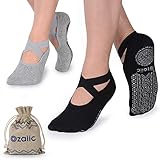 Ozaiic grip socks with ballet-style strapsBest for: strappy reformer socksSee it on Amazon (Ozaiic grip socks with ballet-style straps)
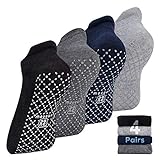 unenow unisex grip socksBest for: plain unisex gripSee it on Amazon (unenow unisex grip socks)
We may earn a commission from these links. As an Amazon Associate I earn from qualifying purchases.
When was Pilates invented?
There is no single date. The method took shape between about 1914 and the late 1920s.
When war broke out in 1914, Pilates was a German national living in Britain, and he was interned. From 1915 he was held at Knockaloe, a large camp for civilian internees on the Isle of Man. The story told in nearly every history is that he led his fellow internees in daily exercise and began fixing springs to bed frames so that men who were weak or confined to bed could work against resistance. The detail is hard to prove. The idea it describes, springs that support a movement as well as resist it, became the basis of his apparatus.
After the war he went back to Germany, and in the mid 1920s he emigrated to the United States (1926 is the year usually given). He and Clara opened a studio at 939 Eighth Avenue in Manhattan, in a building shared with dance studios, and in 1927 he was granted a US patent for a reformer-type exercise machine. By the end of that decade the method existed in recognisable form: a mat repertoire, a set of machines, and a teacher in New York who would keep refining both for another forty years. If you want a round figure, Pilates is about a hundred years old.
What was Pilates originally called?
He called it Contrology. The word puts control at the centre: the mind directing each movement, slowly and precisely, instead of the body grinding through repetitions on autopilot. His 1945 book, Return to Life Through Contrology, carries the word in its title and describes the method as the complete coordination of body, mind and spirit.
There was an earlier and shorter book, Your Health, in 1934. Return to Life, written with William John Miller, is the one teachers still study, because it sets out 34 mat exercises in order, from the Hundred to the Push Up, with photographs of Pilates himself demonstrating them.
The name Pilates took over gradually. Students naturally referred to the work by the name of the man who taught it, and after his death that usage won. By the time the method went mainstream in the 1990s almost nobody said Contrology, though some classical teachers still use the word, usually to mean the original work as he taught it.
What exactly did he invent?
Three things, and the third is the one most easily forgotten.
The first is the exercises. The mat order in the 1945 book is only the start; the apparatus repertoire adds hundreds more, many of them variations he devised for particular clients.
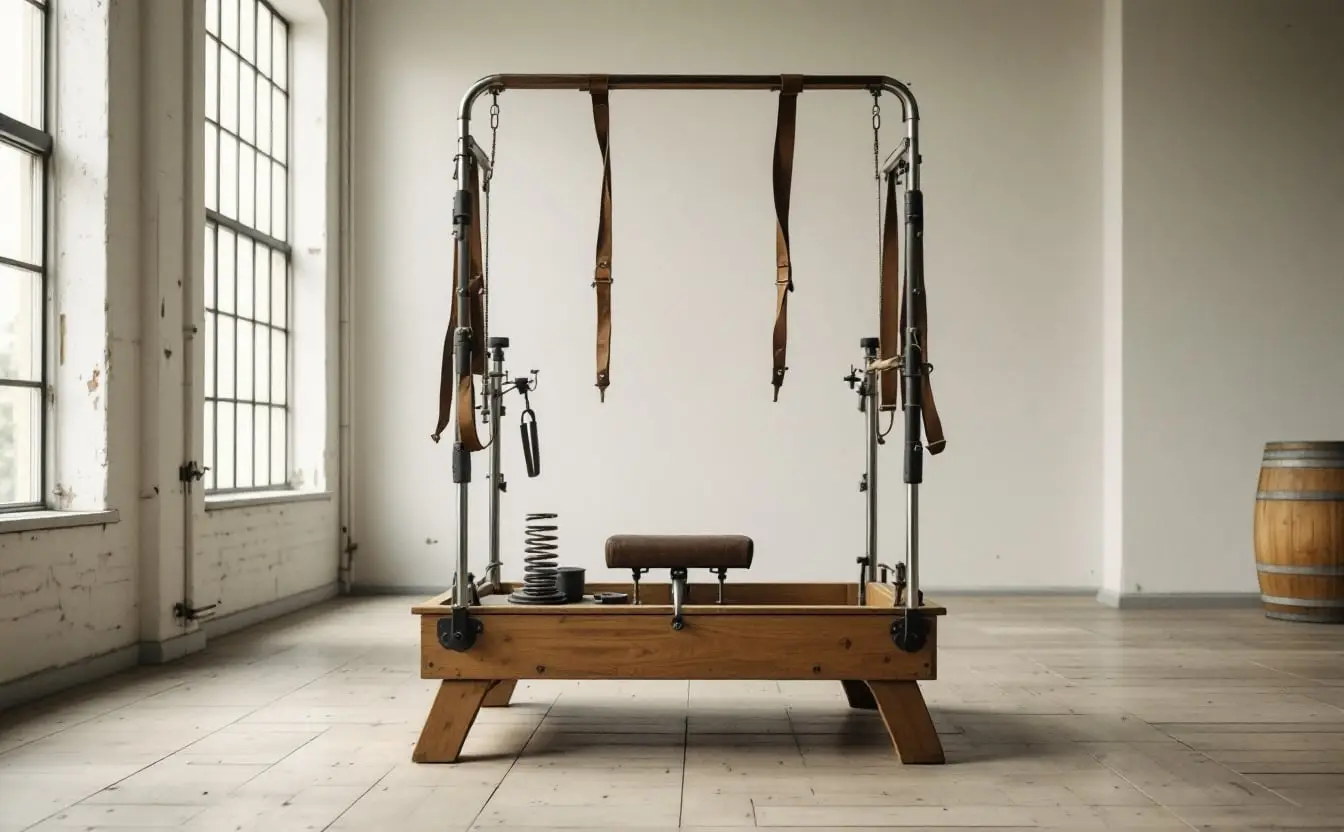
The second is the equipment. Pilates designed and built his own machines, in wood, leather and steel springs, and the modern versions are recognisably the same objects:
| Apparatus | What it is | How studios use it now |
|---|---|---|
| Universal Reformer | A sliding carriage on a frame, with springs, a footbar and straps | The mainstay of private sessions and group classes |
| Cadillac (trapeze table) | A raised table under a frame of bars, springs and a trapeze | Assisted work, advanced work and rehabilitation |
| Wunda Chair | A low box with a spring-loaded pedal | Strength and balance, much of it seated or standing |
| Ladder Barrel and Spine Corrector | Curved wooden barrels | Arching, stretching and side bending the spine |
| Magic Circle | A sprung ring held between the hands or legs | Light resistance in mat work |
The third is a way of teaching. Low repetitions, often three to five. A fixed order in which each exercise prepares the body for the next. Transitions treated as part of the work, not a rest. And a teacher who watches closely and corrects. That habit of attention is why Pilates still looks like Pilates in a good class, whatever machine is in the room.
Clara's part
Clara Pilates taught beside Joseph for about four decades and went on teaching for ten years after his death, until she died in 1977. She is often described as the gentler teacher of the two, and some of the adapted work for clients who could not manage the full repertoire is credited to her. She deserves far more than a paragraph. On the narrow question of who invented the method, though, the record is consistent: the system was his, and she was its first and longest-serving teacher.
Who carried the method on
Pilates left no formal teacher-training programme. What he left was a group of students who had learnt in the room, now called the elders: Romana Kryzanowska, Kathy Grant, Lolita San Miguel, Ron Fletcher, Carola Trier, Eve Gentry, Mary Bowen, Jay Grimes and Bob Seed among them. Each taught the work as they had received it, and each added something of their own.
Romana did the most to keep the classical order intact. She directed the New York studio from about 1970 and trained a very large share of later classical teachers, and her life is told in full in our profile of Romana Kryzanowska.
How the name became generic
For a while in the 1990s it looked as if the word itself might belong to one company. A business holding trademarks on "Pilates" tried to stop others using it for classes and equipment. In October 2000, in Pilates, Inc. v. Current Concepts, a federal court in New York ruled that Pilates is the generic name of a type of exercise, not a brand, and the trademarks fell. That ruling is why any gym can put Pilates on its timetable today, and also why the quality of what you get under the name varies so widely.
Did he invent it alone?
Nobody invents an exercise system in a vacuum. Pilates grew up among German gymnastics clubs, the life-reform movement and the strongman culture of the 1890s and 1900s. He read anatomy and, by his own account, studied the way animals move. Several of his ideas have close cousins in other systems of the period, and the strongest resemblance is to Bess Mensendieck, whose body culture for women also worked slowly and precisely from a strong centre, though there is no record that the two ever met. The candidates are weighed one at a time in our piece on Kneipp, Mensendieck and Steiner.
The fair verdict is that he absorbed a culture and turned it into something of his own: a named method, a complete repertoire, original apparatus and a studio to teach it in. Plenty of people in 1920s Europe and America taught exercise from the centre of the body. Only one of them left a system still taught in the same order a century later.
Story and record side by side
| What you will often read | What the record supports |
|---|---|
| He was a sickly child with asthma and rickets | The claim comes from interviews given decades later; no childhood record of it has been published |
| He built the first reformer from bed springs on the Isle of Man | Widely told and hard to document; the 1927 US patent is documented |
| He trained detectives at Scotland Yard | Repeated often, documented poorly |
| He called his method Pilates | He called it Contrology |
| Balanchine and Graham sent dancers to him | Widely reported, and the studio's dance clientele is well attested |
| Pilates is a registered brand | A US federal court ruled the word generic in 2000 |
Questions readers ask
Was Joseph Pilates German or American?
He was born and raised in Germany, lived in Britain from 1912 until the end of the First World War, went home to Germany for a few years, and lived in New York from the mid 1920s until his death. The method was conceived by a German and made famous in America.
How old was Joseph Pilates when he died?
He was 83. He died in New York on 9 October 1967.
Is Contrology the same as Pilates?
Yes. Contrology was his own name for the method, and Pilates is the name it took after him. When a teacher uses the old word, she usually means the classical repertoire, taught in his order.
Where can I read more?
The longer history pieces, on his influences, the elders and the stories that grew up around him, are collected on the archive shelf.
If you want to meet the inventor on his own terms, find a copy of Return to Life Through Contrology. It is short enough to read in an evening. Then lie down on the floor and try the first exercise as he set it out: arms pumping by your sides, five beats on the in-breath and five on the out, ten times through.