Choosing a foam roller: density, length and how to use one
Some links in this story go to Amazon and to other shops, and we may earn a commission from them. As an Amazon Associate I earn from qualifying purchases.
How to choose a foam roller by density, length and texture, how to use one safely on your legs and upper back, and three rollers that suit Pilates at home.
The edit
| Pick | Best for | One fact | Where to buy |
|---|---|---|---|
| Amazon Basics 36-inch firm foam roller$22.99 Amazon price as of 24 Oct 2026, 04:32 UTC | Lying lengthwise | 36 inches long | See it on Amazon (Amazon Basics 36-inch firm foam roller) |
| TriggerPoint GRID 13-inch roller$28.99 Amazon price as of 24 Oct 2026, 04:32 UTC | Travel and the gym bag | 13 inches long | See it on Amazon (TriggerPoint GRID 13-inch roller) |
| 321 STRONG textured roller$24.99 Amazon price as of 24 Oct 2026, 04:32 UTC | Gentler rolling | Medium density | See it on Amazon (321 STRONG textured roller) |
Product prices and availability are accurate as of the date/time indicated and are subject to change.
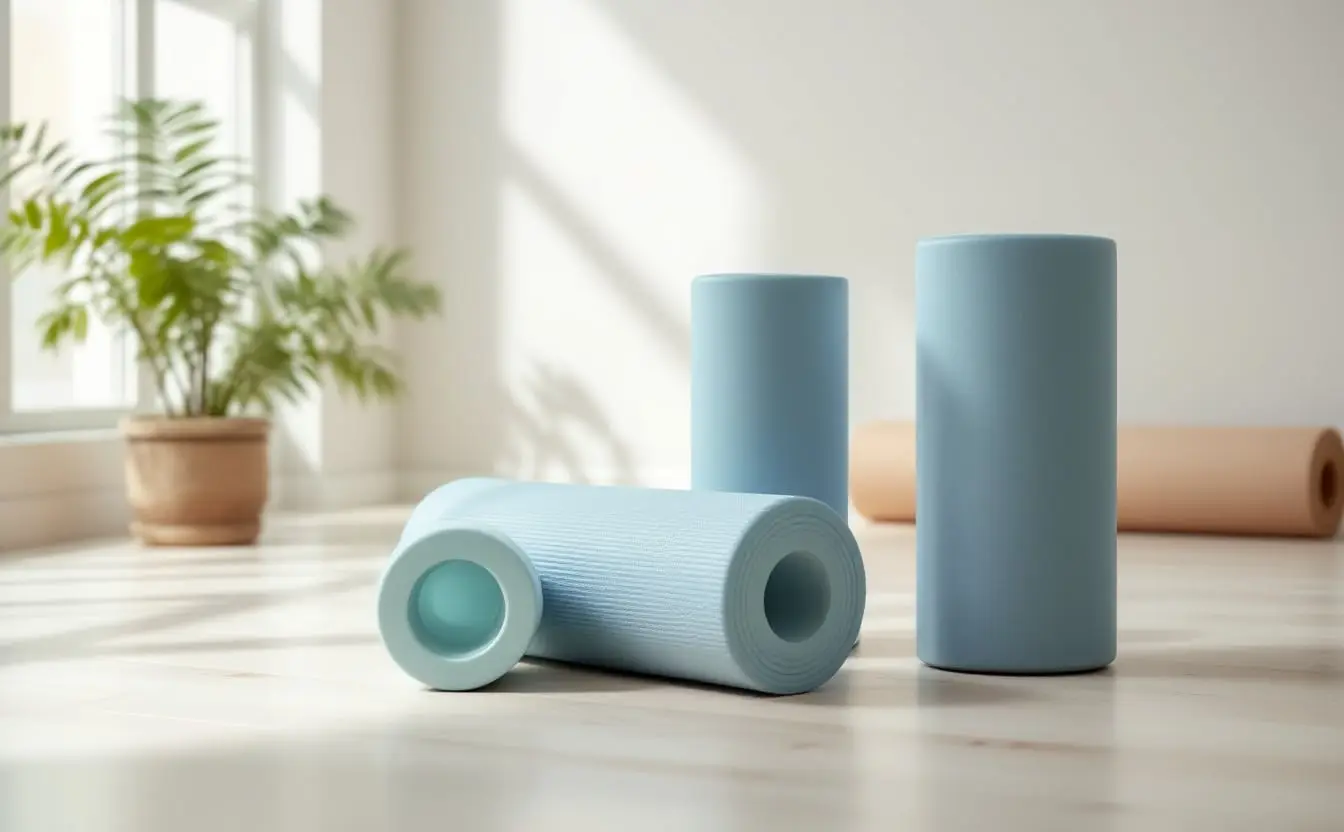
The best foam roller for most people who also do Pilates at home is a full-length one, about 36 inches (91 cm) long, of medium to firm density with a smooth surface. If it has to travel in a gym bag, a short textured roller handles the rolling well but cannot do the Pilates work. Almost everything else, from vibration motors to spiky knobs, is a matter of taste.
That suits most of the people who go looking for a roller: runners with tight calves, desk workers whose upper back has set like plaster by Friday, and Pilates students who met a long roller in class. What matters is firmness, length and where the roller lives. One stood on end beside the sofa gets used. One in the loft does not.
Keep expectations sensible. Reviews of the research suggest rolling can ease the feeling of soreness after hard exercise and give a short-lived gain in range of movement, without obvious harm to performance. It does not flush anything out of your muscles or change their length for good, so treat it as a pleasant, useful tool rather than a treatment.
Three foam rollers compared
| Pick | Best for | Key facts |
|---|---|---|
| Amazon Basics 36-inch firm foam roller | Lying on lengthwise for chest openers and Pilates balance work | 36 in (91 cm) long; high-density moulded polypropylene foam; smooth surface |
| TriggerPoint GRID 13-inch roller | Calves, thighs and upper back after training, and travel | 13 in (33 cm) long; hollow core; textured surface with zones of different firmness |
| 321 STRONG textured roller | People who find firm rollers too much | Medium density; three textured zones; mid-length |
These three were chosen from the makers' specifications, published reviews and how each suits the way people use a roller alongside Pilates. We have not tested them ourselves, so treat the table as a shortlist, not a verdict.
The long firm roller is the all-rounder for mat work at home. The short hollow-core GRID roller suits people who mostly roll their legs and need something compact. The medium textured roller sits between them, for anyone whose first go on a firm roller was mainly wincing.
Kit list
 THERABAND long flat bandsBest for: footwork and rowing$11.99 Amazon price as of 24 Oct 2026, 04:32 UTCSee it on Amazon (THERABAND long flat bands)
 Gaiam 10 mm thick matBest for: rolling on hard floors$24.76 Amazon price as of 24 Oct 2026, 04:32 UTCSee it on Amazon (Gaiam 10 mm thick mat)
Product prices and availability are accurate as of the date/time indicated and are subject to change.
We may earn a commission from these links. As an Amazon Associate I earn from qualifying purchases.
Foam roller density: soft, medium or firm
Density decides how hard the roller pushes back. Soft rollers, often white polyethylene foam, give under your weight, which suits very sore legs, lighter bodies and anyone who tenses at the first hint of pressure. They also dent over months of use. Medium density suits most people: firm enough to do something, forgiving enough to relax onto. Firm rollers, moulded polypropylene or a hard core wrapped in dense foam, barely give at all. Heavier and well-trained people often prefer them, and they keep their shape for years.
There is no industry standard for density, and colour means different things from brand to brand, although black often marks the firmest models. Read the description, not the colour. A rough test once it arrives: if you cannot lie on it and breathe out slowly, it is too firm for you for now.
Length and diameter
Rollers come in three common lengths.
| Length | What it suits | What it cannot do |
|---|---|---|
| About 36 in (91 cm) | Lying along the spine, Pilates work, rolling the upper back with room to spare | Fit in a bag or a small cupboard |
| About 18 in (46 cm) | Legs, glutes and upper back at home | Support head and pelvis together when you lie on it lengthwise |
| About 12 to 13 in (30 to 33 cm) | Travel, the gym, one leg at a time | Anything lengthwise; the upper back feels cramped |
Most rollers are about 6 inches (15 cm) across, which puts you at a comfortable height off the floor. Slimmer 4-inch (10 cm) rollers press into a smaller area and feel sharper. Half-round rollers, flat on one side, stay put on the floor and turn up in studios for balance and foot work. They are useful, but they are not for rolling.
Texture and materials
Smooth rollers spread pressure evenly and are the right surface to lie on. Textured rollers, with ridges, grids or knobs, concentrate pressure into smaller points. Some people like that on the calves; others find it simply hurts more without helping more. For a first roller, start smooth, or pick a textured one of medium density so the foam softens the pattern.
The main materials:
- Polyethylene foam is light, soft and budget, and loses its shape fastest.
- Expanded polypropylene, the moulded kind that looks like tightly packed beads, is firm and light and holds its shape well.
- EVA foam is dense, with a closed, slightly grippy surface that wipes clean easily.
- Hollow-core rollers wrap a rigid plastic tube in foam: firm, durable and compact.
What to avoid
- A very firm, spiked roller as your first. You will use it twice.
- A short roller if you want it for Pilates. Lying lengthwise needs your head and pelvis supported at the same time.
- A soft roller that has started to dent. Lying on a lopsided cylinder is uncomfortable and slightly unstable.
- Any roller sold with claims about detox, cellulite or realigning the spine. A foam cylinder cannot do any of those.
- A vibrating model, unless you already know you enjoy rolling. It is heavier and needs charging.
The three rollers from the table, in one place, plus a firm closed-cell roller from the studio supplier Power Systems, sold in three lengths with half-round versions for balance work:
How to use a foam roller
The basic technique is the same for every muscle.
- Warm up for a few minutes first, with a brisk walk or some marching on the spot. Rolling cold muscles is more uncomfortable, not more effective.
- Place the roller under the muscle, never under a joint or a bony point. Use your hands and your other leg to take some of your weight; that is how you control the pressure.
- Roll slowly, about an inch (2 to 3 cm) a second, over a short stretch of muscle. Fast rolling back and forth mostly works your arms.
- When you find a tender spot, pause on it or rock gently for a few breaths. Aim for discomfort of about 5 or 6 out of 10 that eases as you stay. If you are holding your breath or clenching your jaw, take some weight off.
- Give each area 30 to 90 seconds, then move on. A lower-body round takes 5 to 10 minutes.
Keep the roller off bones and joints (kneecaps, the outside of the knee, ankles, hip bones and elbows), off the neck, out of the groin and the back of the knee, and off the lower back itself. Rolling after training or on easy days fits neatly into the kind of active recovery that should leave you fresher, not more tired. Before a session, keep it brief and light, a minute or so per area, then get moving.
Using a foam roller for your back
The upper back is one of the most satisfying places to roll, and one of the safest, because the ribs spread the load. Sit on the floor with the roller behind you, across your back at the level of the bottom of your shoulder blades. Lie back onto it, knees bent and feet flat, with your hands behind your head to carry its weight and your elbows pointing forwards. Lift your hips a little for more pressure, or leave them down for less, and roll slowly between the bottom of the shoulder blades and the top of the shoulders for 30 to 60 seconds.
Then stop and let the upper back arch gently over the roller for three slow breaths, head resting in your hands and ribs heavy. Move the roller an inch (2 to 3 cm) higher and repeat, three or four times in all. After a day hunched over a laptop, this is the part people keep doing.
The lower back is different. There are no ribs around the lumbar spine to spread the pressure, and rolling it directly pushes the joints into extension without doing much for the muscles. Plenty of people find it makes a stiff back feel worse. Roll the glutes and the sides of the hips instead, or lie lengthwise on a long roller with your knees bent and simply breathe.
Pilates uses of a long roller
A 36-inch roller earns its space because lying on it lengthwise turns familiar mat work into balance work for the trunk. Sit at one end and lie back so your head and tailbone are both supported, knees bent and feet flat on the floor a little wider than hip-width. Spend the first minute just breathing. Lateral breathing is easy to feel here, because the back ribs have only a narrow strip of support and you notice them widening.
- Chest opener: rest your arms out to the sides, palms up, a little below shoulder height, for a minute or two.
- Arm arcs: float both arms up to the ceiling, then reach them overhead and back, stopping where your ribs start to lift.
- Marching: lift one foot an inch (2 to 3 cm) off the floor and put it down, then the other, without letting the roller wobble. It asks for the same quiet control as the dead bug in our guide to deep core exercises.
- Bridge with feet on the roller: lie on the mat with the roller under your heels and lift the hips. The roller wants to escape, and the backs of the thighs work hard to stop it.
- Swan preparation: lie on your front with your forearms on the roller and roll it forwards as you lift the chest a little, then back as you lower.
To get off, roll to one side onto the mat. Sitting straight up from the roller is how people end up on the floor in a less dignified way.
Care and safety
Wipe the roller after use with a damp cloth and a little mild soap, and dry it before you put it away. Keep it on end, away from radiators and strong sunlight, which can warp or harden foam, and never leave it in a hot car. Replace a foam roller once it has dents, cracks or soft spots, and a hollow-core one if the shell cracks.
Roll muscle only, and stay off bruises, broken skin, varicose veins and any fresh injury. Check with a doctor or physiotherapist first if you have osteoporosis, take blood-thinning medicine, are recovering from surgery or are pregnant. A calf that is suddenly swollen, warm, red or painful should never be rolled: see a doctor promptly, because it can be a sign of a blood clot. Sharp pain, or pain that spreads down an arm or leg with numbness or tingling, is a reason to stop and get it checked.
Questions people ask
Which foam roller is best for a beginner?
A smooth, medium-density roller. Choose the full 36-inch length if you also do Pilates or want to lie on it, and an 18-inch one if space is tight and you mostly roll your legs.
Should foam rolling hurt?
It should feel like firm pressure that eases while you stay on a spot, roughly 5 or 6 out of 10. Pain that makes you hold your breath is too much, and bruising afterwards means you pressed far too hard.
How long does a foam roller last?
It depends on the material. Soft polyethylene can flatten within months of daily use, while moulded polypropylene and hollow-core rollers usually keep their shape for years. When it no longer feels even under your back, it has had its day.
Your first week with a roller
Start small. Each evening for a week, give your calves a minute each and your upper back two minutes, and stop there. By the weekend you will know whether the roller is too soft, too firm or about right, and whether it has earned its place on end beside the sofa.