Why the Hundred comes first, and how to do it well
Some links in this story go to Amazon and to other shops, and we may earn a commission from them. As an Amazon Associate I earn from qualifying purchases.
The Hundred opens the classical Pilates mat order. Why it comes first, how to breathe and pump, where the head and legs go, common faults and easier versions.
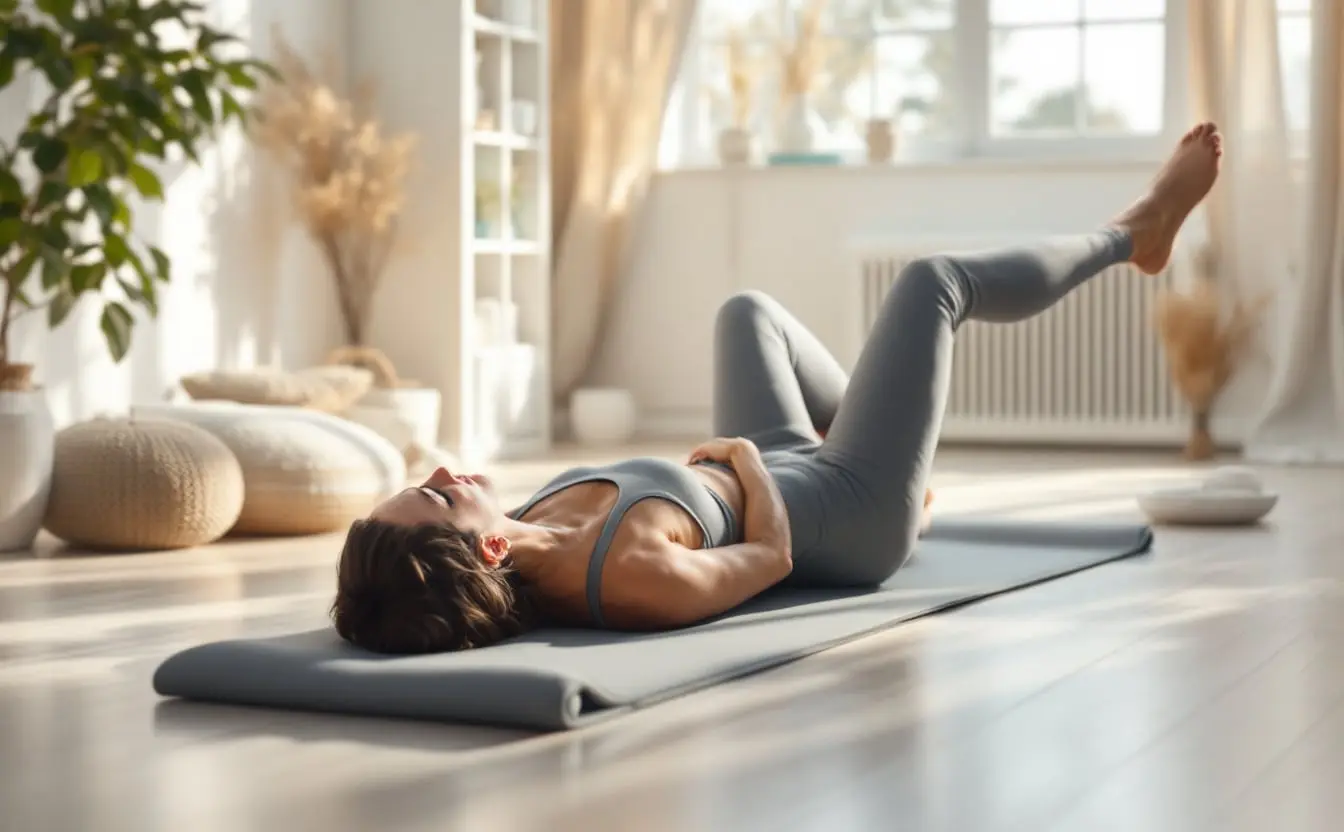
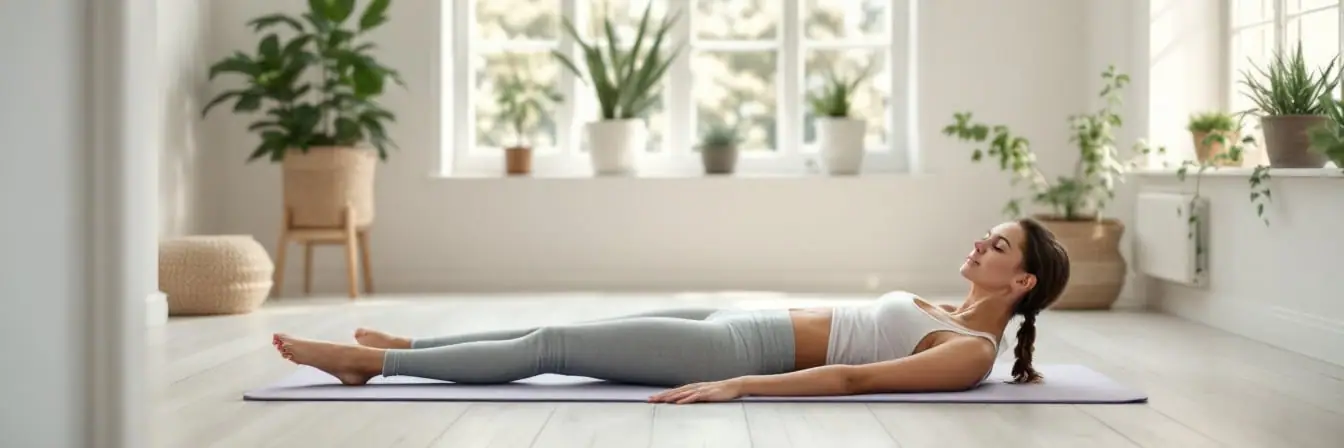
Every classical mat class I have taken has started the same way. You lie down, curl your head up, lift your legs and start pumping your arms while someone counts. Five in, five out. By sixty you are warm. By ninety you are bargaining with yourself. Then it is over, and the Roll Up begins before you have quite caught your breath.
The Hundred is so familiar that it is easy to stop looking at it. It is also the exercise most often done badly, partly because it comes first, when nobody is warm yet, and partly because it looks far simpler than it is. This piece takes it apart: why it sits at the front of the order, what each part of the body is doing, how to build it up, and what the usual faults are telling you.
Why it comes first
Joseph Pilates published his mat work in Return to Life Through Contrology in 1945 as a sequence of 34 exercises, and the Hundred is number one. Classical teachers describe it as the warm-up for everything that follows. The pumping arms and steady breathing raise the heart rate, the abdominals switch on and stay on, and the breath finds a rhythm before the spine is asked to move.
That last point matters. The Hundred holds the trunk still in a curled shape while the breath and arms do the work. The Roll Up, which comes next, takes the same curl and turns it into movement, one vertebra at a time. Once you have studied the order closely, as I described in a piece on learning the classical sequence, you start to see each exercise preparing the next. The Hundred prepares all of them.
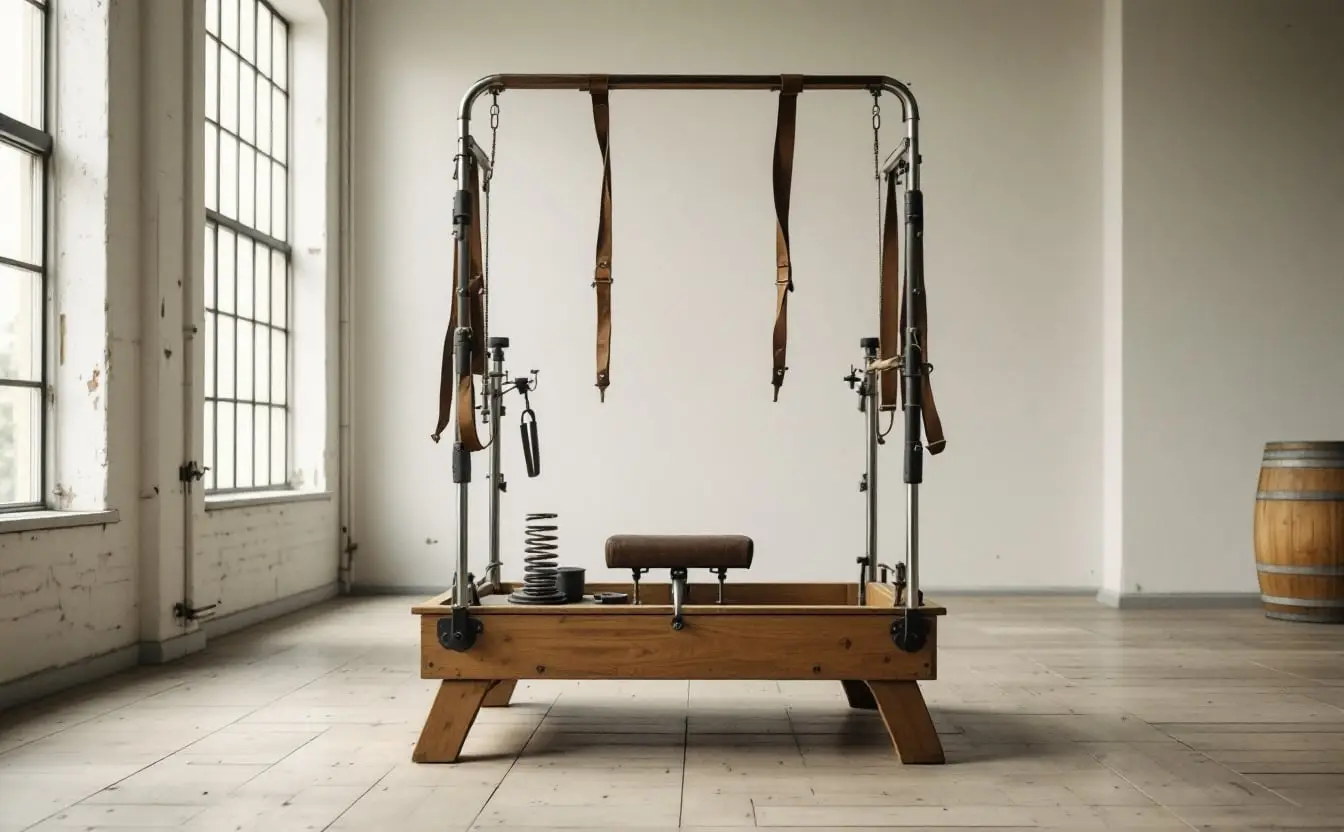
It turns up on the apparatus too. On the reformer it follows Footwork, done with the hands in the straps, so the arms pump against spring resistance rather than air. The shape and the breath are the same. Learn one well and you understand the other.
Kit list
 Ozaiic grip socks with ballet-style strapsBest for: strappy reformer socksSee it on Amazon (Ozaiic grip socks with ballet-style straps)
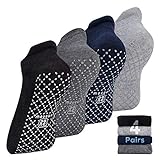 unenow unisex grip socksBest for: plain unisex gripSee it on Amazon (unenow unisex grip socks)
We may earn a commission from these links. As an Amazon Associate I earn from qualifying purchases.
The four parts of the shape
Think of the Hundred as four jobs done at once. Most problems start with one of them going wrong and the others trying to make up for it.
The breath
The usual pattern is in for five pumps and out for five, ten times through, which is where the name comes from. Some teachers ask for in through the nose and out through the mouth; others do not mind. What matters more is that the breath stays even and the out-breath is full. Plenty of people sneak in extra little sips of air, or stop breathing altogether somewhere around the fortieth count.
The breath goes wide into the back and sides of the ribs rather than pushing the belly up, because the belly is busy holding the curl. If that is new to you, the guide to lateral breathing explains how to practise it with your hands or a band round the ribs. If five counts feel too long, start with three in and three out and build up over a few weeks.
The arms
The arms reach long by your sides, a few centimetres above the mat, palms down. The pump comes from the shoulder joint, not the elbow or the wrist, and it is small: a firm beat of perhaps 15 to 20 centimetres, down and up, as if you were patting the surface of a pond. The fingertips reach towards the far wall the whole time. That reach, more than the pumping, keeps the shoulder blades settled down the back instead of creeping up towards the ears.
Watch a room full of people doing the Hundred and you will see every kind of arm: flapping hands, bent elbows, arms waving a foot in the air. A small, sharp, straight-armed pump is harder and much more useful.
The head and neck
The head and shoulders curl up until the lower tips of the shoulder blades just leave the mat, with the eyes looking towards the navel or between the thighs. The lift comes from the abdominals drawing the ribs towards the hips. The neck simply continues the curve of the upper spine.
Leave a space under the chin about the size of a tangerine. Jamming the chin into the chest shortens the front of the neck and makes it work far harder than it should. The opposite fault, letting the head tip back while the shoulders stay up, is just as tiring. If the neck starts to ache, put the head down. That is not failure. It is the right call, and you can lift it again for the last twenty counts if it recovers.
The legs
In the full classical version the legs are straight and together, squeezing lightly through the inner thighs, heels together and toes a little apart. How high? As low as you can hold them without the lower back arching away from the mat or the belly bulging upwards. For most people that is somewhere near 45 degrees at first, and some never take them lower, which is fine. Think of the legs as a dial: higher is easier, lower is harder, and bent knees in a tabletop position are easier still.
Building it up
The Hundred can be adjusted at every level, so there is no reason to skip it. Here is a sensible progression for home practice. Stay at each stage until the full hundred counts feel steady, which for many people takes a few weeks.
- Head down, knees bent, feet flat on the mat. Pump the arms and breathe. This is the Hundred for the arms and breath alone, and it is a perfectly good place to start.
- Head down, legs lifted into tabletop, shins parallel to the floor. Now the abdominals have to hold the weight of the legs.
- Head and shoulders lifted, legs in tabletop. Most beginners stay here for a while, and it is where the twenty-minute classical mat sequence starts its version.
- Head and shoulders lifted, legs straight and pointing towards the ceiling or on a high diagonal.
- Head and shoulders lifted, legs lowered to the angle you can hold without the back lifting.
If you reach fifty counts and the shape is falling apart, stop, rest for a breath or two, and do the second fifty. A clean fifty is worth more than a ragged hundred. You can also split the head work: thirty counts with the head up, rest it for twenty, then lift it again for the rest.
What the usual faults are telling you
| What you see or feel | What it usually means | What to try |
|---|---|---|
| Neck aching or shaking | The abdominals are tiring and the neck is taking over | Lower the head, or go back to stage 2 for a while |
| Lower back arching off the mat | The legs are too low for the abdominals to hold | Raise the legs or bend them into tabletop |
| Belly bulging upwards | The load is more than the deep abdominals can control | Make the version easier and check the out-breath is full |
| Shoulders hunched to the ears | The pump is coming from the hands, not the shoulders | Reach the fingers longer and make the pump smaller |
| Breath held or snatched | Counting has taken over from breathing | Drop to three counts in and three out |
| Legs drifting apart or wobbling | Inner thighs and seat have switched off | Press the heels lightly together, or hold a small cushion between the knees |
Who should adapt it
Some people are better off starting with the head down and staying there until they have had advice. With osteoporosis, repeated forward curling of the spine under load is something you are usually told to limit, so talk to a physiotherapist or a teacher experienced in bone health before you lift the head. The same applies if you are pregnant or have recently had a baby, if you have a neck or back problem, or if you see a ridge or dome along the middle of your abdomen when you curl up. In each case, in-person guidance is worth more than anything written down.
Three habits from classical teaching
A few habits come up again and again in classical studios, and they repay attention.
The first is to move straight on. In the classical order you do not finish the Hundred, flop back and wait. You lower the legs and head, reach the arms overhead and go into the Roll Up. The transition belongs to the exercise.
The second is that the Hundred is not an endurance test. It is a warm-up with a job: to set the breath, the curl and the reach for the whole session. If you finish it exhausted, today's version was too hard.
The third concerns counting. Teachers count aloud, but you should be breathing, and the pump follows the breath, not the other way round. Try the Hundred once with nobody counting for you, keeping your own five beats to each breath, and notice how much smoother it feels.
Tomorrow morning, before anything else, do ten breaths with your head down and your knees bent. Pay attention only to the arms: straight, reaching, a small sharp beat from the shoulder. That is the Hundred at its simplest, and it is the version you will keep coming back to.