Twelve hip mobility exercises, sorted by where you do them
Some links in this story go to Amazon and to other shops, and we may earn a commission from them. As an Amazon Associate I earn from qualifying purchases.
Twelve hip mobility exercises sorted by position, standing, kneeling, floor and wall, with hip flexor stretches, how often to do them and easier options.
The most useful hip mobility exercises move the hip in every direction it can go: forwards and back, out to the side and across, and turning in and out. The twelve below are sorted by where you do them, standing, kneeling, on the floor and with a wall, so you can pick three or four that suit the moment rather than following one fixed routine. A handful, three to five times a week, is enough for most people to keep their range and slowly add to it.
If you want a ready-made sequence with timings, the ten-minute hip routine for desk days puts eight moves in order for you. This is the library behind it, with none of that routine repeated, for when it starts to feel stale.
How to improve hip mobility
The hip is a ball and socket, built to move in six directions: forwards (flexion), back (extension), out to the side (abduction), across the body (adduction), and rotating in and out. Ordinary life uses mostly the first: sitting, stairs and cars all bend the hip forwards, while the other five go quietly unused.
Improving that takes two things: time in the positions, which stretching gives you, and control at the edge of your range, which is why this library mixes held stretches with slow, active moves such as side lunges and fire hydrants. Range you can only reach with gravity or your hands doing the work tends not to show up when you need it.
Go gently. A stretch should feel like a clear but tolerable pull, about 3 to 5 out of 10, with your breathing slow and unforced. Range builds over weeks of regular practice, not in one heroic session.
Kit list
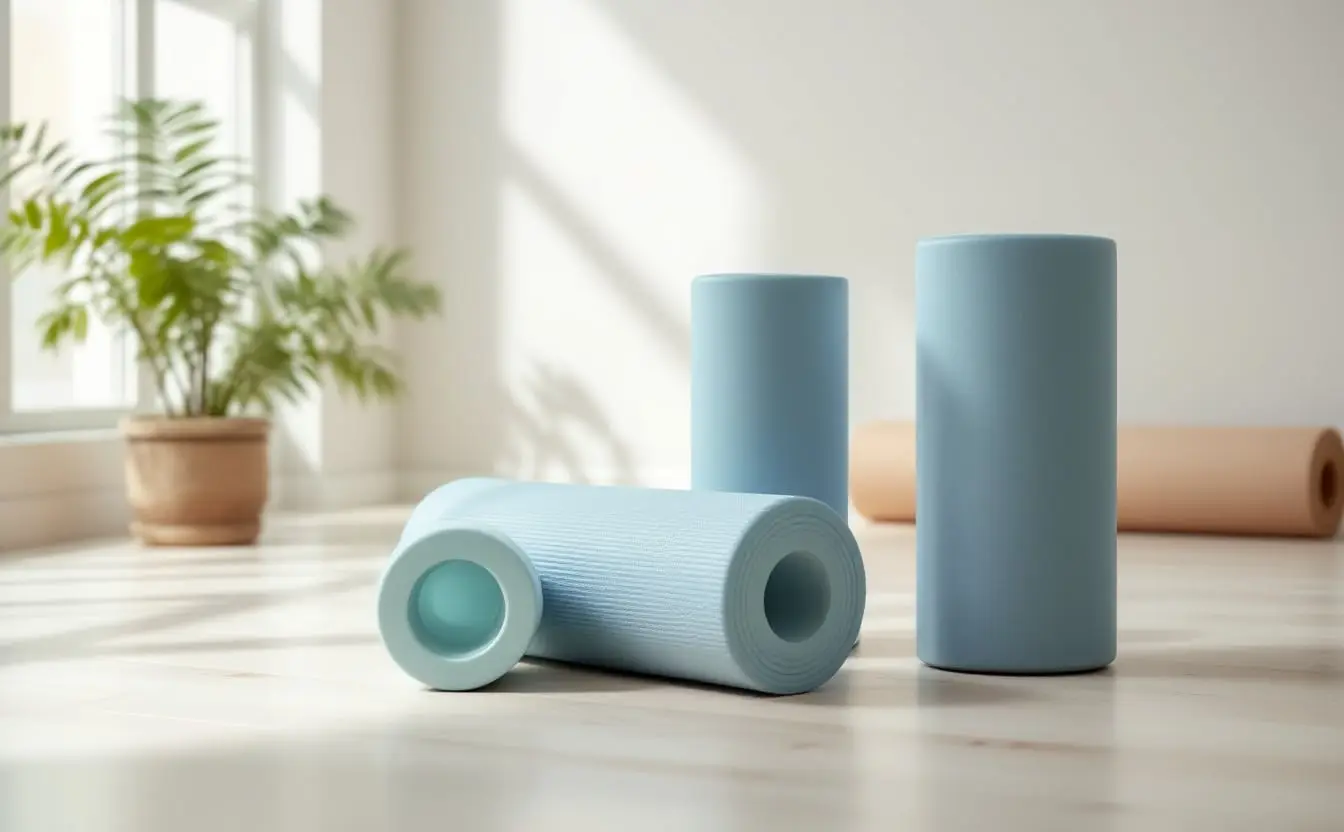
 TriggerPoint GRID 13-inch rollerBest for: travel and the gym bagSee it on Amazon (TriggerPoint GRID 13-inch roller)
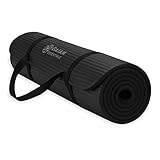 Gaiam 10 mm thick matBest for: rolling on hard floorsSee it on Amazon (Gaiam 10 mm thick mat)
We may earn a commission from these links. As an Amazon Associate I earn from qualifying purchases.
Standing hip mobility exercises
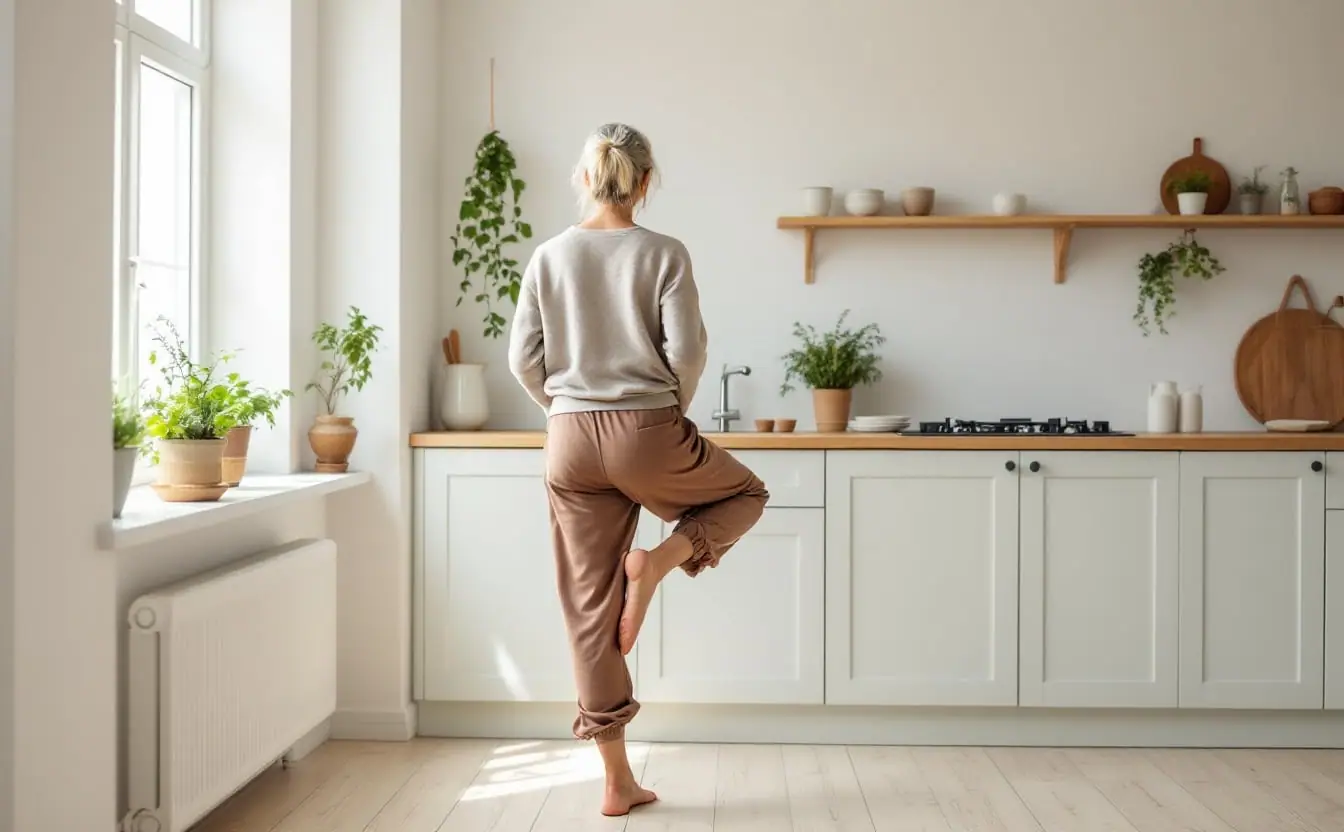
1. Leg swings
Stand side-on to a wall or sturdy chair, one hand resting on it. Stand tall on the inside leg, knee soft, and swing the outside leg forwards and back like a pendulum, starting small, with the trunk upright. Do 10 to 15 swings, then turn round. You should feel the front of the hip open as the leg goes back and the back of the thigh lengthen as it comes forward. Easier: shorter swings, both hands on the support. Harder: face the wall and swing the leg across the body and out to the side instead.
2. Standing knee circles
Face the wall with both hands on it at chest height. Lift your right knee in front of you to about hip height, carry it out to the side in a slow arc, then lower it back beside the standing leg. Do five circles, five in reverse, then swap legs. Keep the pelvis level and the trunk still, so the circle comes from the hip rather than from leaning. You should feel it deep in the hip socket, with the standing buttock working to keep you steady. Easier: smaller circles with the knee lower. Harder: one hand off the wall, and a slow count of ten per circle.
3. Side lunge
Stand with your feet about twice hip-width apart, toes forwards or turned out slightly. Bend the right knee and sit the hips back and to the right, keeping the left leg straight and both feet flat, until you feel a stretch along the inside of the left thigh. Push back to the middle and repeat to the left, 6 to 8 times each side. The bent knee should track over the toes. Easier: hold a worktop in front of you and go less deep. Harder: pause for three seconds at the bottom, or hold a light weight at your chest.
Kneeling hip exercises
4. Low lunge with a twist
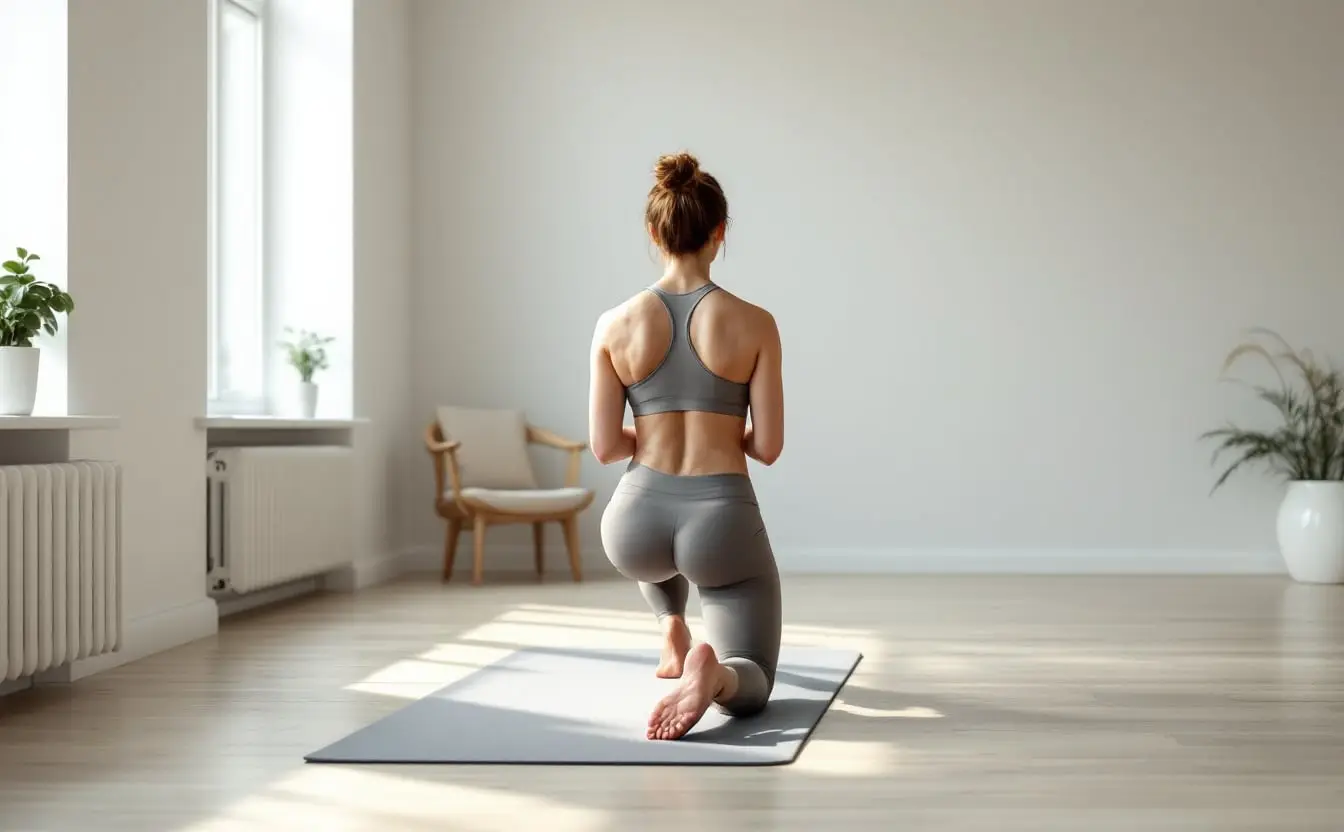
Kneel on a folded towel, left knee down and right foot well forward in a long lunge. Put your left hand on the floor, or a stack of books, inside the right foot. Shift forwards until the front of the left hip stretches, then turn your chest to the right and reach the right arm to the ceiling, eyes following the hand. Make five slow turns, hold the last for three breaths, then swap. You should feel the front of the back hip, the inner front thigh and a turn through the upper back. Easier: hands on a chair seat and no twist. Harder: lift the back knee off the floor.
5. Adductor rock-back
Start on hands and knees, then straighten your right leg out to the side, foot flat and toes pointing forwards, level with your left knee. With your back long, rock your hips back towards your left heel until the inner right thigh stretches, then rock forwards again. Do 8 to 10 slow rocks, hold the last for three breaths, then swap. The stretch belongs along the inside of the straight leg. Easier: a smaller rock and a cushion under the kneeling knee. Harder: lower onto your forearms, which lets the hips travel further back.
6. Fire hydrant
On hands and knees, hands under shoulders and knees under hips, keep the right knee bent at a right angle and lift it out to the side as high as you can without tipping the pelvis or leaning onto the left hand. Lower it slowly. Do 8 to 12 each side. This is control work, not a stretch: you should feel the outer back of the working hip. Easier: a smaller lift. Harder: pause at the top for three seconds, or add a light mini band just above the knees.
Hip stretches on the floor
7. Supported pigeon
From hands and knees, bring your right knee forward behind your right wrist, shin angled across towards your left hip, and slide the left leg straight back. Keep the hips level, with a folded blanket under the right buttock if it hovers. Stay up on your hands and hold for 45 to 60 seconds before swapping. You should feel it deep in the right buttock and outer hip, never in the knee. Easier: a higher cushion, or the figure-four stretch on your back from the desk routine. Harder: fold forwards over the front shin, forearms down.
8. Butterfly
Sit with the soles of your feet together and your knees out to the sides. Hold your ankles, sit tall, then lean forwards from the hips with a long back until the inner thighs stretch. Hold for 45 seconds. Let the knees sink in their own time; pushing them down with your elbows only strains the groin. Easier: sit on a folded blanket with the feet further away. Harder: draw the heels closer to your body and lean further forwards, still with a long back.
9. Prone hip rotations
Lie on your front, forehead on your stacked hands, knees hip-width apart and bent to a right angle so the soles face the ceiling. Let both feet fall slowly outwards while the knees stay put; this turns the thighs inwards in the hip sockets. Bring them back up, then let the feet cross a little the other way. Do 8 to 10 slow sways, both hips flat on the floor. Expect a gentle pull around the front and sides of the hips. Easier: a smaller range with a pillow under the hips. Harder: one leg at a time, holding each end position for a slow count of five.
Hip mobility with a wall
10. Couch stretch
Put a cushion against the foot of the wall. Kneel on it with your right knee close to the wall, the shin running up the wall and the top of the foot against it, left foot flat in front with the knee at a right angle. Start with the trunk leaning forwards, hands on a chair. Tuck the tail slightly, squeeze the right buttock, then bring the trunk up only as far as you can without arching the lower back. Hold for 30 to 45 seconds, then swap. Expect a strong stretch down the front of the right thigh and hip. Easier: move the knee a foot (30 cm) away from the wall, or rest the foot on a sofa seat. Harder: knee closer to the wall, trunk fully upright.
11. Wall straddle
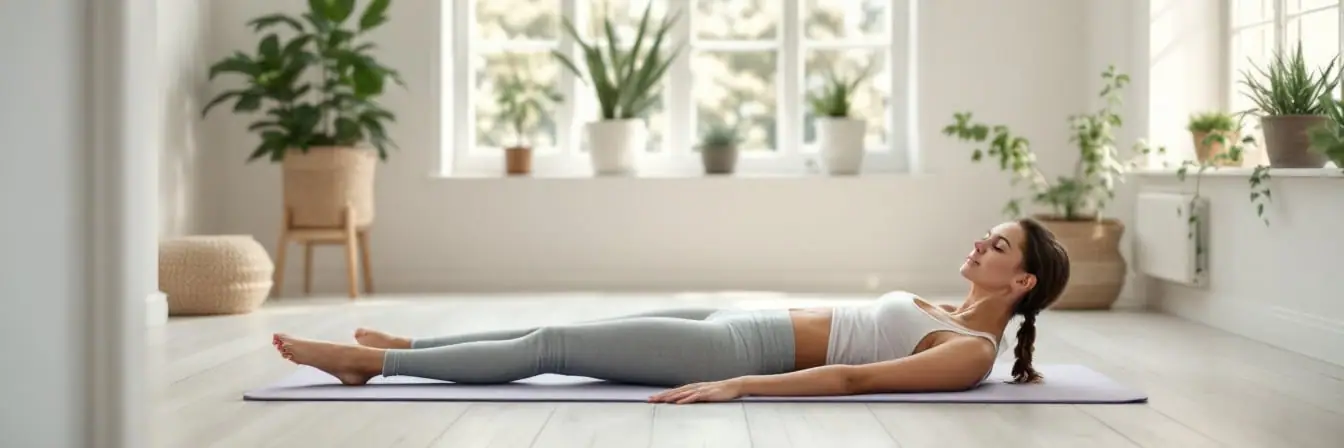
Lie on your back with your seat close to the wall and your legs up it, straight but not locked. Let the legs slide slowly apart into a wide V, heels resting on the wall, until the inner thighs stretch. Hold for 60 to 90 seconds, breathing slowly, then use your hands to help bring the legs back together. Easier: bend the knees slightly and move your seat a little further from the wall. Harder: bring the soles together and slide the feet down the wall into a butterfly.
12. Hip airplane at the wall
Face the wall at arm's length, fingertips on it at chest height. Balance on your right leg with the knee soft, hinge forwards a little from the hips and let the left leg lift slightly behind you. Slowly turn the pelvis open, so the left hip rotates up towards the ceiling, then close it back past square, so the left hip turns down towards the floor. The turning happens in the right hip. Do five slow turns each way, then swap. You should feel the standing hip and buttock working hard. Easier: keep the left toes on the floor and hinge less. Harder: one hand off the wall.
Which are the best hip stretches for you?
The best ones target what is actually stiff. Everyday clues are a reasonable guide.
| If this feels stiff | Movement to work on | Start with |
|---|---|---|
| Standing up straight after sitting | Reaching the leg back | 4, 10 |
| Sitting cross-legged or putting on socks | Turning the thigh out | 7, 8 |
| Squatting deep | Turning in and out, with control | 9, 12, 6 |
| Wide stances and side steps | Out to the side and across | 3, 5, 11 |
| Everything, first thing in the morning | All directions, gently | 1, 2 |
How often to do hip mobility exercises
Three to five days a week works for most people, 10 to 15 minutes at a time. Pick four to six exercises, hold the stretches for 30 to 60 seconds and do the moving exercises for 8 to 12 slow repetitions. If you are fitting this around classes, the weekly Pilates plan shows where the mobility days can sit. A couple of minutes with a foam roller on the glutes before the floor stretches is pleasant, not essential.
Three combinations to start with:
- Before a walk, run or class: 1, 2, 3 and 4.
- An evening on the floor: 7, 8, 9 and 11.
- After a long sit: 10, 5, 6 and 12.
When to get your hips checked
Stop if you feel pinching in the front of the hip or groin, clicking that hurts, or pain running down the leg. Hip or groin pain that lasts more than a couple of weeks, wakes you at night, follows a fall or makes you limp needs a doctor or physiotherapist, not more stretching. After a hip replacement, follow your surgeon's or physiotherapist's advice, since pigeon, prone rotations and deep folds may be off limits for a while. If you are pregnant, ask your midwife or a physiotherapist which positions suit you.
Questions people ask
What are the best hip flexor stretches?
Three are worth having: the half-kneeling stretch from the desk routine, the couch stretch (number 10) and the low lunge (number 4). In all three, tuck the tail slightly and squeeze the buttock of the back leg before you lean anywhere. Without it, the lower back arches and the front of the hip barely notices.
Should I stretch my hips before or after exercise?
Before training, choose the moving exercises: leg swings, knee circles, side lunges and the low lunge with a twist. Save long holds such as pigeon and the wall straddle for afterwards, when there is nothing left to warm up for.
Start with three
Pick one exercise from three different positions, say leg swings, the adductor rock-back and the wall straddle, and write the numbers on a sticky note on the fridge. Do those three each evening for a week. When they feel familiar, swap one for its neighbour in the same section.