Buying a Pilates machine for home: reformers, cords and space
Some links in this story go to shops, and we may earn a commission from them.
How to choose a Pilates machine for home: springs or cords, floor space and ceiling, weight limits, folding, noise, sliding boards and learning first.
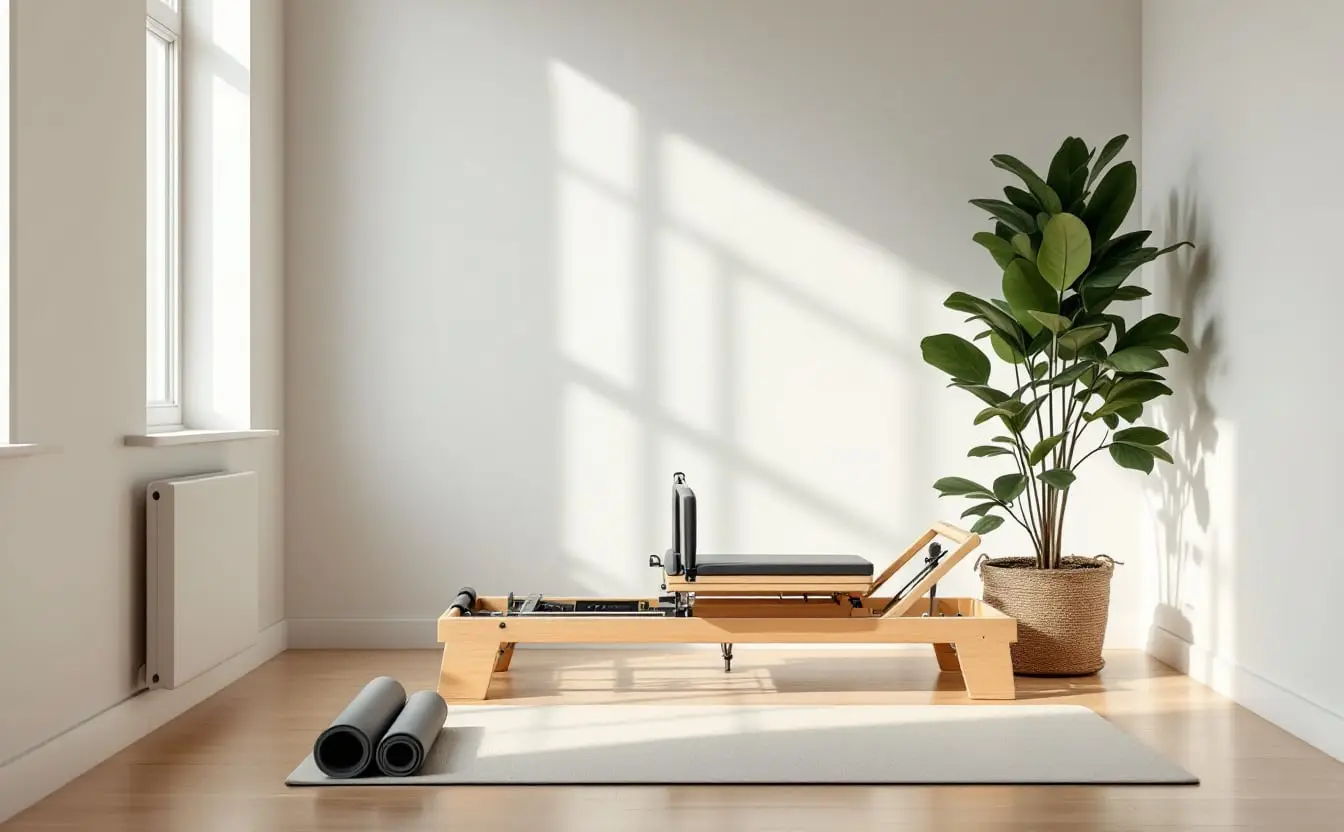
A Pilates machine for home almost always means a reformer: a padded carriage that slides along a frame, held back by springs or elastic cords, with a footbar to push against and straps for the hands and feet. Buying one makes sense if you already know the reformer from classes, have a permanent patch of floor for it and will use it at least twice a week. If you have never had a reformer class, book a few before you look at machines. Floor space is easier to give up than to win back.
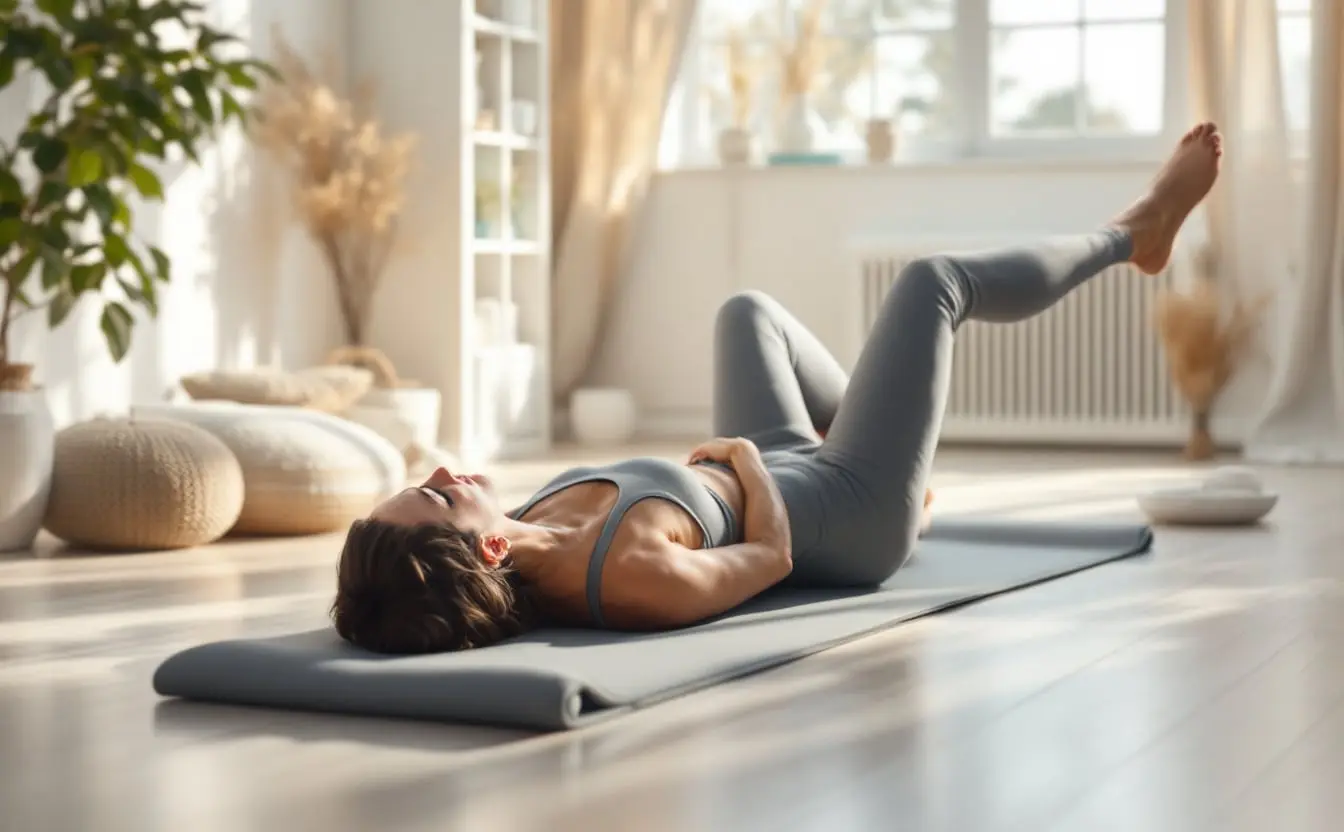
The appeal is obvious. No commute, no timetable, no waiting list for the 7am class. The springs or cords give you supported leg work and resistance the mat cannot, and lying down for Footwork on a moving carriage is still one of the clearest ways to learn what a level pelvis feels like. But a home machine also asks more of you than a mat. You set it up, change the load, get on and off safely and decide what to do next with nobody watching.
This guide is about the choosing: springs against cords, footprint and ceiling, weight limits, folding and noise, and the honest difference between a sliding board and a true reformer.
Three home machines side by side
| Pick | Best for | Key facts |
|---|---|---|
| AeroPilates 287 home reformer | A first home machine for someone who knows the basics from class | Steel frame; three elastic cords for resistance; padded footbar and adjustable headrest; folds and rolls on wheels |
| AeroPilates reformer with rebounder | People with room to spare who also want lying-down jumping work | Elastic cord resistance; a rebounder fitted at the foot end; about 85 inches (2.2 m) long |
| JANUA folding Pilates board | Small rooms and tight budgets, as a step on from the mat | A folding sliding board with band resistance; not a spring reformer |
A note on how these were chosen. We picked them from the makers' specifications, published reviews and how well each suits Pilates at home, and we have not tested them ourselves. Treat the table as a starting point and check the current specification, especially the weight limit and folded size, before you order.
Kit list
- AIREX yoga and Pilates mat from Power SystemsBest for: a mat that wipes cleanSee it at Power Systems (AIREX yoga and Pilates mat from Power Systems)
- Power Systems Pilates resistance ringBest for: a studio-grade ringSee it at Power Systems (Power Systems Pilates resistance ring)
We may earn a commission from these links.
Springs or bungee cords
Studio reformers run on steel extension springs in a row of strengths, hooked on and off to change the load. Most budget home machines use elastic cords instead: rubber cords, often in a fabric sleeve, that you clip on in different combinations. The AeroPilates 287 is the familiar example, with three cords.
The two feel different. A good spring gives an even pull through the whole stroke and carries heavy loads, so Footwork on a full spring setting is real leg work. Cords are lighter overall and tend to feel softer at the start of a press, building as they stretch. Heavy lower-body work is harder to match on cords, though plenty of people never miss it.
Cords have practical advantages. They are quiet, light and simpler to build, which is why folding home machines use them. They also age: heat, sunlight and use make rubber lose its stretch, so check that replacement cords are sold for the model you choose. Springs tire too and need replacing on the maker's schedule, but a spring machine is usually heavier, steadier and firmly in the mid-range or studio-grade bracket.
My own view: cords are fine for learning control at home, and control is most of the point. If your main aim is heavy leg work, a spring machine or a studio class does it better.
Space: footprint, ceiling and floor
Most home and studio reformers are roughly 7 to 8 feet long (about 2.1 to 2.4 m) and 2 feet or a little more wide (60 to 70 cm). That is only the machine. You also need about 2 feet (60 cm) clear down each side, and a little more at the head and foot, so you can step on and off, reach the springs or cords and walk round without stepping over straps. Mark the outline plus that margin on the floor with masking tape and live with it for a week before you buy.
A plain reformer rarely needs a tall ceiling, because most of the work is lying, sitting or kneeling. Height starts to matter if you add a tower frame, if you are tall and kneel on the carriage with your arms overhead, or if you plan standing work. Measure to the lowest light fitting or beam, not to the ceiling itself.
The floor matters more than people expect. A firm, level surface keeps the frame square and the carriage running straight. Thick carpet lets the frame sit unevenly. On wood or tile, a rubber mat or a few interlocking rubber tiles under the frame stops it creeping and protects the floor. Rebounder work sends impact through the frame and into the floor, so in an upstairs flat, think about the people below before you choose the machine with the trampoline.
What to look for in a Pilates reformer machine for home
Weight limits and your height
Every machine lists a maximum user weight. Treat it as a limit, not a target, and stay comfortably below it, especially on folding frames, which have more joints to carry the load. Height counts too. On a shorter frame a tall person can run out of carriage travel in leg work, or find the footbar and shoulder rests too close together. If you are over about 6 feet (1.83 m), look for the frame length and carriage travel in the specification, or try the machine in person.
Check how high the carriage sits off the floor as well. Low machines are harder to climb on and off for anyone with stiff knees or hips.
Folding and storage
Folding machines either fold in half or stand up on one end, and most roll on small wheels. Find out how heavy the machine is to lift, whether folding is a one-person job and how tall it stands when stored. Be honest with yourself here. A machine that takes ten minutes to unfold from behind the sofa tends to stay folded.
Noise
Cords are quiet. Springs make a soft clink, and a carriage that crashes home makes a clatter that carries through floors, though that is a technique problem as much as a machine one. Wheels should hum along the rails, not grind or knock. Rebounders are the loudest part of any home set-up, because jumping is impact even when you are lying down.
Footbar, straps and headrest
Look for a footbar with more than one position that locks firmly, straps or ropes you can adjust, and a headrest that tilts. Shoulder rests should be padded and solid. For a fuller list of what separates good apparatus from poor, from frames to upholstery, see what makes good Pilates apparatus.
Sliding boards versus true reformers
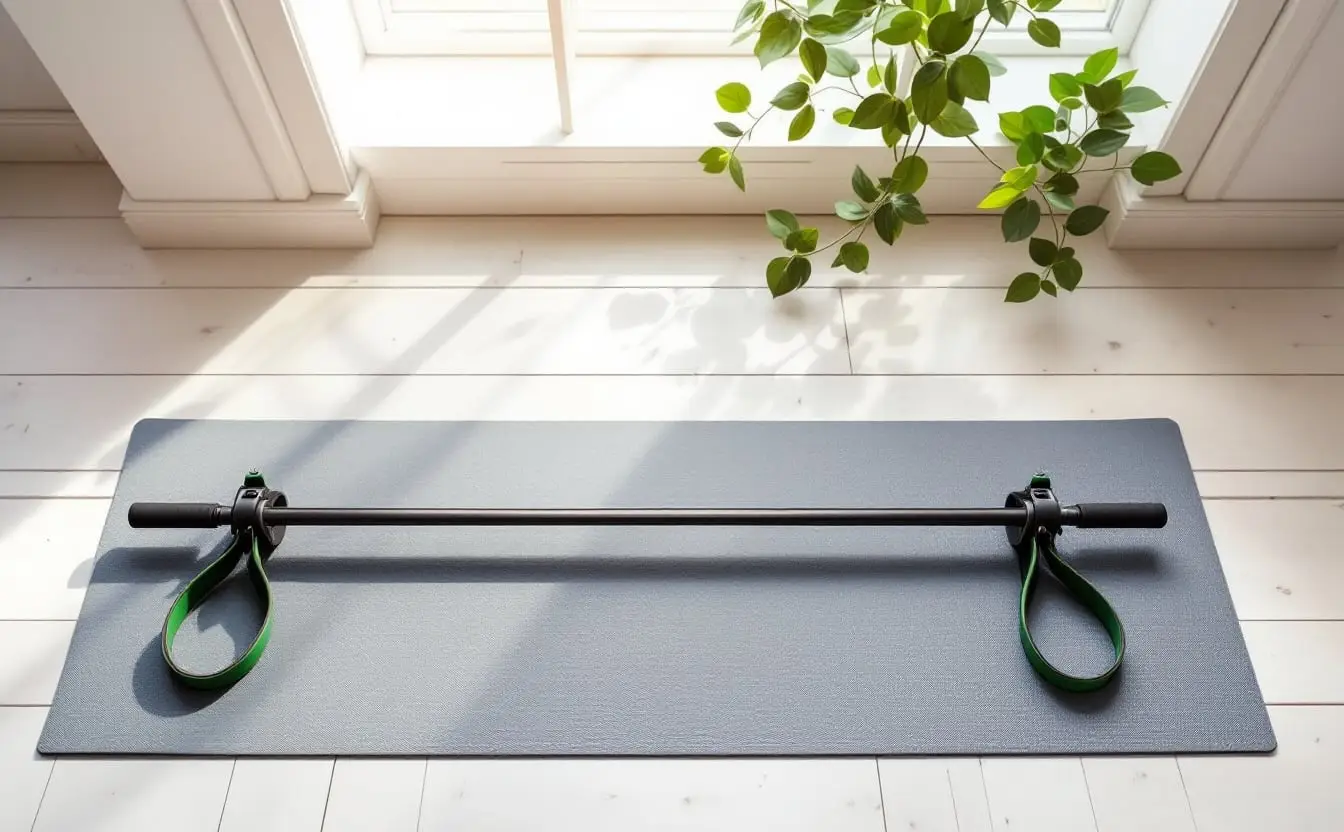
A true reformer has a carriage running on rails or tracks, shoulder rests, a footbar, and springs or cords pulling the carriage back towards the frame. A sliding board is simpler: a low platform with a gliding section and bands for resistance. A folding sliding board weighs less, folds flat and fits where no reformer would.
Boards do some things well. Plank and pike variations, lunges, kneeling arm work and slow sliding presses all teach control, and they can be hard work. What they cannot give you is the supported lying Footwork and leg work in straps that makes the reformer so useful for beginners, and band resistance is lighter and changes more along the stroke. Think of a board as a serious mat accessory rather than a small reformer and you will not be disappointed.
Is a home reformer worth it?
For some people, clearly yes. Run through this list before you spend anything:
- You have done a beginners' course or a block of reformer classes and can name the basic exercises.
- The machine can stay set up, or you are certain you will unfold it.
- You will use it at least twice a week, most weeks.
- You have a plan for teaching: occasional private sessions, or follow-along classes made for your kind of machine.
- Your floor, your ceiling and your neighbours can live with it.
Fewer than four ticks and I would wait. A mat, a ring and a band cover a great deal of the method, and the guide to a home Pilates kit sets out what to buy first. If you are still deciding which format suits you in class, the piece on whether to start on the mat or the reformer is the place to begin. A cord machine at home with a studio class once a fortnight is a combination that suits a lot of people.
The three machines from the table:
Learn with a teacher first
Reformers are safe when they are used as taught. Most problems happen at the edges of an exercise: climbing on while the carriage can roll, a footbar that is not fully locked, a strap that slips off a foot under load, a cord or spring unhooked carelessly, or an exercise copied from a video that nobody has ever taught you. Three or four private sessions, or a short beginners' course, teach you how to get on and off, change the resistance and set the footbar and headrest for your body. Some teachers will come to your home and run the first session on your own machine, which is time well spent.
If you are pregnant or postnatal, or have osteoporosis, a recent injury or surgery, or ongoing back pain, check with your doctor or physiotherapist first, and learn with a qualified teacher in person before you practise alone.
Looking after a home reformer
- Wipe the carriage, headrest and footbar after each session with a damp cloth and mild soap, or the cleaner the maker recommends. Harsh sprays crack vinyl.
- Keep the rails free of dust, hair and grit, which wear the wheels and make the carriage judder.
- Before every session, look at the cords or springs, ropes, straps and clips. Stop if you see fraying, cracks, rust, gaps between coils at rest or a clip that no longer closes firmly.
- Keep the machine out of direct sun and away from radiators. Heat and light age elastic cords and upholstery.
- Once a month, tighten bolts and check that the footbar locks in every position.
- Replace worn parts with the maker's own parts, and leave the machine alone until you do.
- Keep children and pets off it, folded or not.
Questions people ask
What is a Pilates machine called?
Usually a reformer. Joseph Pilates designed several pieces of apparatus, and studios also use the Cadillac or trapeze table, the Wunda Chair and the barrels, but the reformer is what most people mean by a Pilates machine, and it is the piece most often sold for homes.
Can a complete beginner learn on a home reformer?
Yes, with some teaching first. Learning the set-up and the basic exercises with a teacher, then practising at home, is far safer than learning both the machine and the method from a screen.
How much room do I need?
As a rough guide, allow a clear rectangle of about 10 by 6 feet (3 by 1.8 m) for a full-length reformer in use, plus somewhere to keep it if it folds. A sliding board needs much less.
Does a home reformer work as well as a studio one?
For learning control and the basic repertoire, a well-made home machine does the job. Studio machines are heavier, steadier, more adjustable and carry heavier loads. The exercises are the same; the feel is not.
Before you buy anything, lie on the floor where the machine will go and reach your arms overhead and out to the sides. If your hands meet a sofa, a radiator or a door, so will the straps.