Pilates bar or weighted body bar: choosing the right one
Some links in this story go to shops, and we may earn a commission from them.
A Pilates bar is either a take-apart bar with bands or a slim weighted body bar. How to choose each, which bands or weight to start with, and six exercises.
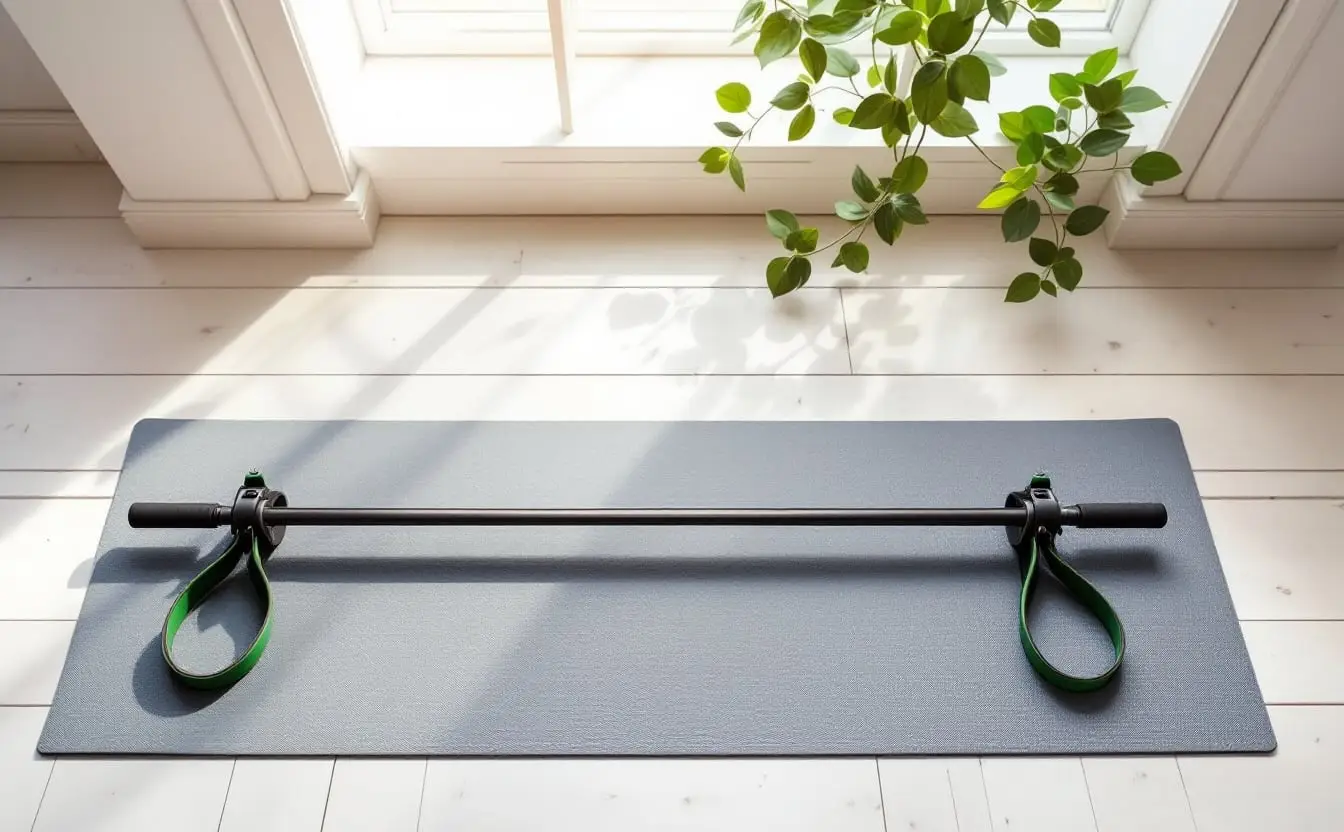
A Pilates bar is one of two quite different pieces of kit. The first is a take-apart bar, usually in three sections, with resistance bands running from each end down to a strap under your feet: you stand on the strap and squat, row or press against the bands. The second is a slim weighted bar, the kind handed round in body bar Pilates and barre-style classes, which you simply hold for lunges, presses and side bends. Both are sound home tools. They do different jobs, and buying one when you wanted the other is the commonest mistake.
The band kit suits people who like the feel of spring resistance and want standing strength work from something that packs into a drawer. The weighted bar suits people who already take classes that use one, or who want a single, simple load. Neither is a first purchase. In my guide to Pilates equipment for home I left bar kits off the first shopping list, and I still think the mat comes first. Once the mat habit is settled and you want more standing work, a bar earns its corner.
Three Pilates bars side by side
| Pick | Best for | Key facts |
|---|---|---|
| Bbtops Pilates bar kit | Stacking bands for a heavier pull | Bar in three sections that packs down; four latex bands that stack; reinforced band connections |
| COFOF Pilates bar kit | A sturdier steel bar with adjustable bands | Three screw-together steel sections; six resistance bands; metal buckles that set the band length |
| CanDo slim weighted bar | Light body bar work at home | Sold in several weights, each with its own colour; smooth surface that is easy to grip; from a physical-therapy brand |
We chose these from the makers' specifications, published reviews and how well each suits Pilates-style work at home. We have not tested them ourselves, so read the table as a shortlist and check lengths, band strengths and weights on the listing before you buy.
Kit list
- Power Systems flat resistance bandsBest for: cutting your own lengthsSee it at Power Systems (Power Systems flat resistance bands)
- Power Systems yoga and Pilates rangeBest for: equipping a roomSee it at Power Systems (Power Systems yoga and Pilates range)
We may earn a commission from these links.
Two products that share a name
Searches for a Pilates bar also turn up the ballet barre, the fixed rail of a barre class, and the foot bar of a reformer. This guide is about the two portable bars you can buy for a living room.
The bar kit with bands
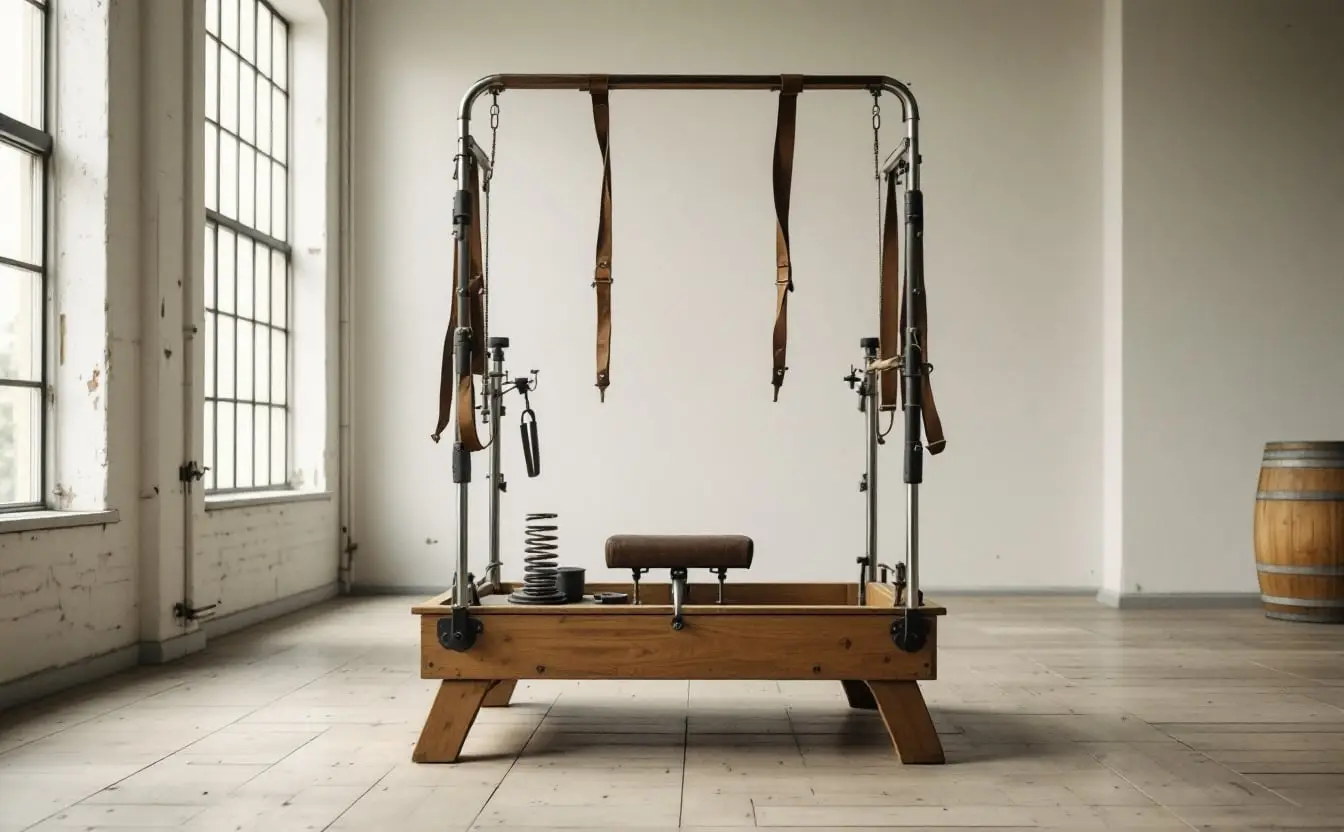
A bar kit is a short bar that screws or clicks together from sections, with a band fixed at each end. The bands run down to a loop or strap under your feet, so standing on it anchors the resistance to the floor. Some kits let you clip on extra bands for a heavier pull; others shorten the bands with a buckle. Either way the load rises as the band lengthens, which feels much like a spring.
People call it a portable stand-in for reformer work, which is a loose comparison: a reformer moves your whole body on a carriage. What a bar kit does well is standing strength (squats with a press, rows, curls, a hinge for the back of the legs) plus a lying version of Footwork. If you have never had a reformer class, mat or reformer: where to start explains what the real apparatus adds.
The weighted body bar
A weighted bar is a solid bar with a padded or coated finish, often around 4 feet (1.2 m) long, sold in fixed weights. There are no bands and nothing to adjust. In classes it turns up in slow squats and lunges, overhead reaches, side bends and bridges with the bar resting across the hips. It is simpler and quieter than a band kit, and nothing can snap. It is also a fixed load, so progress means slower repetitions, a longer range or, eventually, a second, heavier bar.
How to choose a Pilates bar kit
The bar and its joints
Screw-together steel joints are the sturdier type and less likely to work loose in the middle of a set. Push-fit joints are quicker but must click fully home every time. Once the bar is built, twist it gently in both hands: if a joint flexes or rattles now, it will move under load too.
Bands, stacking and buckles
Stackable kits come with several bands that you clip on in combination, one for arm work and two or three together for squats. Buckle kits keep the same bands and change their working length, and a shorter band feels heavier from the first inch. A steel bar with metal adjustment buckles suits a household where people of different heights share one kit. Stacking suits people who like clear steps of resistance.
Start lighter than you expect. Arms are much weaker than legs, and a band that is right for squats will make an overhead press ragged. The resistance band chart does not list bar kits, but its tube option uses the same moves (squat, Romanian deadlift, row, overhead press, curl), so it prints a fair plan for one. My guide to choosing a resistance band set covers latex, colour codes and why strengths never match between brands.
Connections, strap and length
The weak points are where the band meets the bar and where it meets the foot strap. Look for reinforced connections and metal clips or buckles rather than thin plastic, and a strap wide enough for both feet at hip width. Tall people need longer bands or a buckle system, or the bar stops short of a full overhead press; shorter people can find a long band slack at the bottom of a squat. Stand on the strap and lift the bar to shoulder height: you want some tension there, neither none nor most of it.
How heavy should a body bar be?
Light enough to move slowly, with good shape, for 10 to 15 repetitions. As a starting point I would look at the lighter end, roughly 3 to 9 lb (1.4 to 4 kg), for reaches, presses and side bends, and keep anything heavier for squats, lunges and bridges. If you are buying just one, choose for your weakest movement, usually the overhead press. A bar too heavy overhead makes the ribs flare and the low back arch, which undoes the point of the exercise.
A slim weighted bar with a different colour for each weight makes it easy to add a heavier one later without guessing, and a slim, smooth bar suits smaller hands.
What to avoid
- Kits with bands knotted round the bar, or held on with thin plastic clips.
- Bars sold on promises about a "Pilates body" or toning one area. A bar adds load; it does not reshape a particular spot.
- The heaviest weighted bars for overhead work.
- Large bundles with a mat, a skipping rope and a wall poster. You will use the bar.
- Kits that give no way of telling the lighter bands from the heavier ones.
A Pilates bar workout: six exercises
Twenty minutes alongside your mat work: 8 to 12 slow repetitions of each, two rounds, a minute's rest between. Breathe out on the effort and take two counts to lower. The first three suit either bar; the fourth needs a band kit; the last two are for a weighted bar.
Squat to press. Stand on the strap (or hold the weighted bar) with feet hip-width apart and the bar at the front of your shoulders. Sit back into a squat as far as your heels stay down, then stand and press the bar overhead. You should feel the thighs, seat and shoulders. Easier: skip the press. Harder: pause at the bottom.
Bent-over row. Hinge forward from the hips with a long, flat back and soft knees, the bar at arm's length. Draw it to your lower ribs, elbows close to your sides, then lower slowly. You should feel the muscles between and below the shoulder blades. Easier: hinge less.
Romanian deadlift. Stand tall with the bar in front of your thighs. Push your hips back and let the bar slide down to just below the knees, back long, then stand by squeezing the seat. You should feel the backs of the thighs, not the low back. Easier: a smaller range.
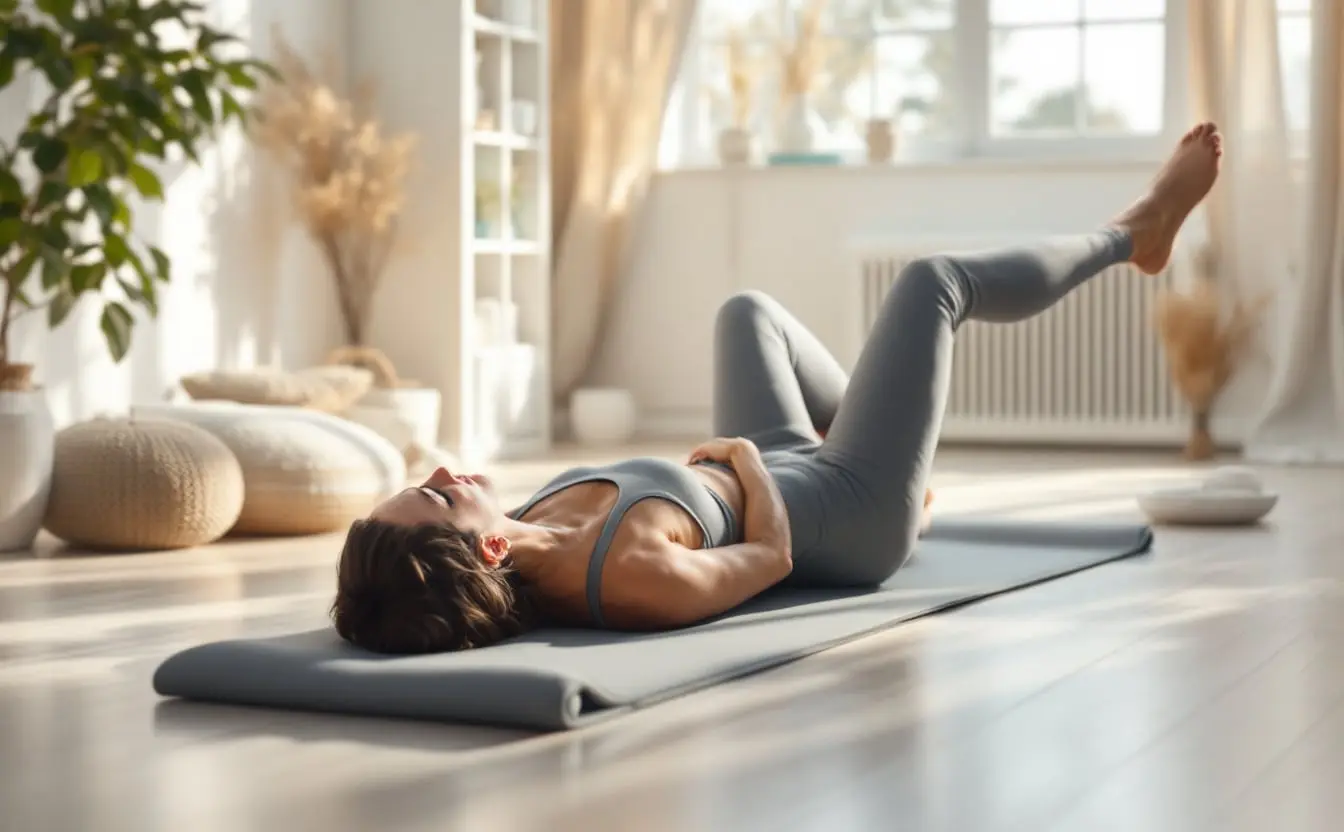
Lying Footwork. Lie on your back with the strap round the arches of both feet and the bar held across your chest, knees bent towards you. Press both legs out to a long diagonal, then bend them back with control, the pelvis still. Easier: press higher towards the ceiling. Harder: one leg at a time.
Standing side bend. Hold a weighted bar overhead, hands a little wider than the shoulders. Reach up, then over to one side with both hips level; return through the centre and go the other way, 5 each side. You should feel the side of the waist work. Easier: hold the bar at chest height and bend less.
Weighted bridge. Lie on your back, knees bent, with a folded towel and the bar across the front of the hips, hands steadying it. Peel the spine up into a bridge, hold for a breath, then roll down one bone at a time. You should feel the seat and the backs of the thighs. Harder: hold the top for three breaths.
Care and safety
- Check the band anchors before each use. Pull firmly on every point where a band meets the bar or the foot strap, and look for fraying, split clips or a buckle that slips. If anything gives, stop and replace that part.
- Look along each band for nicks and pale streaks, and retire it at the first tear.
- Screw the sections fully home before you start and check them between rounds.
- Stand on the strap with the whole foot, in trainers or grip socks, so it cannot slide out. Lower the bar slowly and never let a stretched band go.
- Keep your face out of the line of pull, and clear the space overhead before pressing a weighted bar.
- Most bands are natural latex. With a latex allergy, choose a weighted bar or bands labelled latex-free.
If you have a shoulder or back problem, a recent injury or a pregnancy, ask a physiotherapist before loaded or overhead work.
Questions about Pilates bars
Is a Pilates bar worth buying?
If you want standing strength work at home and already own a mat, yes. If you are new to Pilates, a mat and a long flat band will take you further in less space, and the bar can wait.
Pilates bar or resistance bands?
A long flat band covers most mat work and folds into a pocket. A bar kit adds a fixed grip and more resistance for squats, rows and presses. Many people end up with both.
Can a Pilates bar replace a reformer?
No. It borrows the feel of spring resistance for some moves, but there is no carriage and none of the support a reformer gives your body. Treat it as a strength tool alongside mat work.
What is body bar Pilates?
A class style that adds a slim weighted bar to Pilates and barre-type exercises, done slowly with attention to alignment and breath. Two or three sessions a week, with a day between, is plenty.
Before the first set of every session, stand on the strap, hold the bar at your hips and give each band one firm tug. Those ten seconds are the whole of the safety routine, and the habit worth keeping long after the exercises have changed.