A Pilates ball for home: choosing it, inflating it, using it
Some links in this story go to shops, and we may earn a commission from them.
A Pilates ball is the soft 9-inch ball, not a stability ball. How to choose and inflate one, three picks, six exercises and how it compares with a ring.
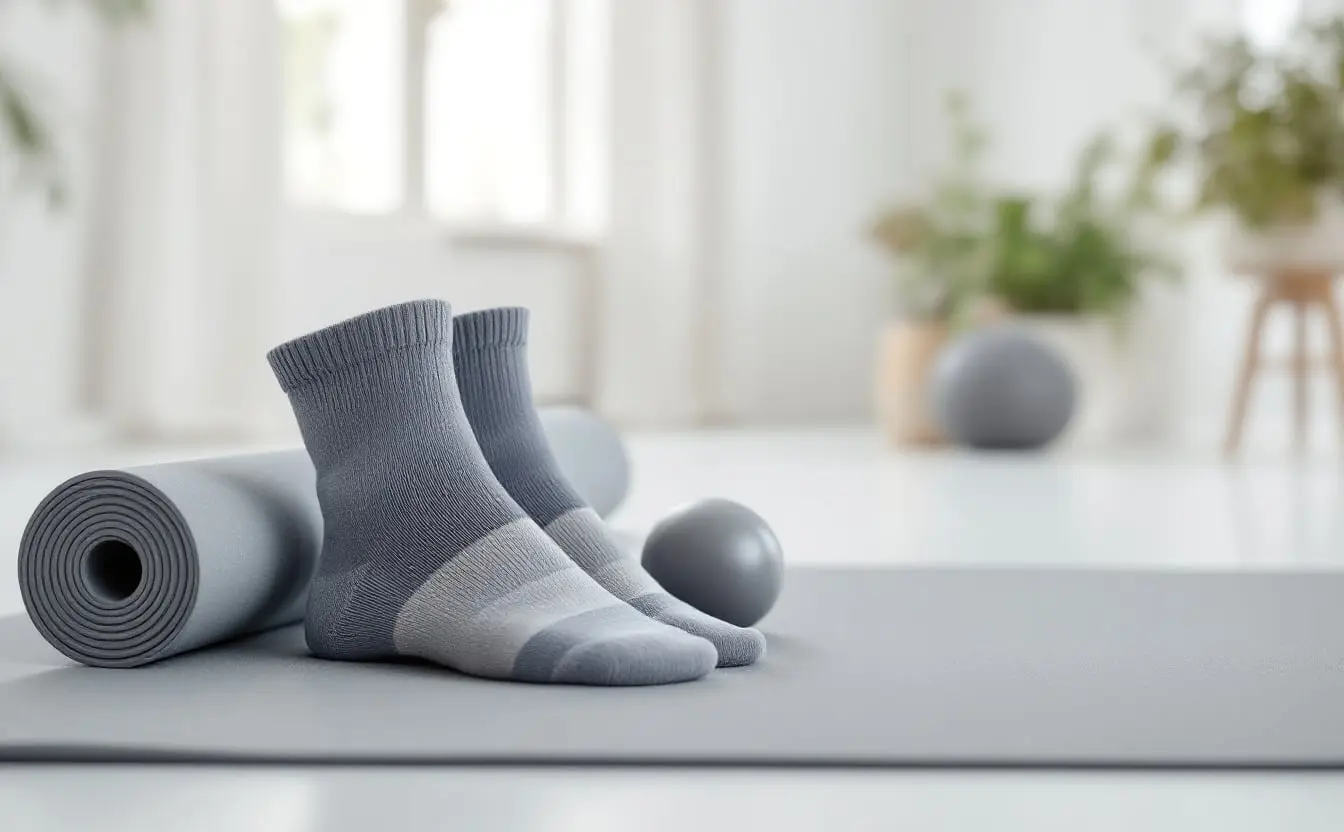
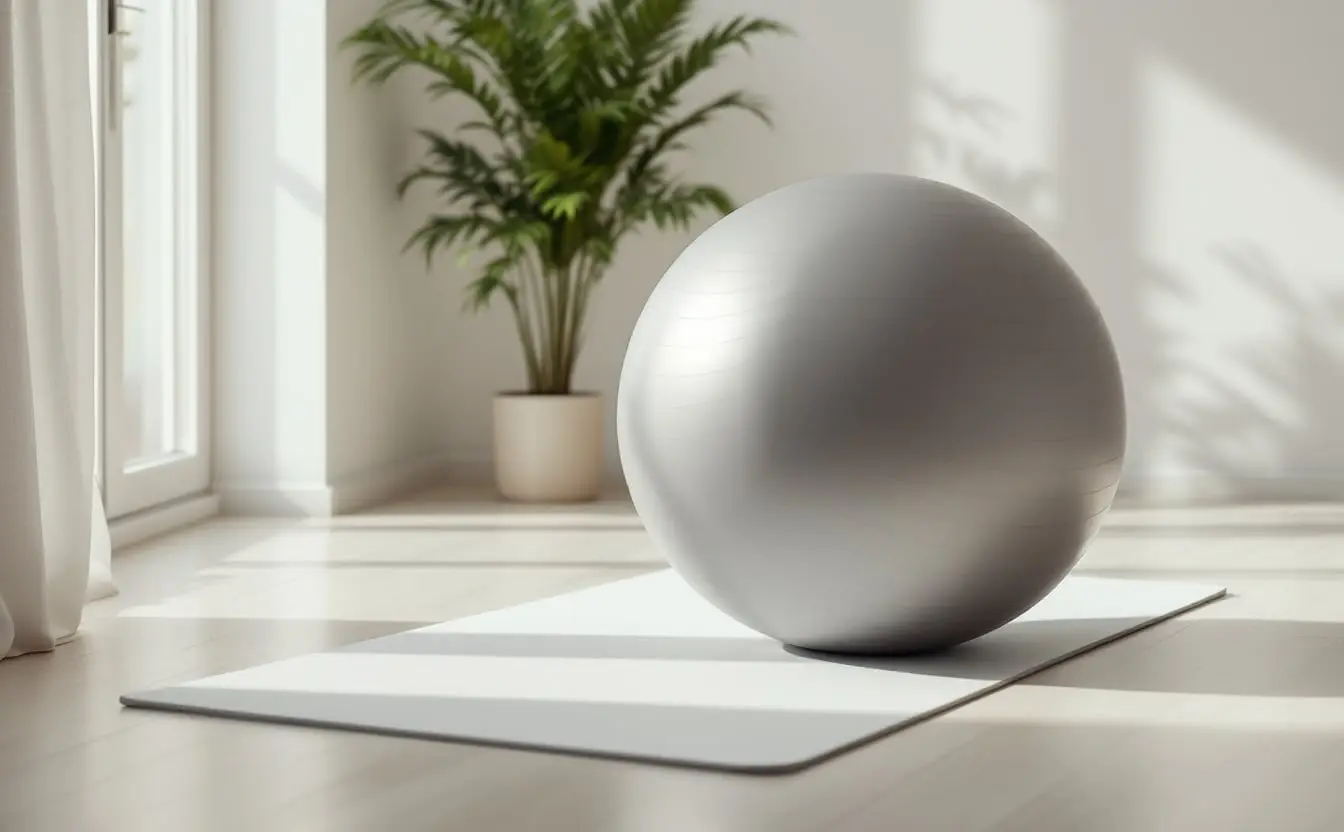
A Pilates ball, in almost every mat class, means the small soft one: about 9 inches (23 cm) across, only partly inflated so it gives when you press it, and light enough to hold in one hand. You squeeze it between the knees, rest the low back or pelvis on it, or roll it under your hands. It is not the large ball you sit on, which is a different tool with its own guide to choosing a stability ball.
After the mat, the small Pilates ball is the prop I would hand most beginners first. It makes curling and rolling exercises easier to control, because it supports you through the part of the movement you cannot yet hold on your own, and it reminds the inner thighs to work without loading them much. It also suits people coming back after a break, anyone who finds a ring too stiff, and anyone who travels, since it packs flat. It need not be anything special. It does need to be the right size, with the right amount of air in it.
Three small balls compared
| Pick | Best for | Key facts |
|---|---|---|
| Trideer 9-inch soft ball | Bridges, curls and support under the back | About 9 inches (23 cm); soft PVC; inflation straw included |
| ProBody 9-inch small ball | A latex-free small ball | About 9 inches (23 cm); latex-free, anti-burst PVC; straw inflator |
| Power Systems Poz-A-Ball | Holding positions | About 8 inches (20 cm); air-filled; made for squeezing and support, not for throwing |
We chose these from the makers' specifications, published reviews and how well each suits mat Pilates at home. We have not tested them ourselves, so treat the table as a shortlist and check the size and material on the listing before you buy.
Kit list
- AIREX yoga and Pilates mat from Power SystemsBest for: a mat that wipes cleanSee it at Power Systems (AIREX yoga and Pilates mat from Power Systems)
- Power Systems Pilates resistance ringBest for: a studio-grade ringSee it at Power Systems (Power Systems Pilates resistance ring)
We may earn a commission from these links.
Small Pilates ball, mini ball, soft ball
The names vary more than the product. Small Pilates ball, mini ball for Pilates, soft ball, barre ball and mini stability ball usually describe the same thing: a thin-walled PVC ball, roughly 7 to 10 inches (18 to 25 cm) across, inflated through a small hole with a straw and closed with a plug. Nine inches is the commonest size and the one most class plans assume. An 8-inch ball, such as the Poz-A-Ball from the studio supplier Power Systems, sits a little lower under the sacrum and fits more easily between smaller knees.
It is not a medicine ball, a weighted toning ball or a spiky massage ball. Those are firm or heavy, and a Pilates ball should be neither.
How to choose a small Pilates ball
Size
Choose 9 inches unless you have a reason not to. Petite people, or anyone who finds a ball wide between the knees in a bridge, may be happier with 8 inches. Very tall people sometimes like a slightly larger ball behind the back in roll-backs, though it feels bulky between the legs.
Material and surface
Most small balls are PVC, and some are sold as anti-burst, which matters less here than on a big ball you sit on. If anyone in your home has a latex allergy, check that the listing says latex-free: a latex-free small ball in anti-burst PVC is one. A matt or lightly textured surface grips the mat and bare skin better than a glossy one, which can skid out from under the pelvis in a hold.
Plug and straw
The ball arrives flat with a short plastic straw. You pull out the plug, blow in through the straw, pinch the hole and push the plug back. Check that the plug sits flush, because one that stands proud presses into your back in support work. Keep the straw with the ball; without it, topping up is fiddly.
What to avoid
- Balls sold with promises to tone the inner thighs or flatten the stomach. A ball gives support and feedback; it does not change one area of the body.
- Firm, heavy balls described as Pilates balls. They suit throwing and lifting, not squeezing and resting on.
- Bundles where the ball is one of a dozen extras you will never use.
- Listings that do not state the size.
How much to inflate a Pilates ball
Partly. Somewhere around two-thirds to three-quarters full is a common starting point, soft enough that a firm press with your fingers sinks in an inch or so. For squeezes between the knees, a soft ball lets you feel the squeeze happen instead of meeting a hard wall. For support behind the back or under the sacrum, a soft ball also sits steadier, because a firm one tends to roll away.
To test it, sit on the mat with your knees bent, place the ball behind your low back and lean into it. You should sink a little and feel held, neither pushed forward nor bottoming out. Add or let out air until that is true. The room matters too: a ball that felt right on a warm evening will feel softer on a cold floor on a November morning, so give it a squeeze before you start.
Six Pilates ball exercises
These slot into a mat routine you already know, such as the foundations in mat Pilates exercises for beginners, rather than forming a workout of their own. Move slowly, breathe out on the effort, and stop short of any position that pinches. A soft 9-inch ball, inflated as above, suits all six.
Bridge with a ball squeeze. Lie on your back, knees bent, feet flat and hip-width apart, the ball between your knees. Press it gently, then peel the spine off the mat into a bridge, hold for a breath and roll down one bone at a time, 8 times. You should feel the inner thighs, seat and backs of the thighs, with the knees pointing straight ahead. Easier: keep the hips low. Harder: lift one heel at the top, then the other.
Supported roll-back. Sit tall with knees bent, feet flat, the ball behind your low back and arms reaching forward. Breathe out and curl back into the ball until it takes some of your weight, hold for a breath, then curl up to sitting, 6 to 8 times. You should feel the deep abdominals as the spine rounds. Easier: roll back only an inch or two. Harder: add a slow turn to each side at the bottom.
Chest lift over the ball. Lie with the ball under your mid-back, around the bottom of the shoulder blades, knees bent and hands behind your head with the elbows wide. Let the upper back drape slightly over the ball, then breathe out and curl the head and shoulders up, ribs drawing towards the hips, 8 to 10 times. You should feel the front of the abdominals through a longer range than on a flat mat, with the head heavy in your hands. Easier: let a little air out. Harder: hold the top for three breaths.
Toe taps with the ball under the sacrum. Lie with the ball under your sacrum, the flat bone at the base of the spine, and lift the legs one at a time into tabletop. Keeping the pelvis still on the ball, lower one foot to tap the floor and bring it back, then the other, 8 each side. You should feel the lower abdominals holding the pelvis steady. Easier: keep one foot on the floor throughout. Harder: lower both feet together.
Swan prep with hands on the ball. Lie on your front, legs long, with both hands on the ball in front of your head. Draw the shoulders gently away from the ears and roll the ball towards you as you lift the chest a few inches, then roll it away as you lower, 6 to 8 times. You should feel the muscles along the spine and between the shoulder blades, with the low back long. Easier: a smaller lift. Harder: hold the top for a breath.
Side-lying double leg lift. Lie on your side, bottom arm long under your head, the ball between your ankles. Squeeze gently and lift both legs a few inches, then lower, 8 to 10 times each side. You should feel the inner thighs and the side of the waist, with the top hip stacked over the bottom one. Easier: bend the knees and hold the ball between them.
Pilates ball vs ring
The Pilates ring guide makes the case for the ring; this is the ball's side. A ball does three things a ring cannot. It supports your body, under the sacrum, behind the back or beneath the head. It rolls, so it can travel under your hands in back extensions. And deflated, it fits in a coat pocket. Its squeeze is softer, with almost no push back, so it teaches the inner thighs to switch on rather than loading them.
The ring wins once you want resistance that builds and a clear way to progress. For most beginners the ball comes first and the ring a few months later, which is the order the home Pilates kit guide suggests too.
Care and safety
- Wipe the ball with a damp cloth and a drop of mild soap after sweaty sessions, and let it dry before you put it away.
- Keep it away from radiators, sunny windowsills, pets' claws and gritty floors.
- For storage or travel, let most of the air out and keep the plug in place, with the straw in the same bag.
- A ball that goes soft between sessions has a pinhole. Replace it rather than pumping it up every time.
- Do not sit, kneel or stand on a small ball. It is made for squeezing and for support while you lie on the mat, not to carry your full weight.
- Keep the loose plug away from small children.
If you have osteoporosis, curl-ups and roll-backs may not suit you, so ask a physiotherapist before trying exercises 2 and 3. The same goes for pregnancy and for back or pelvic pain: get qualified, in-person advice on which ball work fits.
Questions about the Pilates ball
What size Pilates ball should I buy?
A 9-inch (23 cm) ball suits most adults and most exercises. Choose 8 inches if you are petite or find a bigger ball awkward between the knees.
Is a small Pilates ball good for beginners?
Yes, it is one of the most useful props for beginners, because it supports you in the curling and rolling work that is hardest to control at first. Use it in two or three exercises a session, not all of them.
Can I use a cushion instead?
For a squeeze between the knees, a firm cushion works well. Behind the back, a rolled towel is a fair stand-in, though it will not give or roll the way a ball does.
Can I take a Pilates ball on holiday?
Yes. Let the air out, fold it flat and pack the straw with it. It weighs almost nothing and a few breaths bring it back to size in a hotel room.
Next time you unroll the mat, put the ball behind your back before anything else and lean into it. If you sink an inch and feel held, the air is right and the session can start.