What a foam roller can and cannot do for sore muscles
Some links in this story go to shops, and we may earn a commission from them.
Foam rolling can ease soreness and loosen you up for a while, but it does not break up fascia. What the research shows, how long to roll and what to skip.
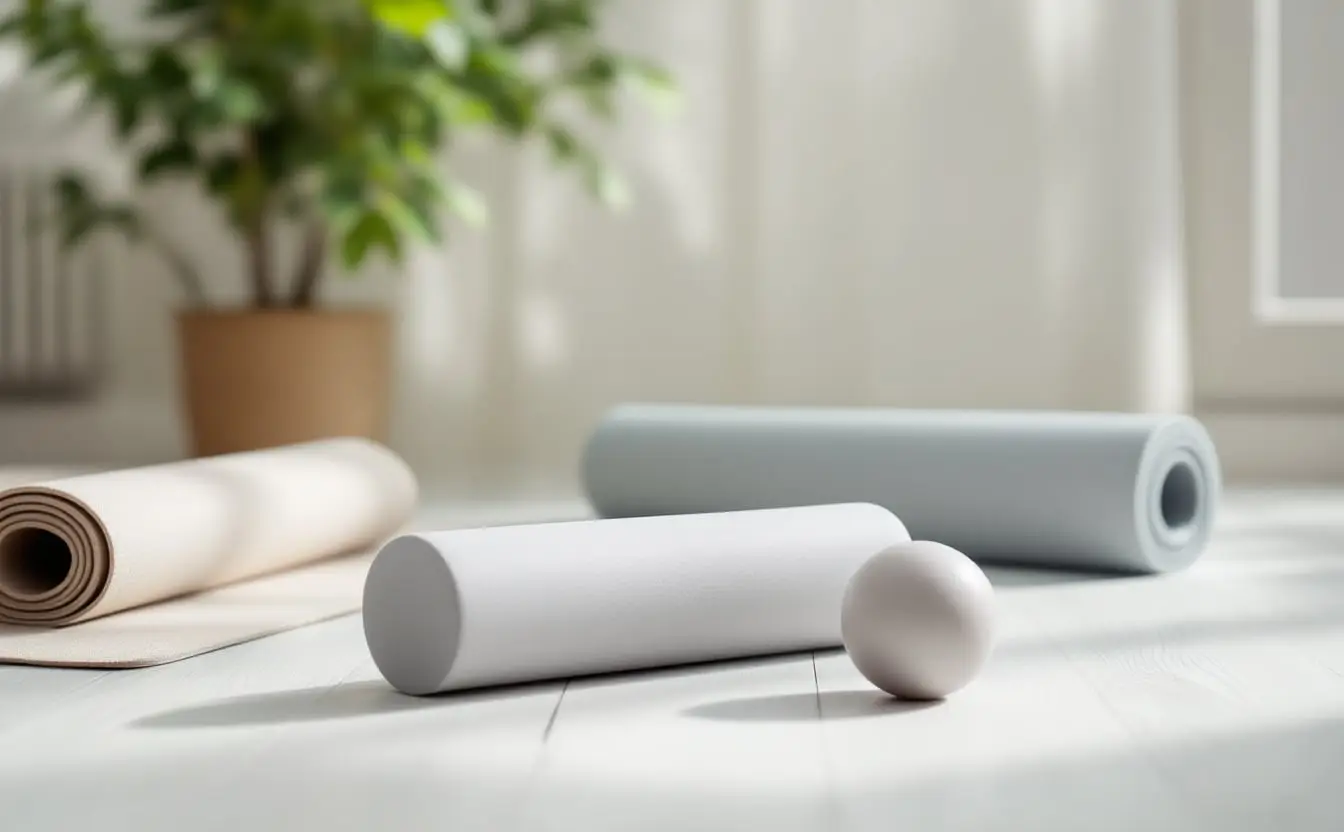
The foam roller has become part of the furniture. It sits in the corner of every gym stretching area and most Pilates studios, and in a good many living rooms, where it gets used in front of the television on Sunday evenings. The claims made for it have grown at the same pace: it breaks up knots, releases fascia, flushes out toxins, straightens posture.
I like a foam roller and use one most weeks. I also think most people roll for longer, harder and with more hope than the evidence supports. The useful part is real, but it is smaller and more specific than the folklore, and knowing which part is which saves time and a fair amount of wincing.
What actually happens when you roll
Lying on a roller presses skin, fat, fascia and muscle between a firm surface and your own body weight. Pressure receptors in those tissues send a rush of signals to the spinal cord and brain, and the familiar sensation, somewhere between relief and complaint, follows. Afterwards the area often feels looser and moves a little further.
The best current explanation is that most of that change happens in the nervous system rather than in the tissue. Your tolerance to stretch rises, protective tension eases, and the body allows a bit more range for a while. Two lines of evidence point that way. Fascia, the dense connective tissue that wraps and links the muscles, is tough stuff, and modelling studies suggest the force needed to permanently deform thick fascia, such as the broad sheet on the outside of the thigh, is far beyond anything a person lying on a roller can produce. And some studies have found that rolling one leg brings a small gain in range in the other, untouched leg too, which is hard to explain by changes in the rolled tissue and fits a nervous system effect rather well.
Neither finding settles the question alone. Together they make the 'breaking things up' story very hard to believe.
Kit list
- Power Systems yoga and Pilates rangeBest for: equipping a roomSee it at Power Systems (Power Systems yoga and Pilates range)
We may earn a commission from these links.
What the research generally finds
Foam rolling has been studied a fair amount, though the studies are often small, short and done on young, sporty volunteers. Reviews that pool them tend to land on a consistent and fairly modest picture.
- Range of movement goes up a little, for a while. A minute or two of rolling usually gives a small increase in how far a joint moves, broadly similar to what a few minutes of static stretching gives. The gain tends to fade within a short time, often well inside the hour.
- Soreness feels less. Rolling in the day or two after hard or unfamiliar exercise tends to reduce how sore muscles feel, and may help people feel recovered a little sooner. The effect is modest but turns up fairly reliably.
- Performance barely changes. Short bouts of rolling before exercise do not seem to sap strength or power the way very long static stretches sometimes can, and any effect on performance, either way, is generally small.
- Lasting change is unproven. There is much less evidence that months of regular rolling, by itself, produces lasting gains in flexibility. If you want to move further for good, regular stretching and strength work through a full range of movement have better support.
That is a decent result for a cheap piece of foam. It is just not the result printed on some of the boxes.
What it does not do
It does not break up fascia, scar tissue or 'adhesions'. For the reasons above, a few minutes of body weight is not remodelling anything. The knot you feel melt is far more likely to be a change in muscle tone and sensitivity, which is pleasant and worth having, but different.
It does not flush out lactic acid or toxins. As I explained in the piece on rest days and active recovery, lactate clears from the blood within an hour or so of finishing exercise and is not what makes you sore two days later. Waste products are handled by the liver and kidneys, which do not need a roller's help.
It does not lengthen the iliotibial band. The IT band is a thick strip of fascia on the outside of the thigh, anchored at the hip and below the knee. It is not a muscle and it does not stretch out under a roller, which is one reason rolling it hurts so much for so little return. If you want to work around it, the outer hip and buttock muscles and the front of the thigh are kinder targets.
It does not fix posture. How you sit and stand depends on habit, strength, comfort and what you are doing. Lying on a roller for five minutes changes none of those.
More pain does not mean more benefit. Pressure that makes you hold your breath, tense up or flinch does not help, and the studies that report benefits have generally used firm but tolerable pressure. Aim for something you would rate around five or six out of ten and can breathe through.
How to roll
The method matters less than people think, but a few habits make it more useful. Move slowly, a few centimetres per second. Breathe normally. When you find a tender spot, pause on it for two or three slow breaths rather than grinding back and forth. Use your hands and the other leg to control how much weight goes onto the roller, and lighten it whenever you need to.
Timing depends on why you are rolling. Before a class or a run, keep it short, about 30 to 60 seconds per area, and follow it with real movement, because rolling is not a warm-up on its own. For soreness after a hard session, roll in the following day or two, again for a minute or two per area. A whole session rarely needs more than 5 to 10 minutes.
| Area | How to set up | Time |
|---|---|---|
| Calves | Sit with the roller under one calf, hands on the floor behind you. Cross the other leg on top for more pressure | 30 to 60 seconds each leg |
| Back of the thighs | Sit with the roller under both thighs, hands behind you, and roll from just above the knees to just below the buttocks | 30 to 60 seconds |
| Front of the thighs | Lie face down on your forearms with the roller under the thighs, as in a forearm plank, and roll from hip to just above the knee | 30 to 60 seconds |
| Buttocks and outer hip | Sit on the roller, cross one ankle over the opposite knee and lean towards the crossed leg | 30 to 60 seconds each side |
| Upper back | Lie with the roller across the back below the shoulder blades, hands behind your head, hips on the floor or lifted, and roll up to the top of the shoulder blades | 30 to 60 seconds |
The upper back is where I think the roller earns its keep. Many people who sit at a desk all day find their upper spine stiffens into a curve, and slowly letting it soften back over the roller, a few centimetres at a time, feels good and seems to make extension work easier in class afterwards. For the hips, a short mobility routine like the 10-minute hip routine for desk days does more than rolling alone.
In Pilates studios the roller often has a second job as a prop. Lying along it lengthways, head and pelvis supported, turns simple arm circles and leg lifts into a quiet balance challenge for the trunk. That is a very different use, and a good one.
What to skip
Some places and some situations are better left alone. The lower back is the main one. Rolling directly over the lumbar spine presses into an area with no ribs or shoulder blades to spread the load, and it tends to provoke the muscles rather than settle them. If the lower back feels tight, roll the buttocks and upper back instead.
Skip the neck on a full-size roller, and keep off joints and bony points such as the kneecap and the outside of the ankle. Avoid bruises, swelling, recent injuries, varicose veins and anywhere that feels numb. If you have osteoporosis, a bleeding disorder, take blood-thinning medicine, are pregnant, or have problems with your circulation, ask your doctor or a physiotherapist before you start. The same goes for a spot that stays painful for weeks. Rolling it harder is not the answer; getting it looked at is.
Questions people ask
Soft or firm roller?
Start with a smooth, medium-density roller. Firm and textured rollers press harder and suit people who already roll regularly and find softer ones do little. A plain roller costs roughly £10 to £25, and the expensive ones do not do anything different in kind.
Is a massage ball better?
For small areas, often yes. A tennis ball or a small rubber ball gets into the sole of the foot, the buttocks and the edges of the shoulder blades (lean against a wall) in a way a roller cannot.
What about vibrating rollers?
The evidence is thinner. Some studies suggest a slightly bigger short-term effect on range of movement than a plain roller, but nothing that makes vibration necessary. If you enjoy it, fine.
Can I roll every day?
Yes, if it feels good and you keep the pressure sensible. A few minutes daily is plenty. If an area feels bruised or more sensitive the next day, you pressed too hard.
Should I roll instead of stretching or warming up?
No. Rolling can sit alongside both, but it does not replace a warm-up that raises your heart rate and moves the joints through the ranges you are about to use. For more on fitting recovery work into a week, the mobility and recovery channel collects the rest.
If you only have five minutes and a roller, spend most of it on the upper back. Lie across the roller just below the shoulder blades, hands cradling your head, breathe out and let the upper spine soften over it for three slow breaths. Move it up a few centimetres and repeat until you reach the top of the shoulder blades. Then put it back in the corner and go for a walk.