
Hiring your first Pilates instructor for a small studio
Some links in this story go to shops, and we may earn a commission from them.
How a small UK Pilates studio can hire its first instructor: employed or freelance, checking training and insurance, the audition class, pay and cover.
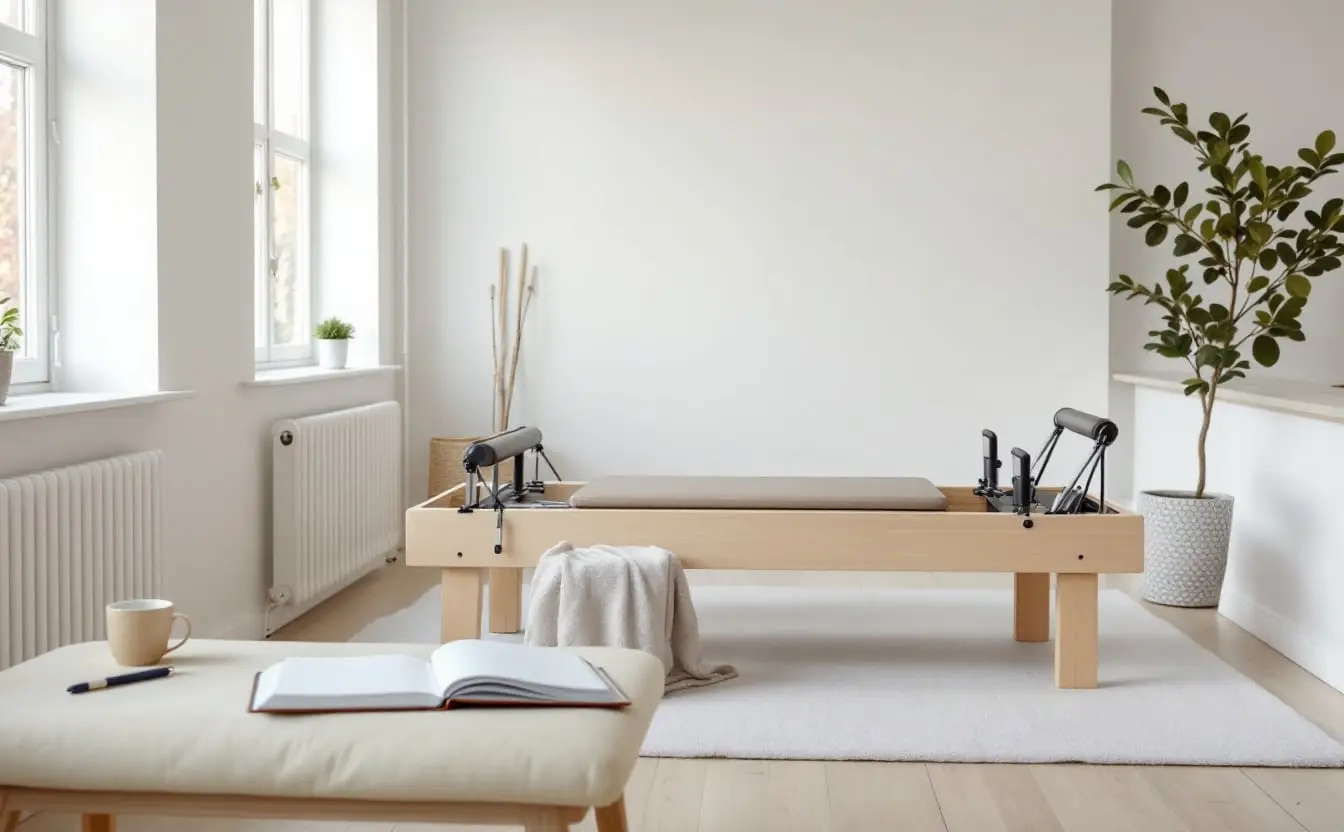
The first hire is the moment a studio stops being one person with a timetable and becomes a small business with someone else's name on the board. It usually comes out of a good problem. The evening classes have waiting lists, you have not had a free Saturday since the spring, and the people who want privates on Tuesday mornings keep hearing no.
A second teacher solves that, and raises questions most owners have never had to answer: contracts, pay, standards, and who teaches when somebody rings in sick at half past six.
Here is a practical order of work for that first hire. It is written for a UK studio and it is general information, not legal or tax advice. Employment status, payroll and contracts are areas where an hour with an accountant or an employment adviser costs far less than getting it wrong.
1. Decide what you are hiring for
Before you write an advert, write down the hours. Which classes, which days, mat or apparatus, beginners or mixed levels? Do you want someone to take over a fixed slice of the timetable, or someone to cover your holidays and the odd bad cold? Those are two different people, and quite possibly two different legal relationships.
Be honest about what you will hand over. Offering a newcomer only the 7am Monday class nobody books gets noticed. If the hours are thin, say so, and look for someone who wants exactly that: a teacher building a portfolio of studios, or an experienced one cutting back.
Note what you will not compromise on, too: how beginners are introduced, classical order or contemporary format, how injuries and spring settings are recorded. That page is the first draft of your studio manual.
Kit list
- Power Systems yoga and Pilates rangeBest for: equipping a roomSee it at Power Systems (Power Systems yoga and Pilates range)
We may earn a commission from these links.
2. Employed or freelance
Most small UK studios start with freelance teachers, paid per class against an invoice. It is simpler on paper. It is not always correct, because employment status depends on how the working relationship actually operates, not on what the contract calls it.
UK employment law has broadly three categories: employee, worker and self-employed. For tax, HMRC asks whether someone is employed or self-employed, and its free online tool, Check Employment Status for Tax, walks you through the questions. The factors that usually weigh most:
- Control: who decides how, when and where the work is done.
- Substitution: whether the teacher can send another qualified teacher in their place, and whether that ever actually happens.
- Obligation: whether you must offer the work and they must accept it.
- Their own business: whether they teach elsewhere, keep their own clients, set their own rates and carry some financial risk.
- Equipment and place: whose reformers, whose room, whose class format.
A teacher who takes a fixed weekly timetable, in your room, on your machines, to your class plan, with no real right to send someone else, can start to look more like a worker or an employee than a freelancer, whatever the paperwork says. That matters because workers are entitled to things like the National Minimum Wage and paid holiday.
| Employed | Freelance | |
|---|---|---|
| Tax and National Insurance | You run payroll (PAYE) and pay employer's National Insurance | The teacher invoices you and handles their own tax through Self Assessment |
| Pension | You must auto-enrol eligible staff into a workplace pension | The teacher arranges their own |
| Holiday and sickness | Paid holiday and Statutory Sick Pay for those who qualify | Nothing from you; the teacher builds it into their rate |
| Insurance | Employer's liability insurance is compulsory for most employers | The teacher carries their own public liability and professional indemnity cover |
| Paperwork | A written statement of terms from day one, and a right to work check before they start | A clear written agreement and regular invoices |
| How they teach | You can set hours, format and standards | You agree the result; the teacher decides much of the how |
Neither column is better. Employing someone costs more in admin, but buys reliability and lets you shape how they teach. Freelancers bring flexibility and ideas from other studios, but you cannot manage them as staff. If you are unsure where a role sits, ask before the first class, not after a disagreement. Check the tax and payroll side with an accountant and the rest with an employment adviser; Acas also publishes free guidance on employment status. A teacher working through their own limited company brings extra rules, usually called IR35, which is another one for the accountant.
3. Check training, insurance and references
A certificate starts the conversation. It does not finish it. Ask which programme the teacher trained with, whether it covered mat only or the full apparatus, how many hours of observation, self-practice and student teaching it required, and how it was assessed. In the UK, many mat teachers hold a Level 3 qualification through a recognised awarding body, while comprehensive apparatus programmes run by Pilates schools follow their own syllabuses. Both can produce excellent teachers, as long as the training matches the classes you want taught. A mat-trained teacher who has taken a lot of reformer classes is not trained to run a reformer group.
Then ask what they have done since qualifying: workshops, lessons with senior teachers, their own regular practice. As Ruth Abernethy argued in her piece on why good teachers never stop studying, that habit predicts more than any single certificate. If a CV looks thin, our look at weekend courses and untrained teachers has questions you can ask without it feeling like an interrogation.
Before anyone teaches, ask to see:
- A current insurance certificate, checked for the type of teaching (mat, apparatus, privates, groups), the setting (your studio, plus online or outdoors if relevant) and the dates.
- A current first aid certificate. Not every studio insists on one, but it is a sensible condition for anyone who may be alone in the building with clients.
- Their training certificate and, if you have any doubt, confirmation from the training organisation.
- Two references from studios they have taught in, ideally ones you can phone.
If they will teach under-18s or work with vulnerable adults, ask an adviser which background checks apply.
4. Run an audition class
An interview tells you how someone talks about teaching. An audition shows you how they teach. Pay for it at your usual class rate. It is a working hour, and good teachers notice who respects their time.
A format that suits a small studio:
- A half-hour conversation first, about their training, the clients they love teaching and the ones they find hard.
- A 25 to 30 minute segment taught to three or four regulars who have agreed to help, ideally a beginner, a strong client and someone with a known niggle they are happy to mention.
- Ten minutes with you as the client. Mention a tight hip, or a wrist that dislikes weight-bearing, and see how they adapt.
- A short debrief. Ask what they would change if they taught the same group next week.
While they teach, watch for these:
- They arrive early, look round the room and set up without fuss.
- They ask each person about injuries and experience before starting.
- Cues are short and clear, and they change the cue when the first one does not land.
- They watch bodies, not notes.
- Spring changes, foot bars and headrests are handled safely and on time.
- They offer an easier and a harder option without making anyone feel singled out.
- They finish on time.
- They ask you questions about the studio.
That last one matters. A teacher who asks about your clients and your cancellation policy is already thinking like part of the team.
5. Agree pay the studio can sustain
Pay is where the arithmetic in our guide to pricing Pilates classes stops being theory. Work out what each class brings in at its average attendance, take off the cost of the room for that hour, and see what is left. If the teacher's fee would swallow nearly all of it, the class is underpriced or under-filled, and no new teacher fixes that.
| Pay model | How it works | Suits | Watch for |
|---|---|---|---|
| Flat fee per class | The same amount however many attend | Teachers who want certainty | The studio carries the risk of quiet classes |
| Per head | A set amount for each client in the room | New classes still building numbers | Quiet weeks hit the teacher, and resentment builds |
| Base plus per head | A modest base and a little more per client above a set number | Group mat and reformer classes | Keep the formula simple enough to check on an invoice |
| Share of the fee | A percentage of what the client pays | Privates and duets | Agree who absorbs card fees and discounts |
| Hourly wage | Paid for contracted hours, including set-up and admin | Employed teachers | Count the unbooked hours you are paying for |
Be clear about the work around classes, too: arriving early, wiping down equipment, notes on new clients. Pay for it or say plainly that the fee includes it. Unspoken expectations about unpaid time lose good teachers fast.
6. Onboard over a month, not a morning
A new teacher can be technically excellent and still unsettle your regulars, simply by doing things differently. A gentle first month helps everyone.
- Week one: they take or observe three or four of your classes, read the studio manual, learn the booking system, and walk through emergency procedures, the first aid kit and how equipment is checked and cleaned.
- Week two: team-teach a class or two, so regulars meet them with you in the room.
- Week three: they teach their own classes. Join one as a participant, if they are comfortable with that.
- Week four: sit down for half an hour. What is working, what feels awkward, what do they need from you?
Introduce them properly, by email and in person, with a line about their training. Clients follow people. If regulars feel a stranger has been dropped on them, some will quietly drift away without telling you why.
7. Plan cover before you need it
Your first hire often becomes your cover plan, and then the problem moves: who covers them? Build a short list of two or three teachers who have taught one paid trial class and know where the spare springs live.
Agree the rules in writing: notice for planned absence, who finds cover, the cover rate, and what happens if nobody can be found. For employed teachers, sickness and holiday follow the contract and the statutory rules. For freelancers, decide whether they find their own substitute, which ties straight back to the status question. And before writing anything into a contract about clients following a teacher who leaves, talk to an adviser.
Keep a one-page note for every regular class in a shared folder: level, usual numbers, typical spring settings, clients with injuries to keep an eye on. A cover teacher who walks in with that page teaches a far better class than one who walks in cold.
Before the advert goes up
Write one page with four things on it: the exact hours you are offering, whether the role is employed or freelance and why, the rate and what it includes, and the date by which you want the new teacher running classes alone. If you cannot fill in all four, you are not ready to hire yet. The gap you find is usually the one that would have caused the trouble.