Shoulder stretches and thoracic mobility for a stiff upper back
Some links in this story go to shops, and we may earn a commission from them.
Ten shoulder stretches and thoracic mobility exercises for a stiff upper back, with easier and harder options, a 12-minute order and when to get advice.
The shoulder stretches that help most people are the ones that also move the upper back. The shoulder blades sit on the rib cage, so when the thoracic spine is stiff and rounded, the shoulders lose range too, especially reaching overhead. The ten moves below cover both: five for thoracic mobility, three shoulder stretches for the chest and the back of the shoulder, and two shoulder mobility exercises that add a little strength. Together they take about 12 minutes and need a mat, a wall, a doorway, a light band and, if you have one, a foam roller.
November is hard on upper backs. Coats get heavier, shoulders creep up against the cold, and the hours at a laptop do not get any shorter. None of that is harmful in itself, but bodies settle into the shapes they spend time in, and a rounded upper back is a very easy shape to settle into.
What thoracic mobility means
The thoracic spine is the middle section of your back: twelve vertebrae from the base of the neck to the bottom of the ribs, each one attached to a pair of ribs. It is built to rotate and to bend forwards, and it can arch back a little, though less freely. When you lift an arm overhead, the upper back extends slightly and the shoulder blade tilts and turns on the ribs. If the upper back cannot do its share, the shoulder joint or the lower back tends to make up the difference, which is one reason a stiff mid-back often shows up as a shoulder that will not go all the way up.
So the order matters. Move the back first, then stretch the shoulder, then strengthen the range you have found. Stretches should feel like a mild to moderate pull, around 3 to 5 out of 10. Shoulders do not like being forced, and a pinch at the front or top of the joint means back off.
Kit list
- Power Systems yoga and Pilates rangeBest for: equipping a roomSee it at Power Systems (Power Systems yoga and Pilates range)
We may earn a commission from these links.
Upper back stretches and thoracic mobility exercises
1. Cat-cow
Start on hands and knees, hands under shoulders and knees under hips. Breathe out and round your back towards the ceiling, starting from the tailbone and letting the head follow last. Breathe in and reverse, letting the breastbone travel forwards as the back arches gently. Aim the movement at the area between the shoulder blades rather than the lower back. Do 8 slow rounds. You should feel the whole spine moving, with the shoulder blades widening as you round. Easier: sit on a chair with your hands on your knees. Harder: come down onto your forearms, which keeps more of the movement in the upper back.
2. Thread the needle
On hands and knees, slide your right hand along the floor under your left arm, palm up, letting the right shoulder and the side of your head come down towards the mat. Pause for a breath, then sweep the right arm back out and up towards the ceiling, turning the chest to follow and keeping your eyes on the hand. Do 6 to 8 on each side. You should feel the turn through the middle of the back and a stretch across the back of the shoulder at the bottom. Easier: a smaller range, with a cushion under your head. Harder: sit your hips back towards your heels first, so the turn has to come from higher up.
3. Open book
Lie on your left side with your head on a pillow, knees bent up to hip height and stacked, arms straight out in front at shoulder height, palms together. Keeping the knees together and on the floor, lift the right arm and open it in an arc to the right, letting the chest turn towards the ceiling and the head follow. The hand does not need to reach the floor. Return, and do 6 to 8 each side, breathing out as you open. You should feel the chest and front of the shoulder open as the middle of the back turns. Easier: a smaller arc, with a cushion behind you where the hand lands. Harder: hold the open position for three breaths each time.
4. Child's pose with side reach
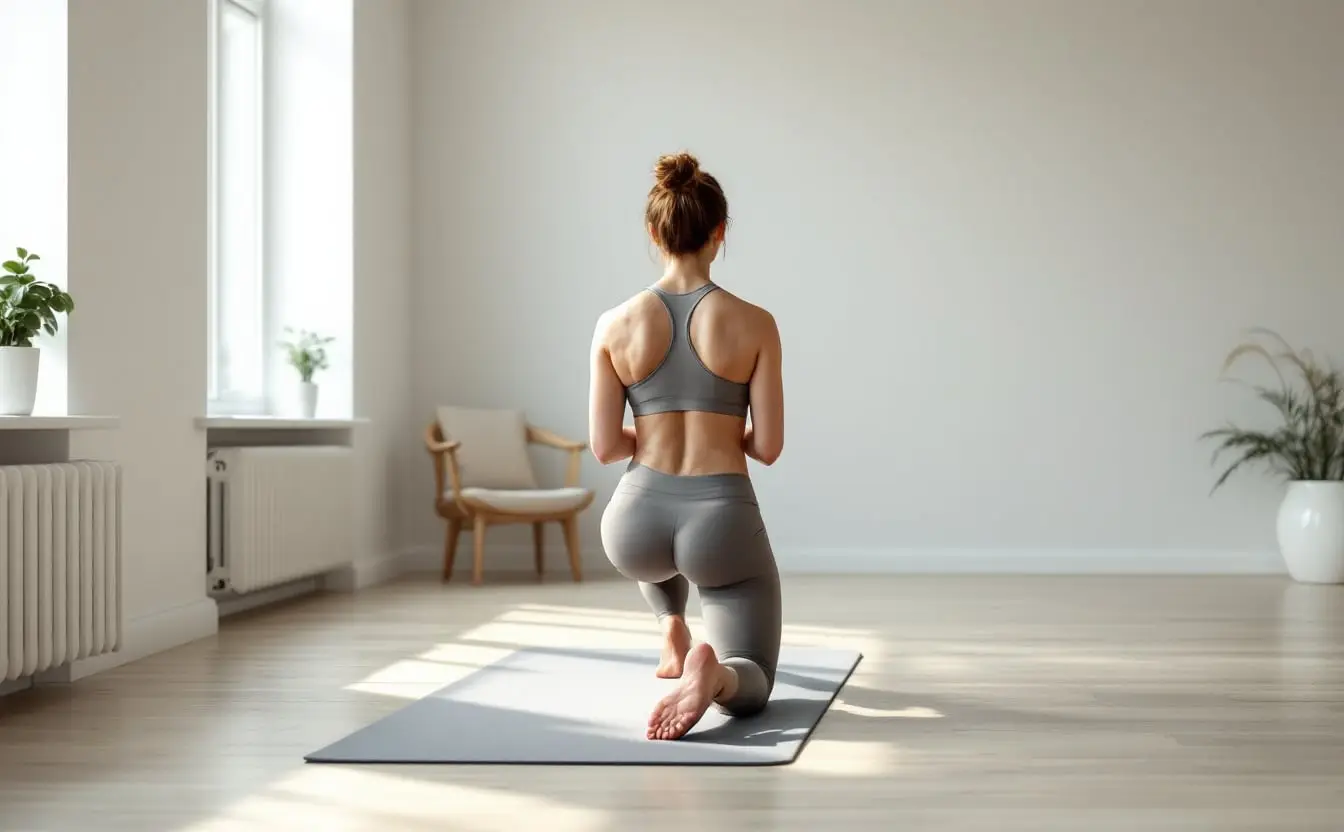
Kneel with your knees apart and big toes touching, sit back towards your heels and walk your hands forwards until your forehead rests on the mat. Then walk both hands over to the right until you feel a stretch along the left side of your trunk and the back of the armpit. Hold for five slow breaths, letting the left ribs widen as you breathe in, the same sideways expansion you practise in lateral breathing. Walk back through the middle and repeat to the left. Easier: a cushion between your seat and heels. Harder: press the opposite hip back towards its heel as you reach.
5. Foam roller extension
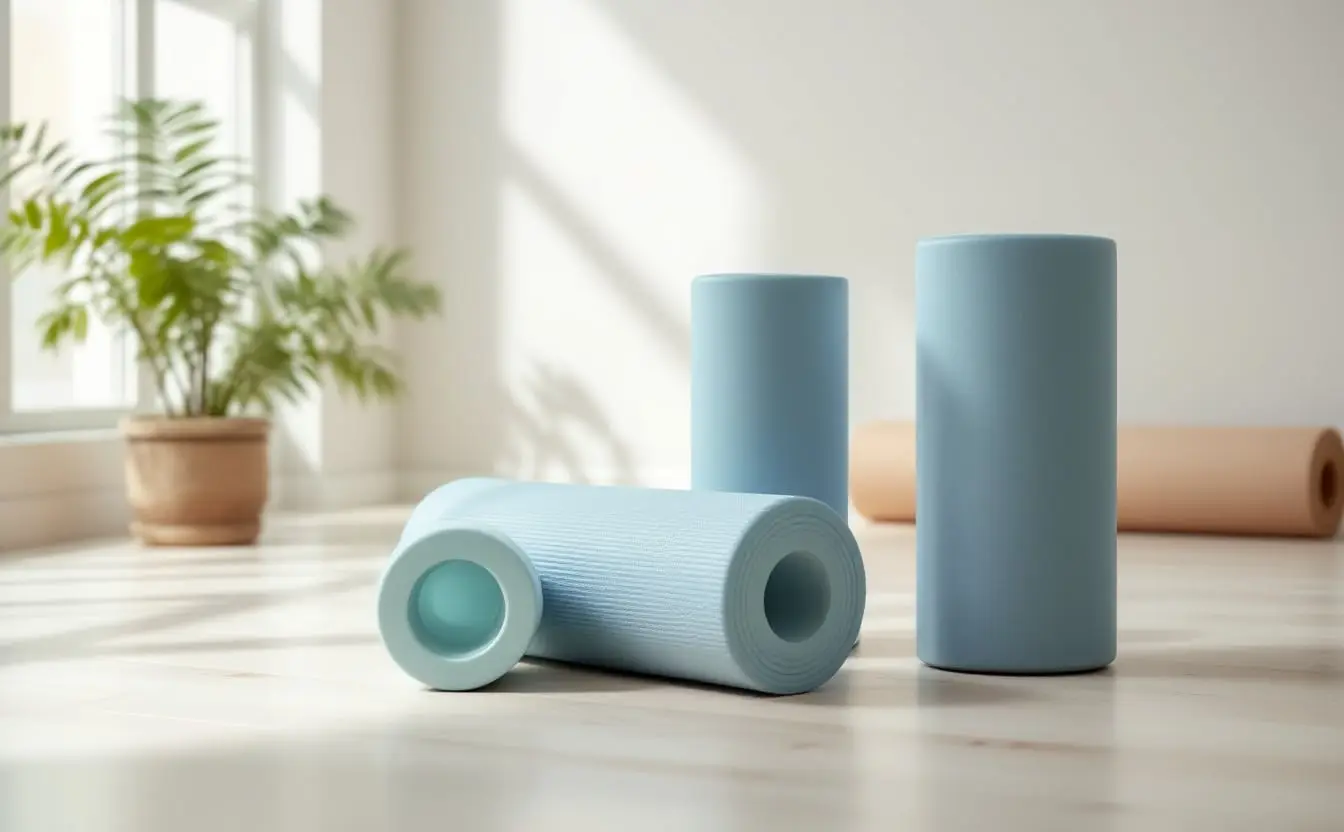
Sit with a foam roller behind you, across your back at the bottom of the shoulder blades. Lie back onto it with your knees bent, hips on the floor and hands behind your head to support it, elbows pointing forwards. Let the upper back arch gently over the roller for three slow breaths, then shift the roller an inch or two (3 to 5 cm) higher and repeat, three or four positions in all. Keep it between the bottom of the shoulder blades and the top of the shoulders, never under the lower back. You should feel a broad stretch across the upper back and chest. Easier: a rolled towel instead of a roller. Harder: reach the arms overhead towards the floor behind you, if your shoulders are comfortable there. If you do not own a roller yet, our foam roller guide covers which length and firmness suit this.
Shoulder stretches for the chest and the back of the shoulder
6. Doorway pec stretch
Stand in a doorway and place your right forearm against the frame, elbow bent to a right angle and at or just below shoulder height. Step forwards with the right foot and turn your chest gently to the left until you feel the front of the chest and shoulder stretch. Keep the shoulder down, away from your ear, and the ribs from flaring. Hold for 30 seconds, twice on each side. If the arm or hand tingles or goes numb, lower the elbow or come out of it. Easier: a lower elbow and a smaller step. Harder: try the elbow slightly above shoulder height, which moves the stretch lower across the chest.
7. Cross-body stretch
Stand or sit tall and bring your right arm across your chest at about shoulder height. Hold it just above the elbow with your left hand and draw it gently closer. Do not let the right shoulder ride up towards your ear or the trunk turn with the arm. Hold for 30 seconds, twice on each side. You should feel the back of the right shoulder and around the shoulder blade. Easier: hold the arm a little lower and pull more gently. Harder: do it lying on your back, where the floor holds the shoulder blade still and the stretch lands more precisely in the back of the shoulder.
8. Sleeper stretch, with caution
Lie on your right side, head on a pillow, with the right upper arm on the floor straight out in front at shoulder height and the elbow bent so the fingers point to the ceiling. Roll your body back slightly, which is kinder to the front of the shoulder than lying squarely on it. With your left hand, guide the right forearm slowly down towards the floor in front of you, only until you feel a mild stretch at the back of the shoulder. Hold for 30 seconds, twice. This one is easy to overdo: any pinching at the front of the shoulder, or symptoms in the arm, means stop and use the cross-body stretch instead. If you have had a dislocation or shoulder surgery, leave it out unless a physiotherapist has given it to you. Easier: a smaller range, leaning further back. Harder: hold for 45 seconds rather than pressing further.
Shoulder mobility exercises with a wall and a band
9. Wall angels
Stand with your back to a wall, feet about 6 inches (15 cm) away and knees soft. Let the back of your head, upper back and seat touch the wall, keeping a small natural curve in the lower back rather than forcing it flat. Raise your arms into a goalpost shape, elbows bent at shoulder height, the backs of the arms towards the wall. Slide the arms slowly up as far as you can without the ribs flaring or the lower back arching, then draw the elbows down towards your sides. Do 8 to 10. You should feel the muscles below and between the shoulder blades working. Easier: step the feet further forward and let the hands come off the wall. Harder: feet closer, with a three-second hold at the top.
10. Band pull-apart
Stand tall holding a light resistance band at shoulder width, arms straight in front of you at chest height, palms down. Breathe out and pull the band apart, moving the arms out to the sides until it nears your chest, with the shoulder blades drawing gently back and down. Do not shrug or arch. Return slowly, for 2 sets of 12 to 15. If you are unsure which strength to use, the resistance band chart matches colours to levels; start light. You should feel the backs of the shoulders and the area between the shoulder blades. Easier: a wider grip or a lighter band. Harder: a two-second pause with the band at your chest, or palms turned up.
A 12-minute order
| Step | Move | Dose |
|---|---|---|
| 1 | Cat-cow | 8 rounds |
| 2 | Thread the needle | 6 each side |
| 3 | Open book | 6 each side |
| 4 | Child's pose with side reach | 5 breaths each side |
| 5 | Foam roller extension | 3 to 4 positions |
| 6 | Doorway pec stretch | 2 x 30 seconds each side |
| 7 | Cross-body stretch | 30 seconds each side |
| 8 | Sleeper stretch (optional) | 30 seconds each side |
| 9 | Wall angels | 8 to 10 |
| 10 | Band pull-apart | 12 to 15 |
Most days is fine at this gentle level, and three times a week is a sensible minimum. The first five also work on their own as a five-minute morning set, and the wall and band work suits the end of a desk day. If your hips are as stiff as your shoulders, the hip mobility library is arranged the same way.
When to see a physiotherapist or doctor
Shoulder pain that wakes you at night, follows a fall, comes with weakness or an arm you cannot lift, or lasts more than a few weeks needs a physiotherapist or doctor rather than more stretching. So does numbness, tingling or pain running down the arm. After a dislocation or surgery, follow your physiotherapist's plan. Shoulder or arm pain that arrives with chest tightness, breathlessness, sweating or nausea needs urgent medical help straight away.
Questions people ask
How long should you hold a shoulder stretch?
About 30 seconds, repeated once or twice, is the common guidance and suits most people. The moving exercises, such as cat-cow and thread the needle, are done for slow repetitions instead.
What are the best upper back stretches for desk workers?
Thread the needle, the open book and foam roller extension, because between them they cover turning and arching, the two things a day at a desk rarely asks of the upper back.
Keep the band on the door
Hang the band on the handle of the door to the room you work in. Each time you close the laptop for the day, do one set of pull-aparts and three slow wall angels before you leave the room. It takes ninety seconds, and it is the easiest part of this routine to keep.