How to plan a mountain day away for your studio community
Some links in this story go to shops, and we may earn a commission from them.
A group trip to the mountains is a small logistics project. How to plan transport, insurance, payments and gentle sessions before anyone pays.
A regular stays behind after class, rolls up her mat and suggests the whole group goes away somewhere together. Three more people nod. By Friday there is a group chat, a dozen opinions about mountains, and no plan for getting anyone there.
A group trip can be lovely for a studio community, and it is also a small logistics project. If you teach in Colorado, a mountain town such as Breckenridge is an obvious draw, and one option for getting a group there in one vehicle is Denver Charter Bus Co CO. This piece walks through planning the trip the way you would plan a new class: in order, with the boring parts first.
Decide what kind of trip it is before anything else
The first question is not where or when. It is what the trip is for. A relaxed day in the mountains with a gentle mat session on a deck is a very different thing from a weekend of two classes a day, shared meals and a walk in between. Each one changes who comes, what it costs, and how much work it is for you.
Be honest about your own capacity. If you are already teaching a full week, a day trip may be all you can run well. If you have a co-teacher or a regular who loves organising, a weekend becomes more realistic. And ask your community what they actually want. A short, anonymous poll after class will tell you more than the three loudest voices in the changing room.
Keep the movement side modest. Mountain air is thinner, and people who feel strong at home can find a session at altitude harder than they expect. Plan lighter sessions than you would teach at home and let people sit out without explanation. Anyone with a heart or lung condition, or who is pregnant, should check with their own doctor before a trip to altitude, and it is reasonable for you to say so in the invitation.
Kit list
- Power Systems yoga and Pilates rangeBest for: equipping a roomSee it at Power Systems (Power Systems yoga and Pilates range)
We may earn a commission from these links.
Set it up in this order
I like a fixed order for any group project, because it stops the fun parts from running ahead of the necessary ones. Here is the order I would use for a studio trip to the mountains:
- Agree the shape of the trip: day or weekend, how many sessions, roughly how many people.
- Pick dates and a fallback, remembering that mountain weather can change plans in any season.
- Sort the transport, since group size, pick-up point and travel time affect everything else.
- Book where you will practise and where people will sleep, if it is an overnight trip.
- Check your insurance and paperwork before you take any money.
- Set the price and the payment terms, including what happens if someone drops out.
- Send a clear invitation with what is included, what to bring and what is expected of people.
- Write a day-of plan with times, a contact number and what happens if someone feels unwell.
Transport comes third on purpose. Once you know how many people are coming and roughly when, the vehicle question shapes the rest. A group in a single coach travels together, arrives together, and does not need to worry about mountain driving, parking or who has had a glass of wine at dinner.
Think about getting everyone up and back together
Car-sharing sounds simple and often is not. Someone has a small car, someone needs to leave early, someone gets lost, and suddenly your gentle morning session starts with half the group missing. For a group of any size, a single vehicle from a single meeting point makes the day calmer for everyone, including the person who would otherwise be driving tired after a long day outside.
When you contact a charter company, have your numbers ready: how many people, the pick-up point, the date, the rough times out and back, and whether you are carrying mats and props. Ask what they need from you, how far ahead to book, and what happens if the weather turns. Ask about space for kit too. A group of mat-carrying Pilates people takes more room than you would think.
Do not try to work out costs per head until you have a real quote. Prices for anything like this vary with dates, distance and group size, and guessing in the invitation is a reliable way to end up out of pocket.
Get the business side straight
This is the part I learned the hard way, running a room of my own for a while: the moment you collect money from people for a trip, you are running an event, not just going on a day out with friends. That changes things.
Check whether your teaching insurance covers sessions you teach away from your usual venue, and outdoors. If you are not sure, ask your insurer or broker in writing before you book anything. Think about whether you need a simple booking form with emergency contacts and a short health questionnaire, as you might for a new client. Decide your cancellation terms in advance and put them in the invitation, so nobody is surprised.
Keep good records: who paid, how much, when, and for what. If the trip is part of your business, ask an accountant how it should be treated in your accounts; I would not try to guess. None of this is complicated, but it is much easier to set up before the trip than to untangle afterwards.
Plan the movement for the place
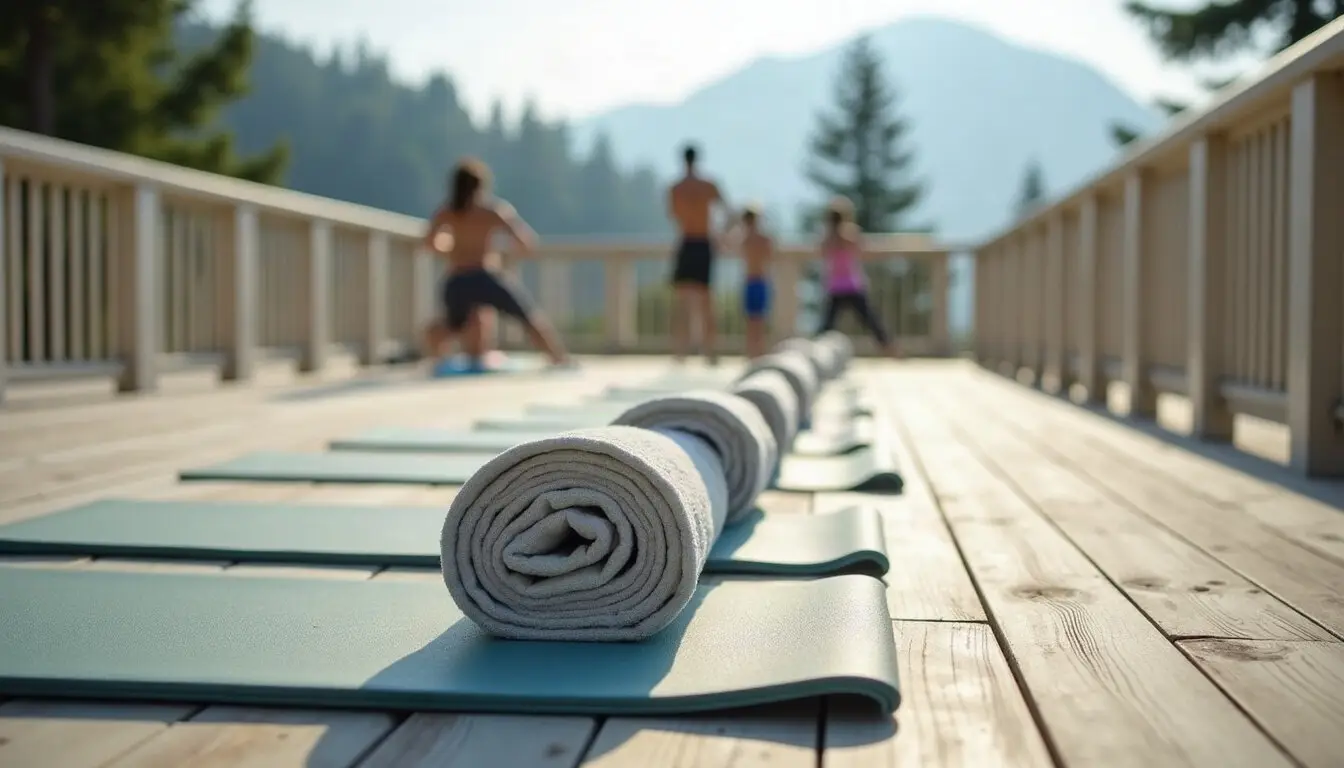
The best part of a mountain trip is practising somewhere you do not usually practise. A deck with a view, a light-filled room, a lawn in morning sun. Plan for what the place actually offers. Outdoor sessions need a fallback indoor space, because mountain weather can turn quickly. Floors may be cold, uneven or hard, so bring extra mats or towels for padding.
Keep the session simple. Familiar exercises at an easy pace, plenty of breath work, generous rests. The Hundred with lighter breathing, Spine Stretch Forward, Single Leg Circles and some side-lying work suit a group of mixed levels and need nothing but a mat. Encourage people to drink water, take breaks and stop if they feel unwell. Nobody needs to prove anything at altitude.
And leave time with nothing scheduled. The point of the trip is the community as much as the practice, and the conversations on the coach home are often the part people remember.
Pack for the mat and for the mountains
A packing list in the invitation saves a lot of messages the night before. Keep it short and practical. Each person needs their own mat, or you need a plan for borrowed ones, plus a towel, a water bottle and layers. Mountain mornings can be cold even when the afternoon is warm, and a session on a shaded deck feels very different from one in the sun. Grip socks help on unfamiliar floors. Sun cream and a hat matter more than people expect at altitude.
For you as the teacher, add a small kit of your own: a few spare mats or towels, a couple of light props that travel well, a printed sheet of everyone's emergency contacts, and a basic first aid kit. Pack it all in one bag that lives near the front of the coach, so you are not digging through the hold when someone asks for a plaster.
Spring check
Lighter: keep the sessions shorter and gentler than at home, and let people sit out freely.
Heavier: put your effort into the transport, the insurance check and clear terms before anyone pays.
The last rep
After your next class, ask the group one question: day trip or weekend? Count the hands, write the number on the whiteboard by the door, and that is your first real step. Before long you will be checking a coach booking and picturing twenty mats laid out on a wooden deck in thin, bright mountain light.