Choosing a kitchen floor you can cook on and practise on
Some links in this story go to shops, and we may earn a commission from them.
How to choose and care for a kitchen floor that copes with spills and still feels level, warm and steady under your mat for an evening Pilates session.
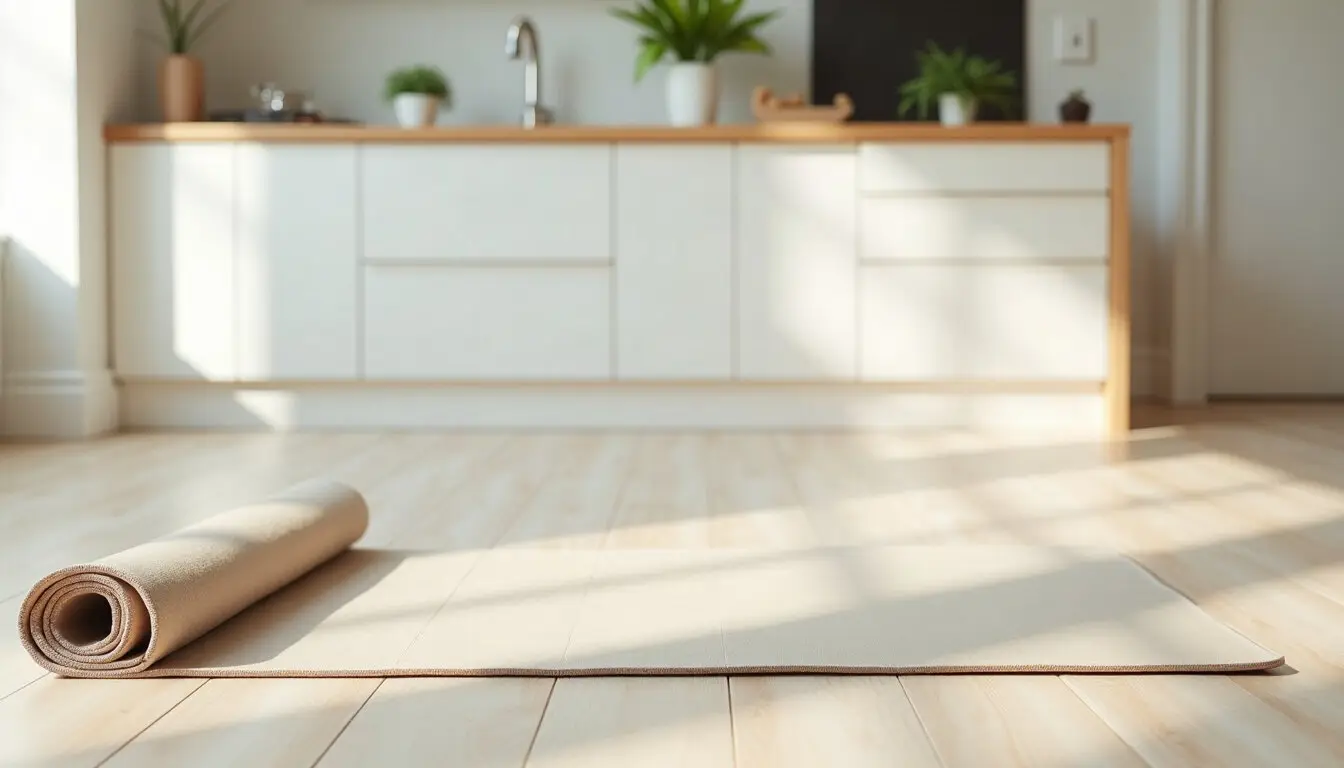
The dal was ticking on the hob and I had unrolled my mat three steps from the cooker, the only clear stretch of floor in my flat. Halfway through a Roll Up I felt every cold, hard edge of the tiles through the foam, and a grain of rice under my left shoulder blade. Not my finest session.
Plenty of us practise in or beside the kitchen, where the floor has two jobs: take a splash of oil, then hold your spine still and warm. If you're researching flooring installation Denver for a room like this, or simply looking at the floor you already have, this piece walks through what a shared cooking and practice floor needs, in the order I would think about it.
Start with the floor you'll lie on
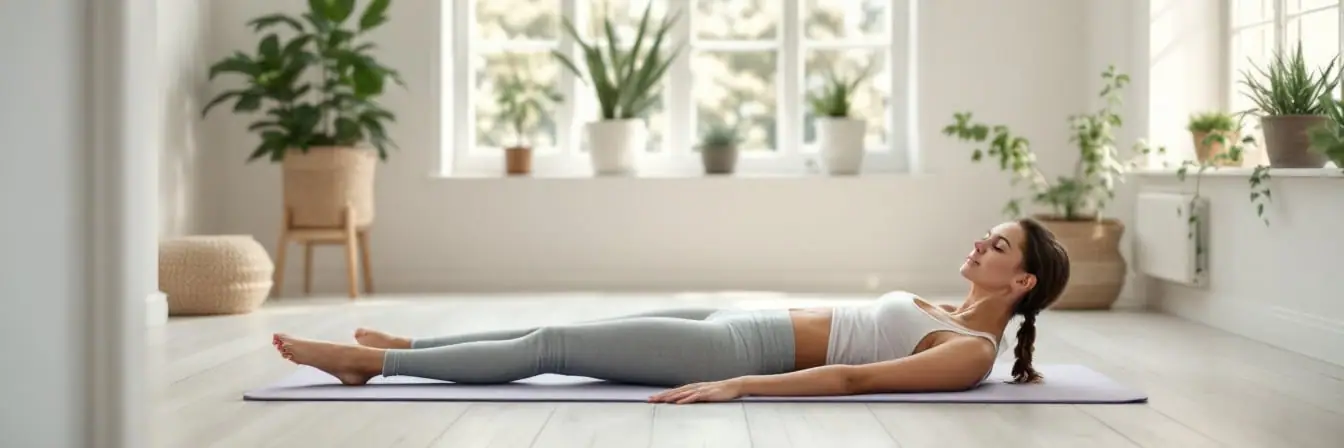
Most cooking happens standing. Most mat work happens lying down, kneeling or on all fours, which means your sacrum, the back of your ribs, your palms and your knees all meet the floor through a few millimetres of mat. That is a very different test from the one a kitchen floor usually gets.
Three things decide how a floor feels in a mat session. The first is temperature: stone and ceramic tile pull warmth out of you, so a slow sequence like The Hundred into Single Leg Circles can leave your back chilled by the end. The second is give: a surface with a little spring underneath, like a wood floor over a decent subfloor, feels kinder under the knees than a slab. The third is texture. Deep grout lines, raised grain or a ridge where two boards meet will find their way through a thin mat and into your shoulder blades.
Wood and good vinyl plank both sit in a comfortable middle ground for most people. Wood brings a little warmth and the pale, calm look this magazine is fond of. Vinyl plank copes well with kitchen life and stays reasonably even underfoot. Tile is lovely to cook on and hard work to lie on, so if you already have it, a thicker mat and a folded blanket under the hips do a lot of good.
Kit list
- Power Systems flat resistance bandsBest for: cutting your own lengthsSee it at Power Systems (Power Systems flat resistance bands)
- Power Systems yoga and Pilates rangeBest for: equipping a roomSee it at Power Systems (Power Systems yoga and Pilates range)
We may earn a commission from these links.
Think about spills before you think about stretches
A kitchen floor gets splashed. Water from the sink, oil from the frying pan, a dusting of flour, and in my flat a faint yellow ghost of turmeric that no cloth has ever fully removed. All of that matters when you put a mat down on top of it.
Oil is the real problem. A thin film you cannot see will let a mat creep during Footwork or standing work, and a sliding mat is how ankles get twisted. Wet patches are the other one: a mat laid on damp boards traps the moisture, which is bad for the floor and unpleasant for you.
So the question to ask of any kitchen floor is how easily it gives up a spill. Sealed, finished surfaces with tight joints wipe clean in one pass. Open joints, worn patches where the finish has gone, or soft unsealed timber hold onto grease and water. When I cook before a session I give the floor a quick wipe with warm soapy water and a dry cloth afterwards, about two minutes of work, and the mat stays exactly where I put it.
Keep the surface level where the mat goes
You notice an uneven floor the moment you lie on it. A slight dip under one hip makes a Bridge feel lopsided, and a raised edge where kitchen tile meets living room boards turns Side Kick into a balancing act you did not sign up for. Standing work in socks is worse: a threshold strip is exactly the height to catch a toe.
If you are changing floors anyway, this is where a careful installation earns its keep. A good flooring company will look at the subfloor before anything goes down, check how flat it is, deal with the step between rooms so the transition is as smooth as the materials allow, and leave room for the boards to move with the seasons. That last point matters in places with dry, cold winters and sunny, warmer summers, Denver among them, where wood shrinks and swells with the air. Gaps that open in winter can catch fingertips in a Plank, so ask whoever fits the floor how they plan for it.
If the floor is staying as it is, work with it. Find the flattest rectangle in the room by lying down and rolling slowly from side to side; your spine is a surprisingly good spirit level. Put the mat there and nowhere else.
Plan the room around the mat, not just the cooker
Kitchens are designed around the triangle of sink, hob and fridge. Nobody draws a dotted mat outline on the plan, and so the clear floor ends up wherever the chairs happen not to be. A little planning makes the evening session something you actually do rather than something you negotiate with the furniture.
This is the routine I use, and it takes about five minutes from the last pan to the first breath:
- Turn off the hob and the oven and move anything hot to the back of the counter, so nothing is bubbling over while you are lying down.
- Push the chairs under the table and move the bin and the shopping bag to the far wall. Aim for an arm's length of clear floor on every side of the mat.
- Wipe the strip of floor where the mat will go, then dry it with a clean cloth. Count to thirty while it airs.
- Check the floor with your hand. It should feel dry, level and free of crumbs. Anything sharp you would feel through the mat, you will feel through your spine.
- Unroll the mat lengthways along the room, away from the cooker and the sink, with your head end towards the window if you have one.
- Add a folded towel under the hips or knees if the floor is hard or cold, and keep a second towel nearby for your hands.
- Open the window a crack for a minute to clear the cooking smell, then close it before you start so there is no draught at floor level.
When I finish, the mat rolls up and lives standing in the corner by the fridge, where it is the first thing I see when I come in. That is half the reason I use it.
Look after the finish you already have
Floors wear in the places we use them. In a kitchen that means a pale track from sink to hob, a dull patch in front of the fridge, and, if you practise there, a softer, worn rectangle exactly where your mat lives. A worn finish is not just a cosmetic issue. It soaks up spills, roughens under the hands and is harder to keep clean enough to lie on.
For wood floors, a full refinish is a job for professionals: sanding, dust control and the finish itself all need the right equipment and some patience, and the room is out of use for a while. Between refinishes, the simple habits do most of the work. Felt pads under chair legs. A doormat at every entrance so grit does not travel. A soft brush rather than a stiff broom. A damp, well wrung mop rather than a wet one.
Vinyl plank needs less of you, but it still prefers a soft cloth to anything abrasive, and it does not like hot pans set straight down on it. Tile needs its grout kept clean and sealed so the lines stay smooth under a mat.
It also helps to think about what goes on top. A mat with a natural rubber base grips most sealed floors well. A thick foam mat is softer on tile but slides more easily on a polished finish, so pair it with a thin grip liner or a cotton rug that stays put. Avoid rugs that bunch: a ridge under a mat is just a new threshold strip.
Spring check
Lighter: stop worrying about having a dedicated studio room. A clean, level stretch of kitchen floor and a five minute set-up is enough for a full mat session.
Heavier: put your effort into the surface itself. A floor that is level, sealed and warm enough to lie on will do more for your practice than any new prop.
The last rep
Tonight, before you start cooking, lie down on the floor where you would put your mat and roll slowly from side to side. Notice where it dips, where it is cold, where the grout or the board edges press into you. That one minute tells you whether you need a towel, a different spot or, one day, a different floor. Then get up, put the rice on, and leave the mat standing in the corner by the fridge, ready for after dinner.